1973: The partnership between BNP Paribas and Roland-Garros is born
Who would have bet that Pierre Ledoux’s idea in 1973 to sign a “small” sponsorship deal with the Roland-Garros French Open to advertise the young Banque Nationale de Paris (BNP) would become the longest partnership in the history of sports sponsorship, continuously renewed for 50 years? And make BNP Paribas the official sponsor of one of the world’s greatest tennis tournaments and the number one sponsor of world tennis?





The genesis of a long-term partnership with BNP Paribas
From the construction of the stadium to the first “Internationals of France”
The “French Championship on clay” event, created in 1891, was initially reserved for players licensed in France. It wasn’t until 1925 that it opened up to foreign players and took on the name of the “French Internationals”.
In 1927, the victory of the “Four Musketeers” in the Davis Cup cemented the place of French tennis on the international stage. The organizers then decided to build a stadium worthy of it. This stadium, with a capacity of six thousand seats, would bear the name of Roland Garros, a pioneer of aviation who died in combat during World War I, and would be built near the Porte d’Auteuil on a 3-hectare site donated by the city of Paris (the story of a stadium built in just one year and soon to be centennial).
In less than six months, the new Roland-Garros stadium was built and hosted its first “French Internationals” tournament in June 1928.
From mobile bank branches to the first partnership
BNP, a young bank born in 1966 from the merger between BNCI and CNEP, needs to develop its presence among the general public, which is then barely banked. At that time, only 18% of the French population holds a checking account.
Since 1971, the BNP Auteuil branch has managed the bank account of the French Tennis Federation (FFT). That same year, BNP sets up a mobile bank branch within the Roland-Garros grounds during the tournament to handle currency exchange, player payments, and emergency cash withdrawals for spectators.
At the same time, the president of the tournament, Philippe Chatrier, wants to build private suites on the central court of Roland-Garros. He needs a bank to finance the project.
It was then that in 1973, Pierre Ledoux took advantage of the former sponsor’s withdrawal to sign a “small” partnership that enabled the financing of the works. In return, the BNP name covered the famous backdrops of the courts, and was displayed as of 1974 on the uniforms of the 150 ball boys dressed by Adidas.
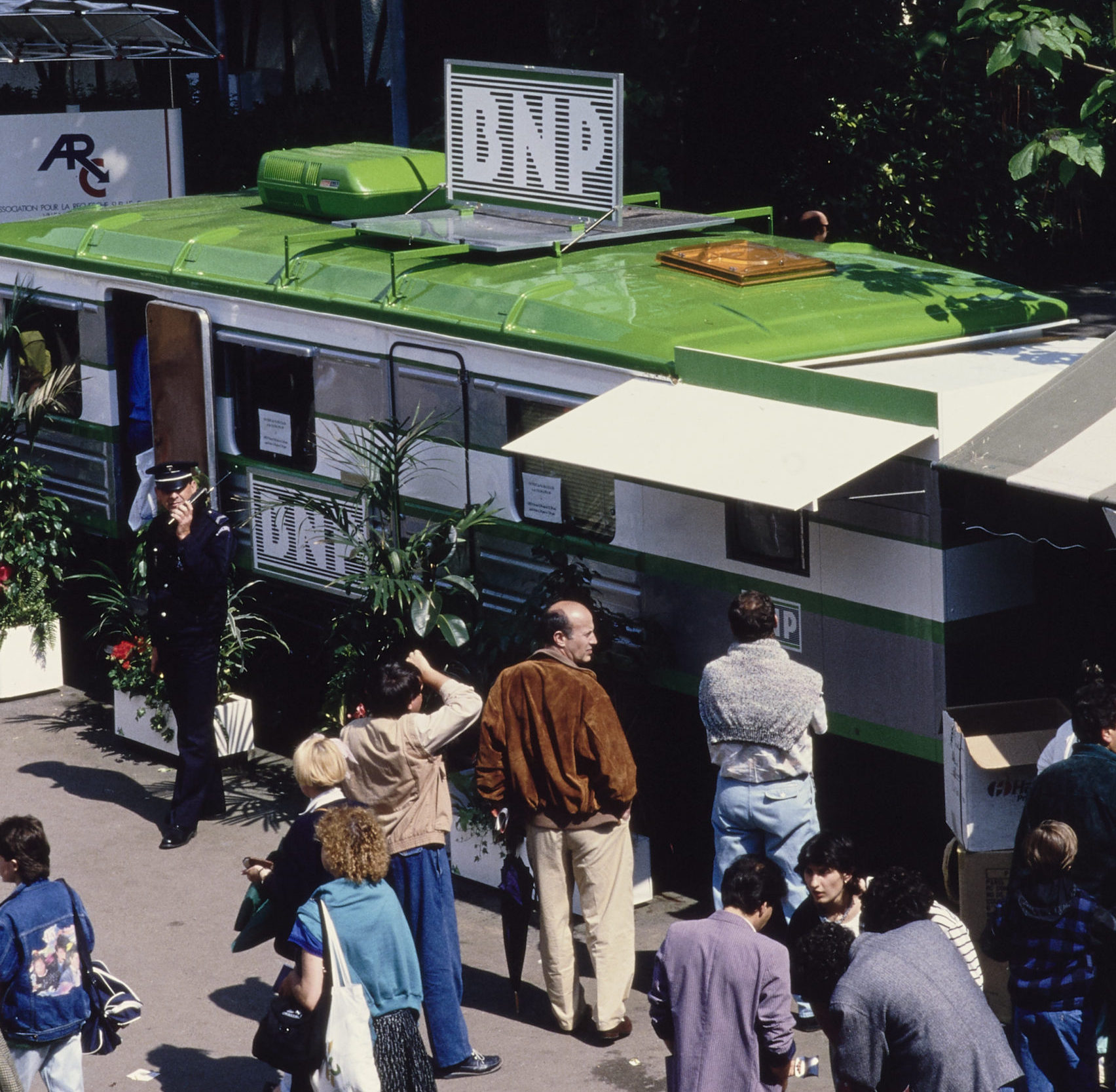
The mobile bank branch in 1987
(BNP Paribas historical archives – 4fI949)
For BNP, it was a way to get some publicity by tapping into the positive and appealing image of tennis.

Discover more
BNP comes to the net: serving up a winning strategy with the general public
The 1980s saw a surge in the popularity of tennis, with the number of licensed players with the FFT increasing from 167,000 in 1970 to 800,000 in 1980. As the sport gained more visibility, professional players started to become household names. Björn Borg was the epitome of this new era in tennis, being the first to be extensively covered by cameras on the court.
The tournament’s media coverage continues to expand
The 1978 tournament marked a milestone with the first live broadcasts on TF1, featuring 20 hours of coverage. Globally, around 20 countries aired footage of the event, totaling 150 hours of broadcast time. After just a decade of partnership, the BNP’s brand had become closely associated with Roland-Garros, thanks to the substantial growth in TV coverage. Notably, only Wimbledon surpassed Roland-Garros in terms of media coverage, with approximately 20% more coverage in France and 50% more in Asia, largely driven by the tournament’s popularity in Japan.
A 360-degree sponsorship strategy that pays off
BNP became aware of the growing impact of the phenomenon and the need to capitalize on these assets. It decided to increase its sponsorship efforts and was appointed as the official bank of the tournament and the French Tennis Federation (FFT). This enabled the FFT to support the overall prize money for players and maintain its position among the top four Grand Slam tennis tournaments.
BNP gradually expanded its media coverage: from 1983, the bank’s advertising presence accounted for 60% of the annual budget of the contract with Roland-Garros. This included television, radio, national and international media, and airport networks… The airports of Roissy and Orly, as well as the CNIT hall (sponsorship of match broadcasts), were also involved.
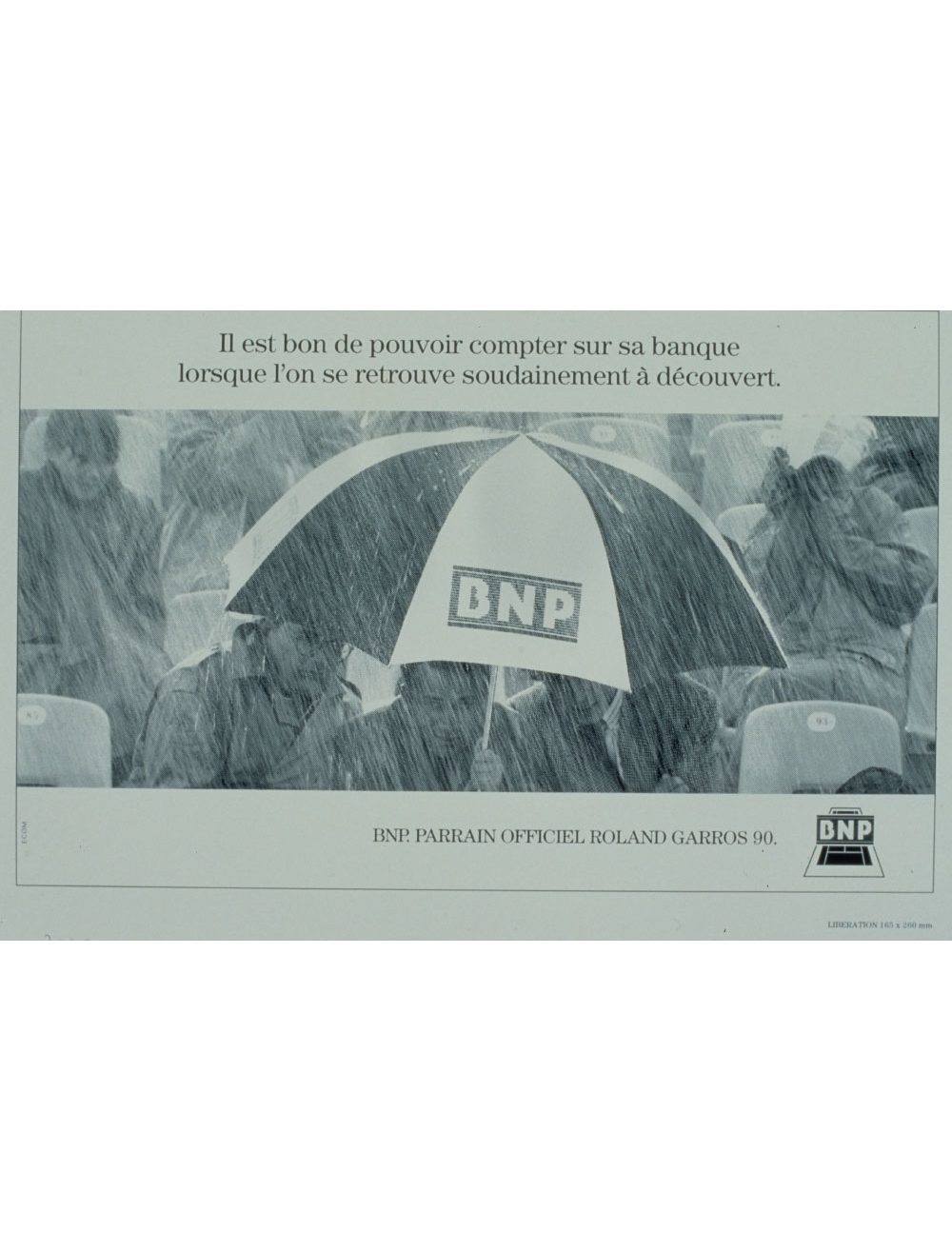
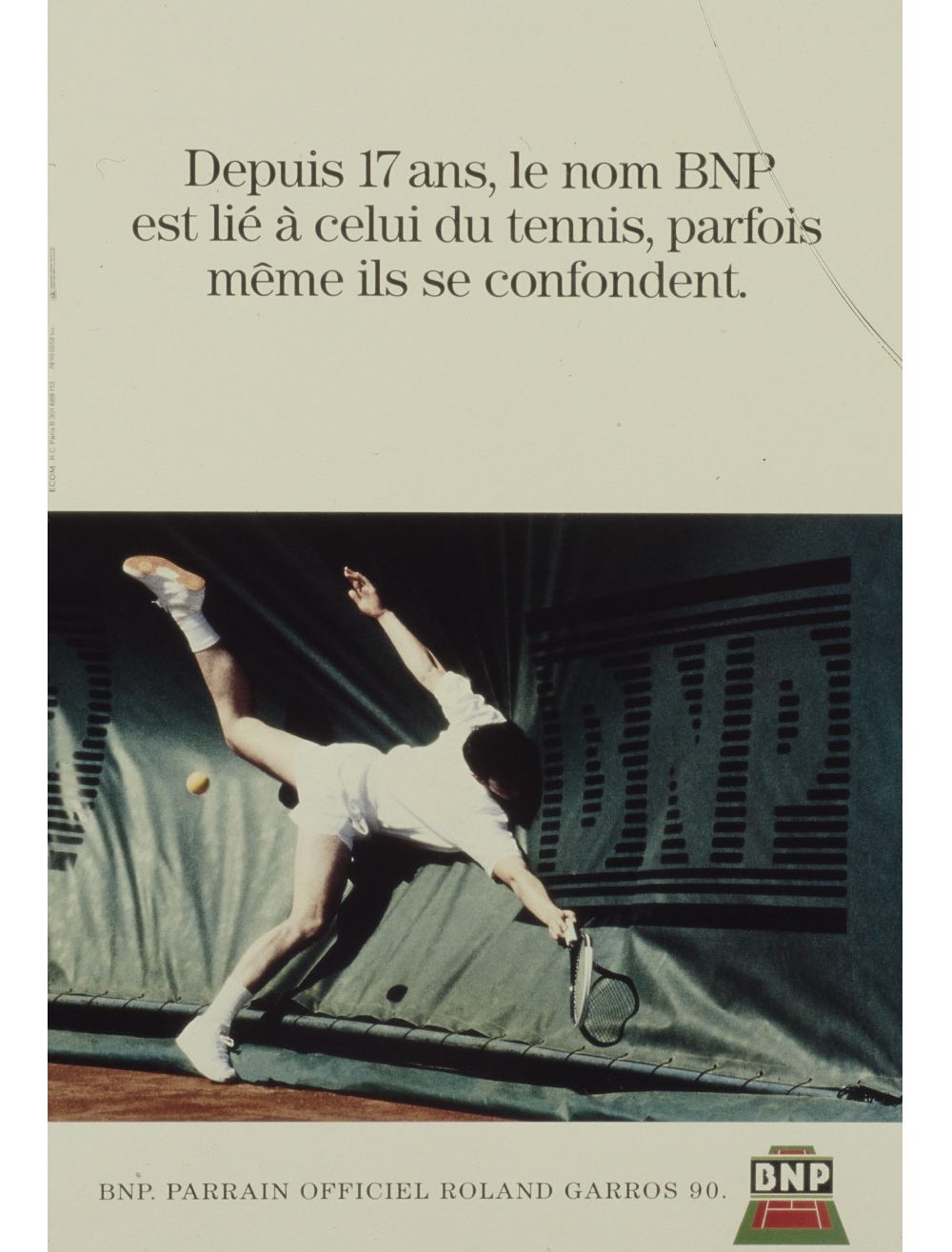
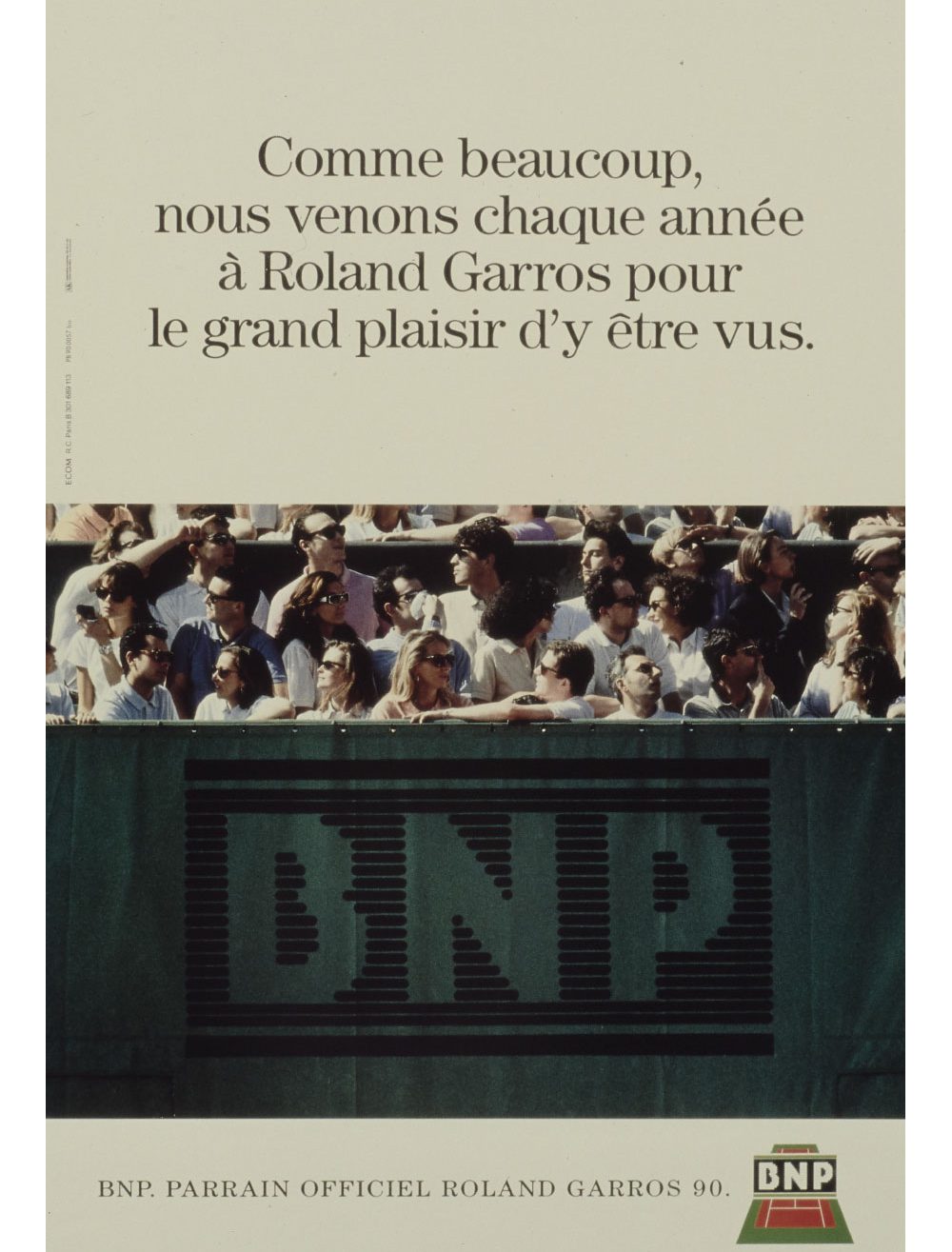
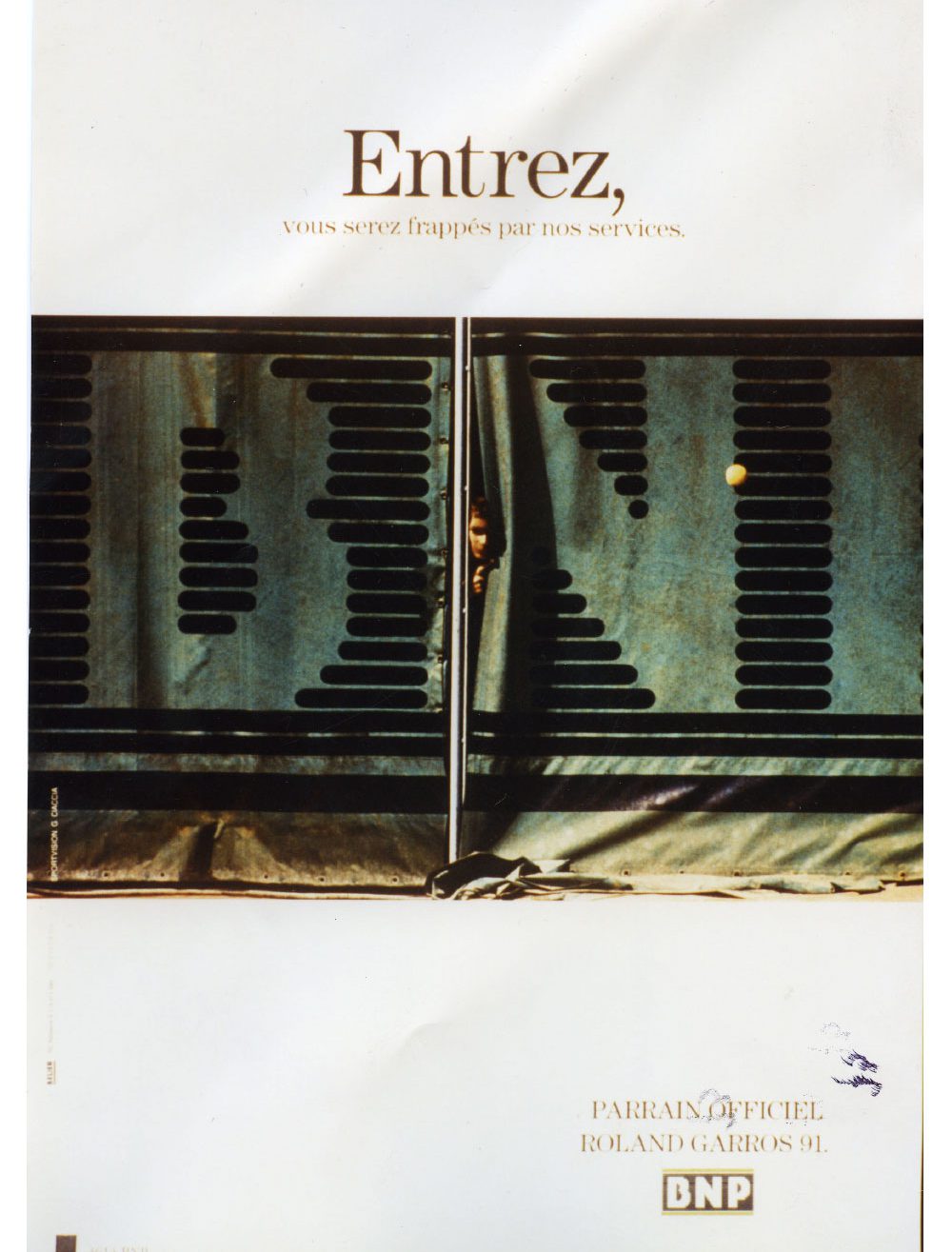
In 1987, BNP launched a new visual identity during the tournament, presenting a new logo on all the backdrops of the courts, and obtained an exclusive presence. It also had an exclusive presence on both sides of the ball boys’ shirts, whose equipment was supplied by Adidas, the FFT’s supplier since 1974. At the same time, the bank complemented its participation with humorous TV commercials, press ads, and the like: “BNP, the bank of Roland Garros”, “BNP, open branches at Roland Garros”. In BNP branches, posters repeated the themes of the press ads. Indeed, every other photo taken at Roland-Garros offered a chance to display the logo.
A logo was created for the 20th anniversary of the partnership in 1993. It was used on the ball boys’ uniforms, invitation cards, promotional items, commercial animation, and in BNP branches. Finally, BNP benefited from a free, full-color, back-cover advertisement in the official Roland-Garros magazine, published before each annual tournament.
Partnership in advertising:
-
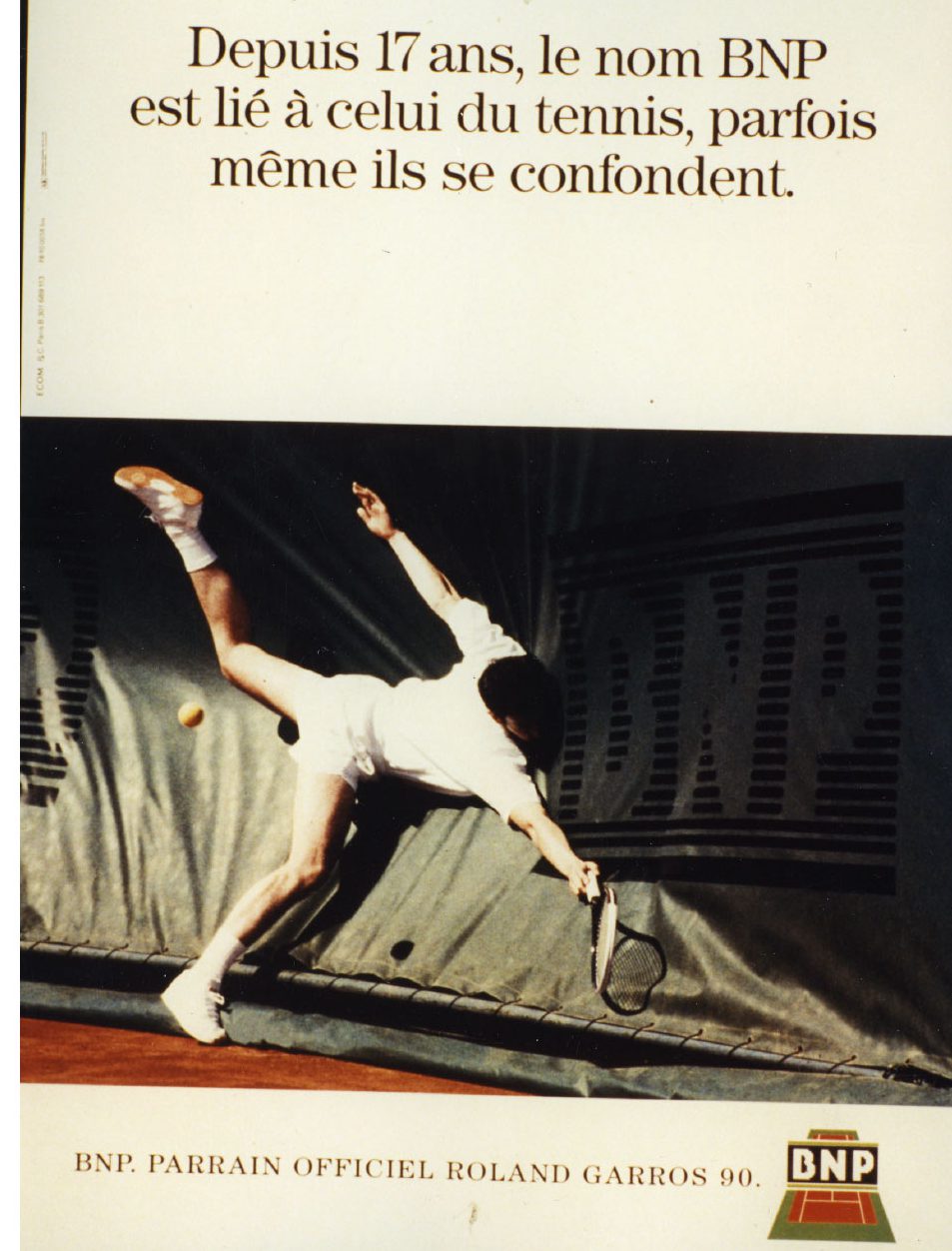
1990 advertising campaign
BNP Paribas historical archives (10FI670)
/
1990 advertising campaign
BNP Paribas historical archives (10FI670)
/ -
1990 advertising campaign
BNP Paribas historical archives(4FI424)
/
1990 advertising campaign
BNP Paribas historical archives(4FI424)
/ -
1990 advertising campaign
BNP Paribas historical archives (10FI670)
/
1990 advertising campaign
BNP Paribas historical archives (10FI670)
/ -
1990 advertising campaign
BNP Paribas historical archives (4FI424)
/
1990 advertising campaign
BNP Paribas historical archives (4FI424)
/ -
1991 advertising campaign
BNP Paribas historical archives (10FI671)
/
1991 advertising campaign
BNP Paribas historical archives (10FI671)
/ -
1991 advertising campaign
BNP Paribas historical archives (10FI671)
/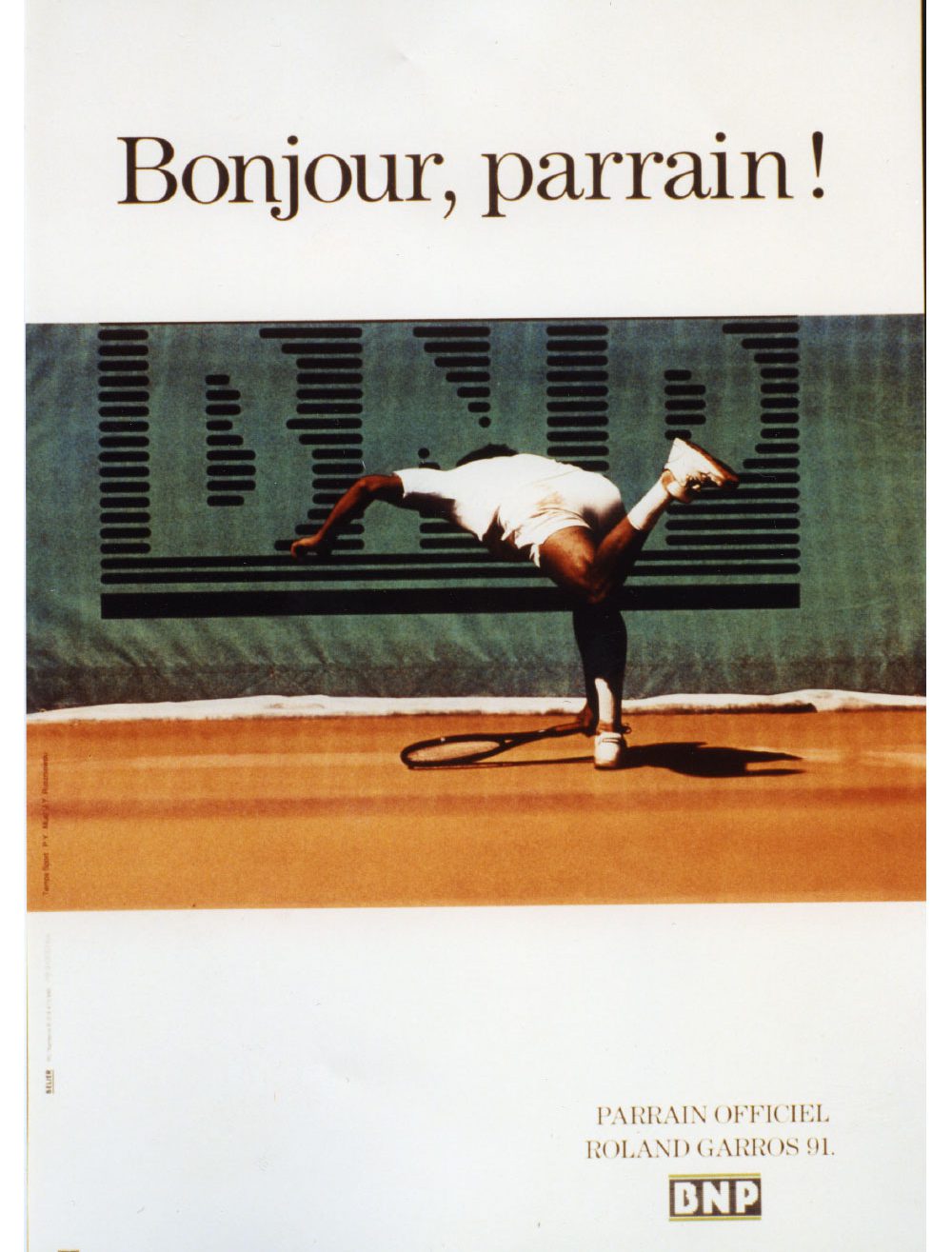
1991 advertising campaign
BNP Paribas historical archives (10FI671)
/ -
1992 advertising campaign
BNP Paribas historical archives (4Fi425)
/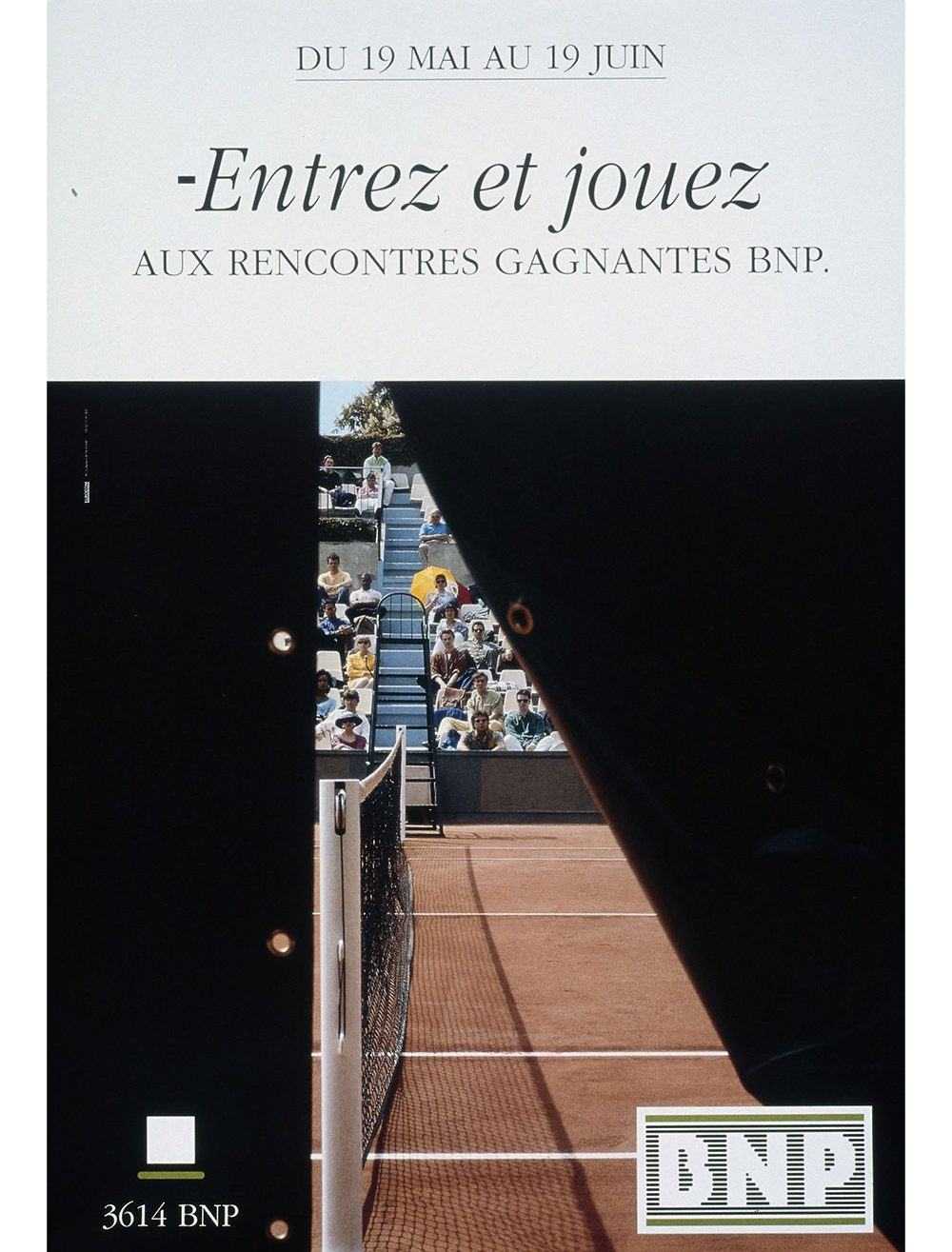
1992 advertising campaign
BNP Paribas historical archives (4Fi425)
/ -
1993 advertising campaign
BNP Paribas historical archives (4Fi426)
/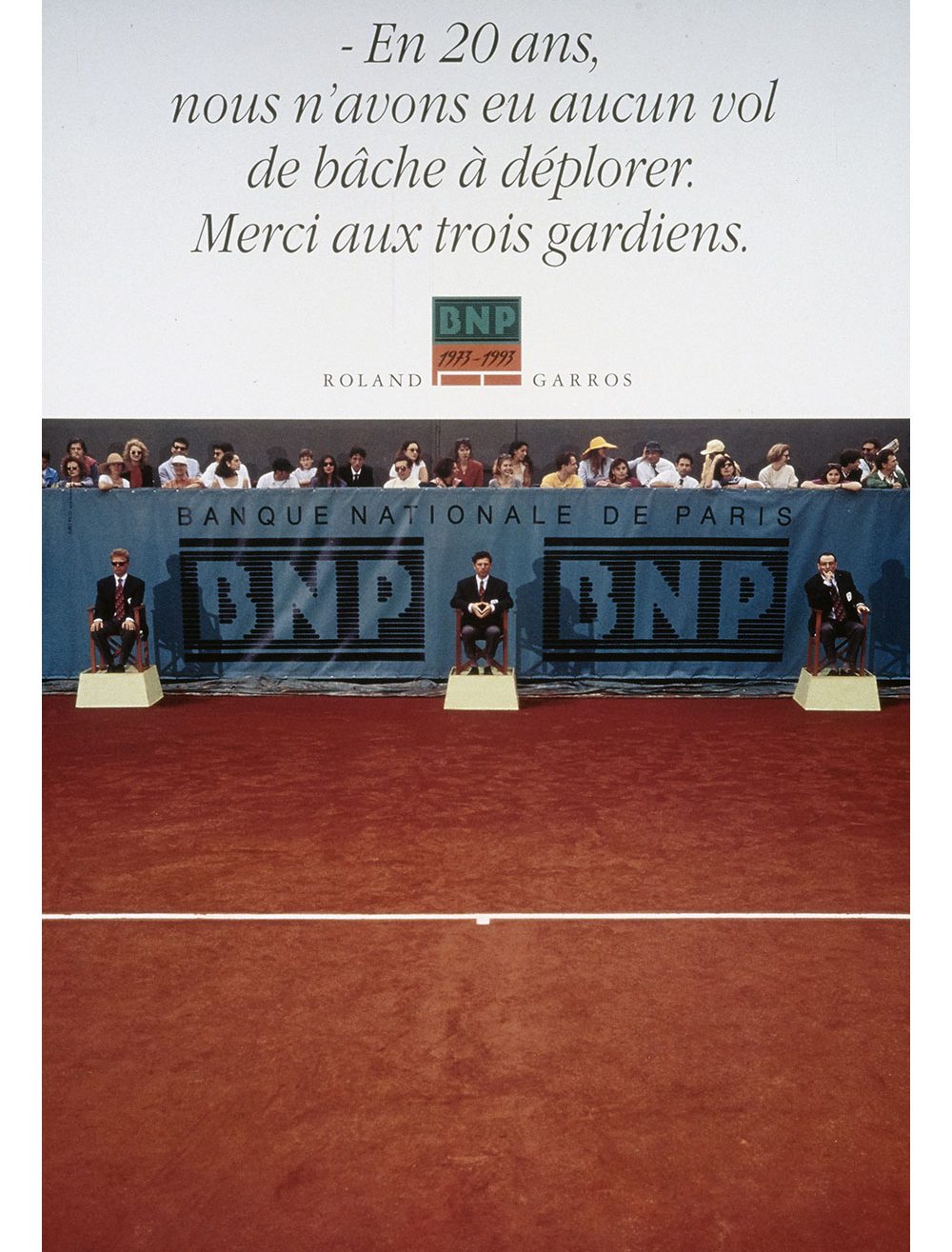
1993 advertising campaign
BNP Paribas historical archives (4Fi426)
/ -
1997 advertising campaign
BNP Paribas historical archives (4FI470)
/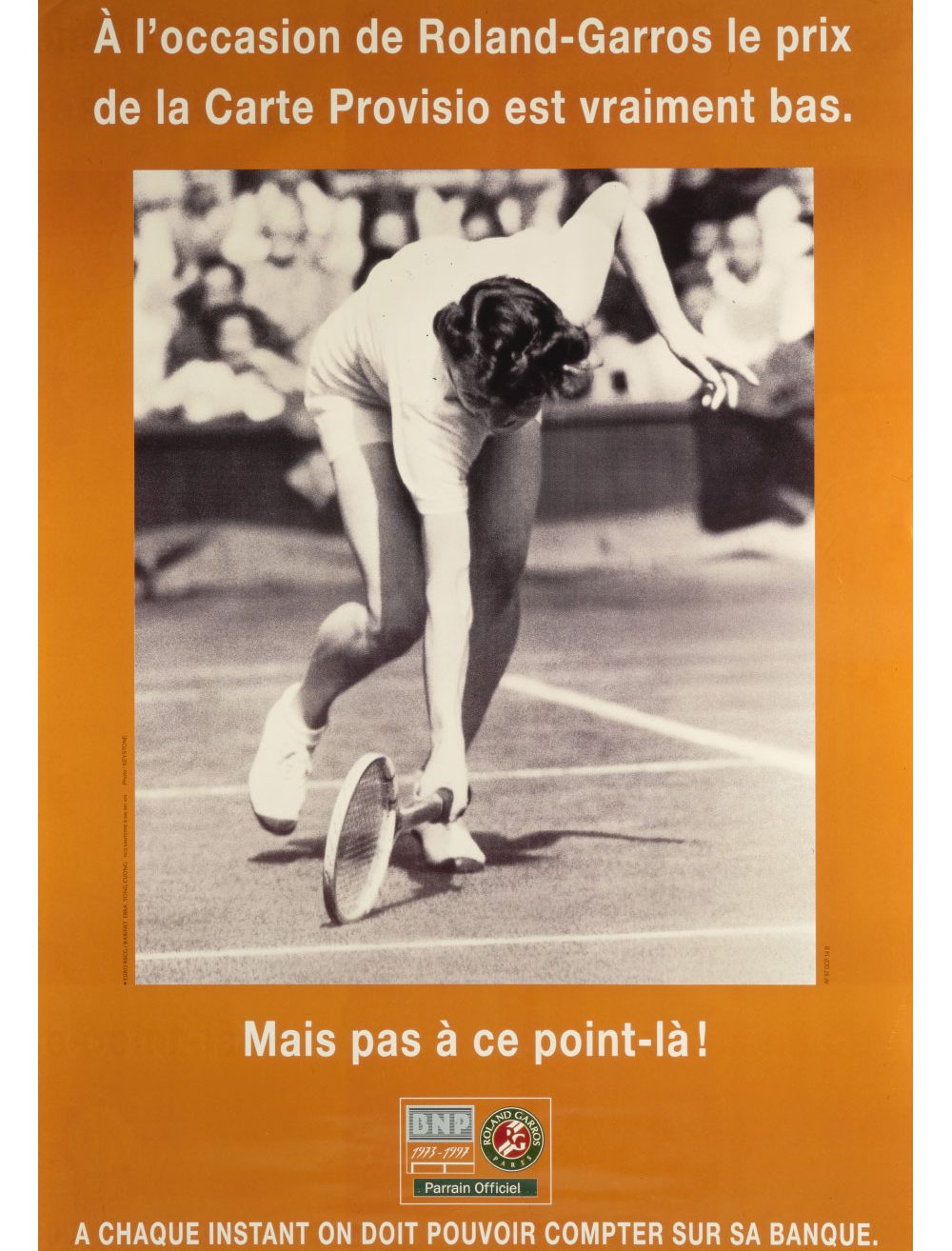
1997 advertising campaign
BNP Paribas historical archives (4FI470)
/ -
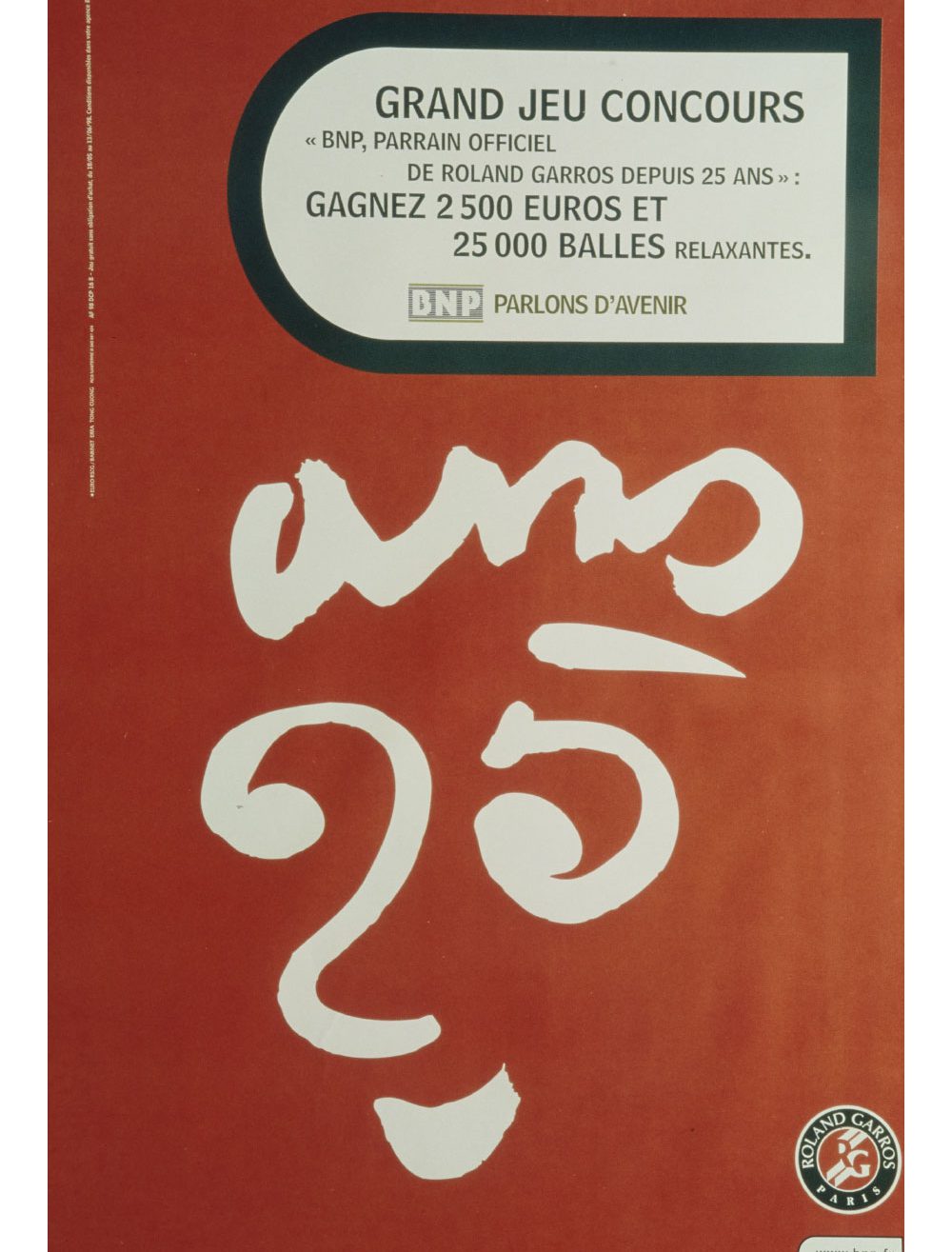
1998 advertising campaign
BNP Paribas historical archives (4FI484)
/
1998 advertising campaign
BNP Paribas historical archives (4FI484)
/
This all-out strategy paid off: awareness of the banking group rose from 87% in 1987 to 93% in 1990. This tidal wave of advertising added a dynamic touch to the bank’s image, both nationally and internationally.
BNP Paribas Group, “supporting tennis at all levels”
Following a decline in its spontaneous awareness, BNP found itself competing with other sponsors of the tournament. To counter this, it decided in 1987 to increase its visibility by broadening its reach.
Public Relations Operations
Starting in 1984, BNP launched public relations initiatives, hosting 50 to 70 guests daily in a reception tent on an auxiliary court. The bank subsequently expanded its public relations efforts, adding a 48-seat box on the main court and a private 75 m2 space in the tournament’s “village” for hospitality events.
En parallèle, la banque diffuse la culture tennis dans l’ensemble de son réseau, notamment à travers des opérations commerciales auprès du grand public.
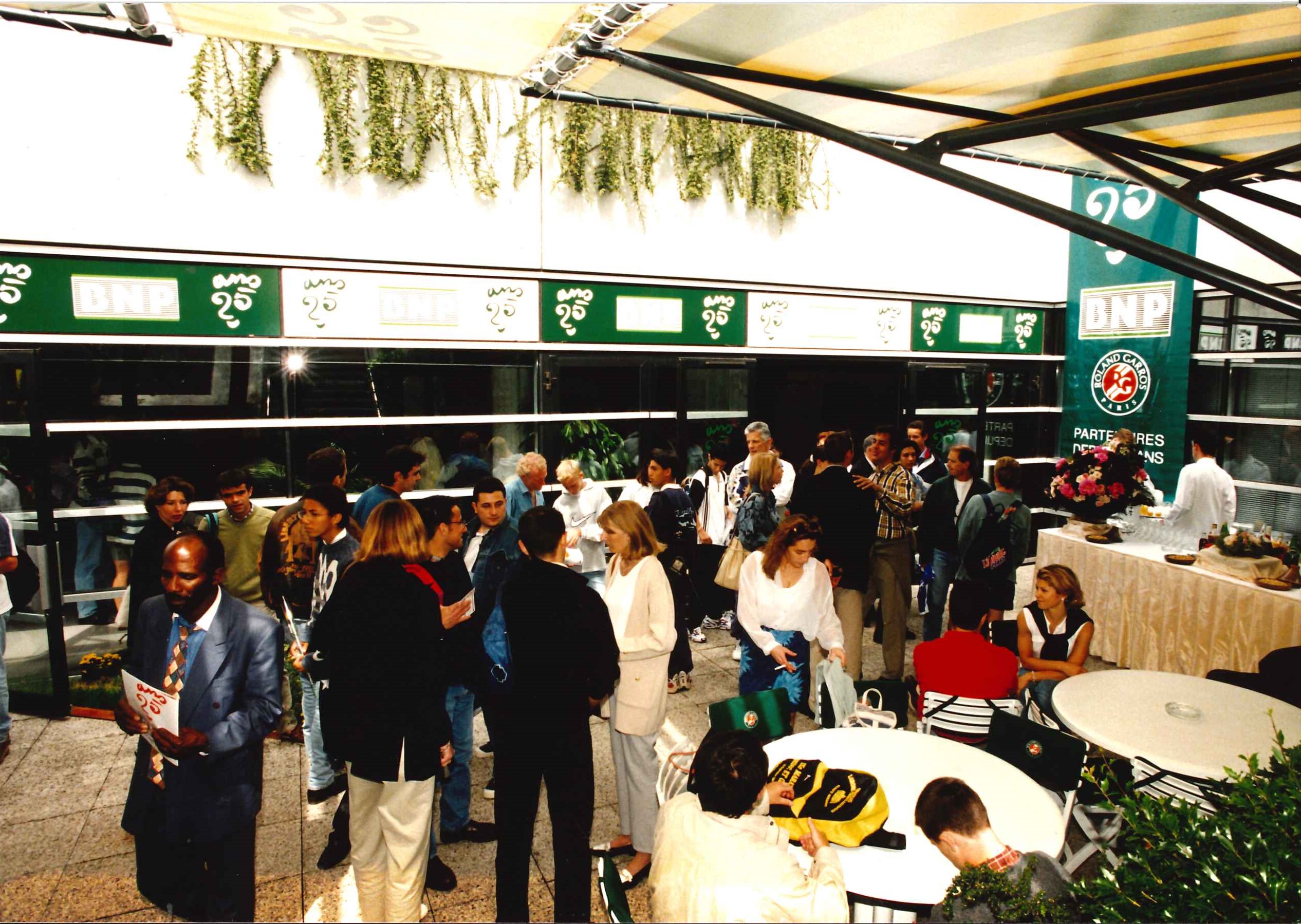
Celebratory reception in the VIP boxes marking 25 years of partnership
BNP Paribas historical archives – 10Fi1026
Support for beginner players
In the 1990s, the Bank sponsored over 120 tournaments nationwide and in local tennis clubs, including the prestigious Trophée Cadet de La Baule and the Challenge BNP Pro Kennex. The Group’s goal was to promote tennis at all levels, with a focus on youth development and mass participation.
To achieve this, the Bank supported innovative tennis programs, such as mini tennis, junior clubs, and adult initiatives, aimed at attracting new players and making the sport more accessible.
Optimise your brand awareness and boost your presence to become a number one seed
After 15 years of partnership, BNP’s spontaneous awareness had slowed however. It faced competition from other tournament sponsors, who were having as much or more impact on the public, with less long-term partnerships. In 1987, the bank therefore decided to boost its visibility and broaden its targets. It therefore began full-scale targeting of the general public interested in tennis, young people and the personalities present on the site.
Support for the French Open Wheelchair Tennis Tournament
Since 1993, the Group has been supporting the wheelchair tennis competition, promoting the development of this discipline and encouraging its practice at the highest level.
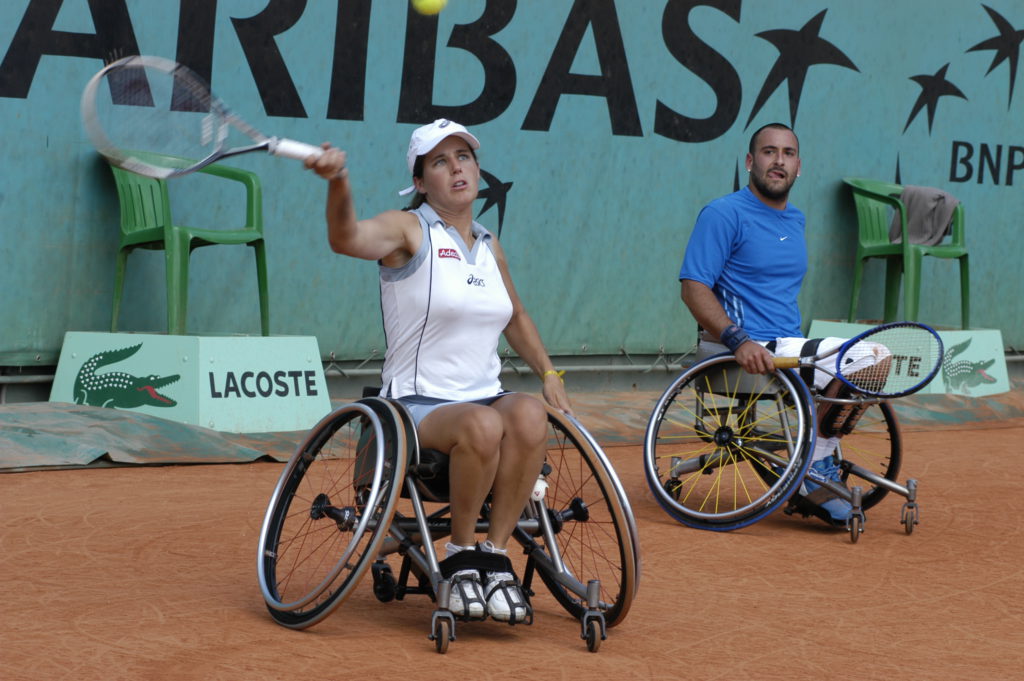
(BNP Paribas historical archives – 1Fi517)
Towards a more inclusive tennis
In 1996, Yannick Noah, concerned about the social issues in disadvantaged neighborhoods, decided to take action by founding the “Fête le Mur” association.
The BNP Paribas Group partnered with the association in 2001 to support its mission.
The program aims to make tennis more accessible to young people from underprivileged backgrounds, identify and develop new talent, and provide opportunities for them to join tennis clubs. Additionally, it creates coaching positions for younger children, which can be filled by role models from these neighborhoods.


The Group’s involvement in this program is a natural extension of its commitment to tennis, making it an active patron of the sport.
In addition, BNP Paribas is dedicated to the hospital and environmental aspects of tennis. Since 2015, the “Aces du Cœur” initiative has been supporting hospital renovations and equipment purchases.
Through its banking network, the Bank collaborates with public authorities to develop files and sponsors international programs focused on young generations and inclusion, such as Team Jeunes Talents in France, the USA, Belgium, and Japan.
Recently, a tailored program was launched with Félix Auger-Aliassime, aiming to support education for children in Togo. For every point Félix scores, he donates $5, and BNP Paribas donates $15 to the Care NGO’s project in Togo.