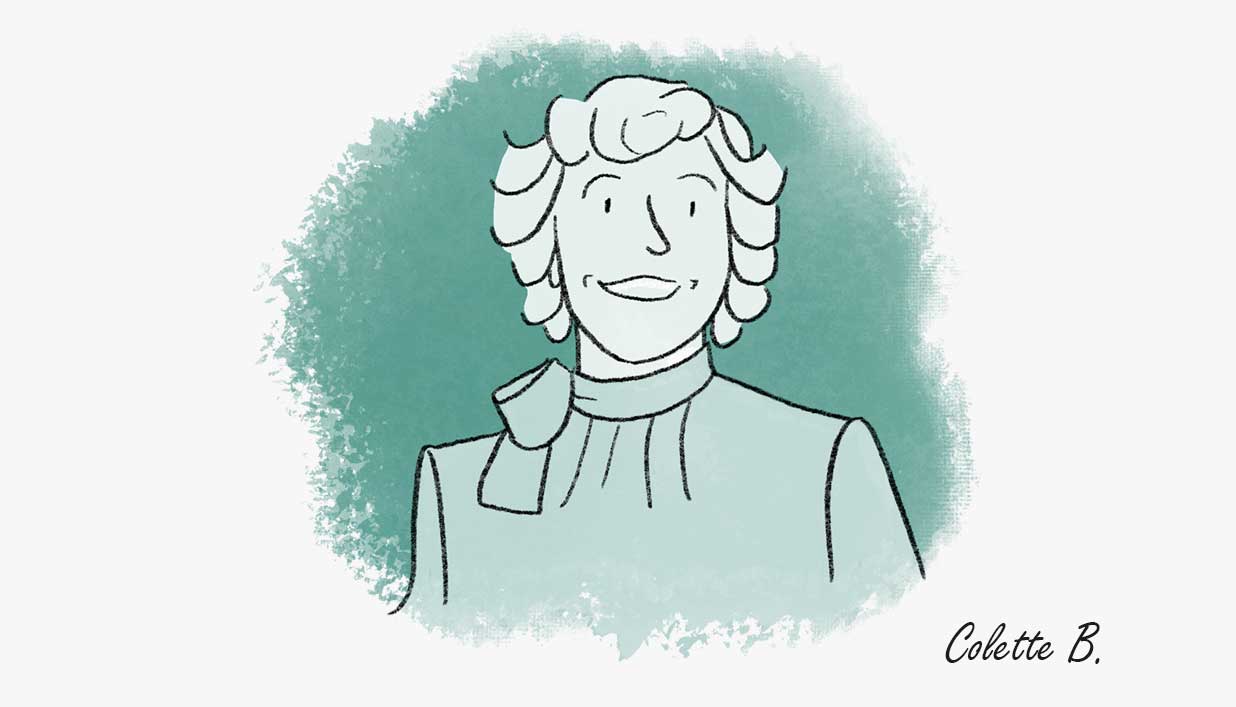
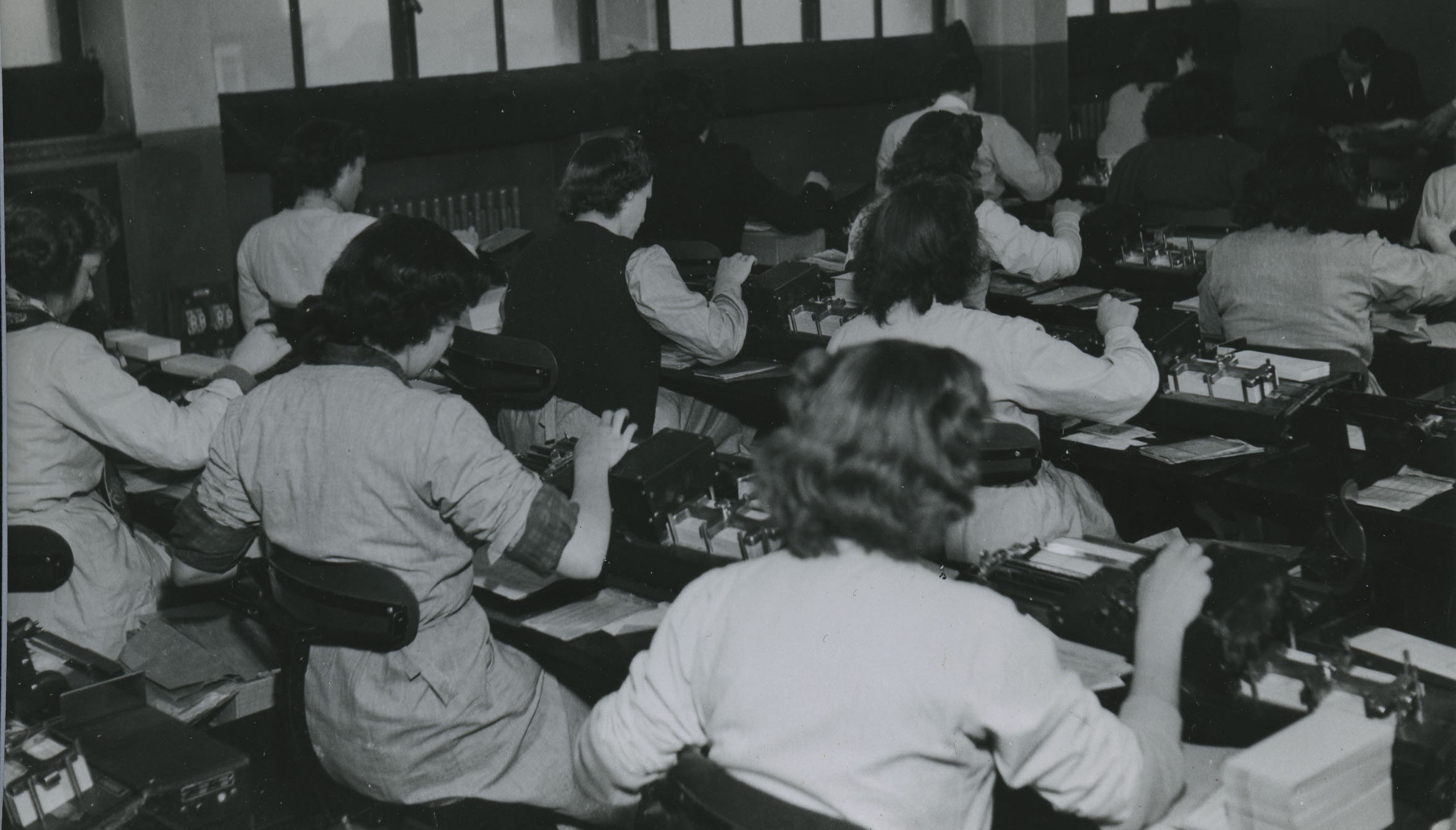
Colette B. began her career at the Bank in 1955, at just 21 years old, and went on to spend her entire professional life there. Her story, which spans the transformations of the banks that ultimately formed BNP Paribas and the changing landscape of the banking industry, has been chronicled in a notebook that she donated to the BNP Paribas Historical Archives. This enhanced life story allows you to hear Colette’s voice, read her personal anecdotes, and explore a wealth of contextual information through accompanying articles. Dive into her life story!
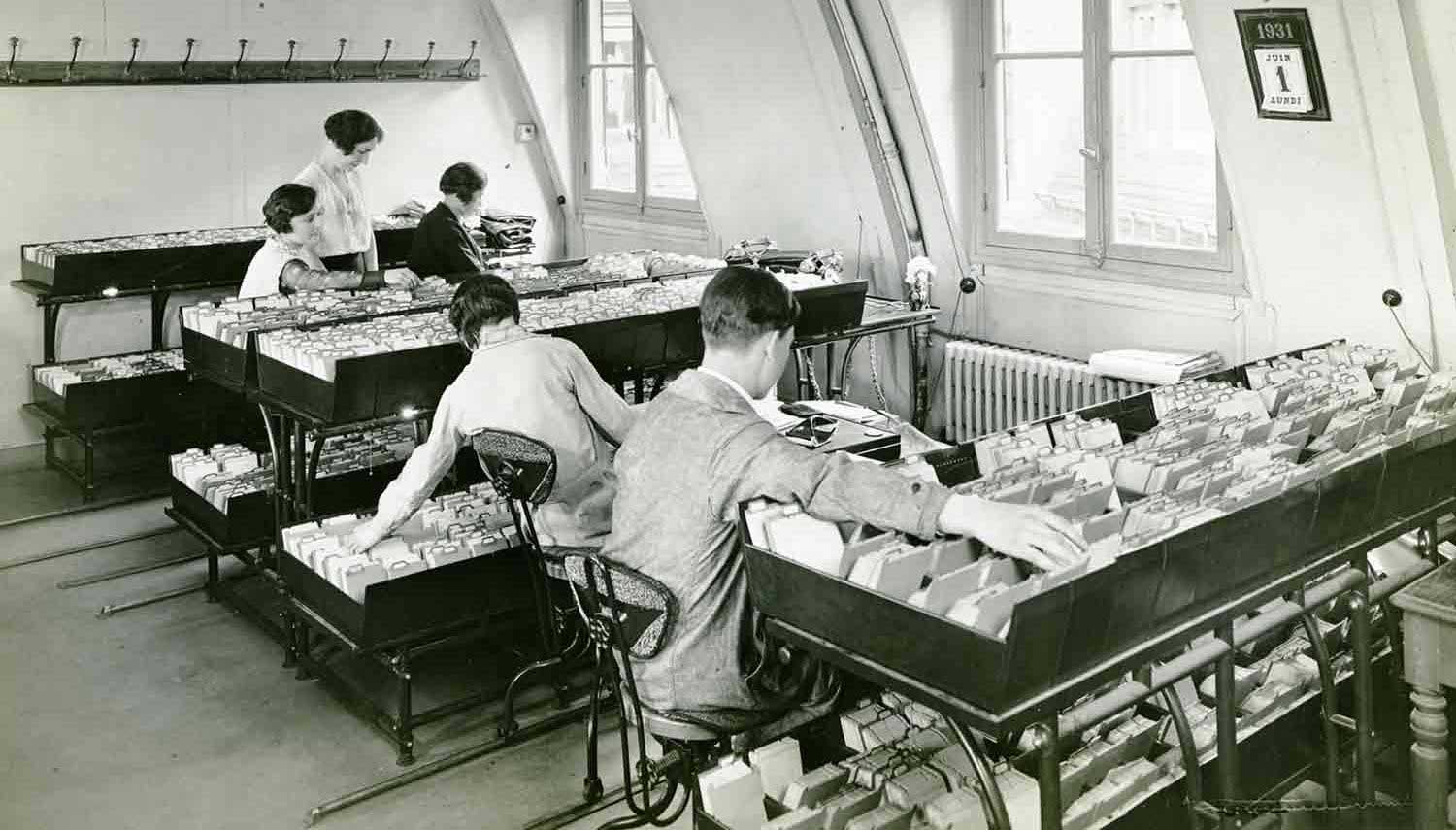
“I joined the Comptoir National d’Escompte de Paris (CNEP) in June 1955, after passing my entrance exam. My division manager assigned me to the Victor Hugo branch in Paris, where I started out working at the counter. This was the traditional starting point, and at the time, account records were still kept on small index cards. Although the work was tedious, I found it rewarding.
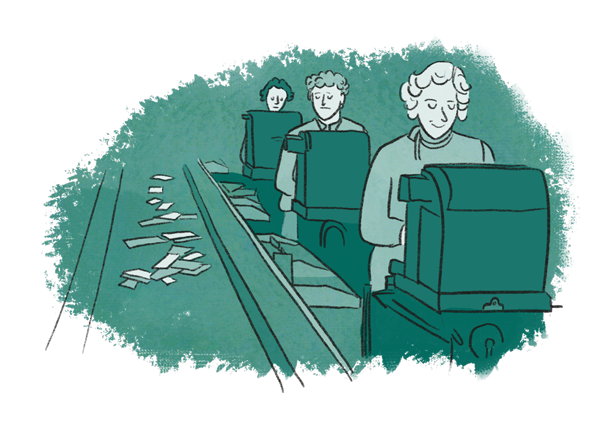
Then, the General Management decided to introduce mechanical machines to modernize account-keeping. Our branch was selected to pilot this new technology, and I was chosen to lead the implementation.
As part of this project, I was sent to the central branch on Rue Bergère in Paris for specialized training. It was a significant step forward in my career!”
And then, well, everyone was a bit worried, because I was coming in to shake things up a bit, especially when it came to managing client accounts. So, everyone was a bit anxious, wondering “how is this going to go?”. So, I had to win everyone over – I’m usually pretty good at that – and in the end, we installed the machines and everything went smoothly. The tricky part was transferring the client accounts from those little hand-held cards to the machines. We had to insert large sheets of paper and then record the account number and the client’s balance, that’s all. So, there was a large card for each client, and it was quite tedious. So, I did it, and the director challenged me, since when it was time to record the company accounts, he insisted that I take the machine, he sat down next to me and… he’s the one who called out all the account numbers and balances. Well, I was also keeping an eye on the time, since it was December 31st and I had a date to celebrate New Year’s Eve, I have to say I was going as fast as I could. Well, I was lucky, I didn’t make a single mistake. So, it was fine, and that kind of… surprised the director a bit. And from then on, he trusted me. Well, I still had to prove myself, of course (laughs), but that’s how it was…
The trial is a success, and the machines are rolled out to all branches in Paris and the surrounding areas. I’m selected to become a mechanography trainer, teaching others how to use these new machines.
Although I’m happy at my current branch, I have to move on. This marks the start of a new phase in my career.
My department head, who is a strong advocate for modernization, offers me his support. He reassures me and lets me know that he’s available to help me with any challenges I may face.
However, as a young woman traveling from branch to branch, I don’t go unnoticed…
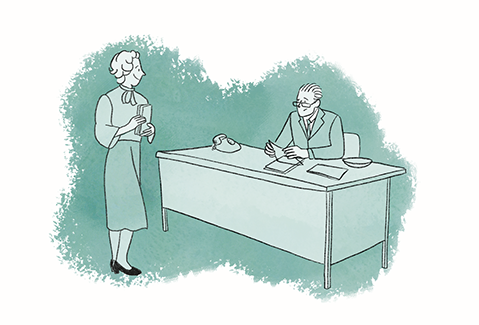
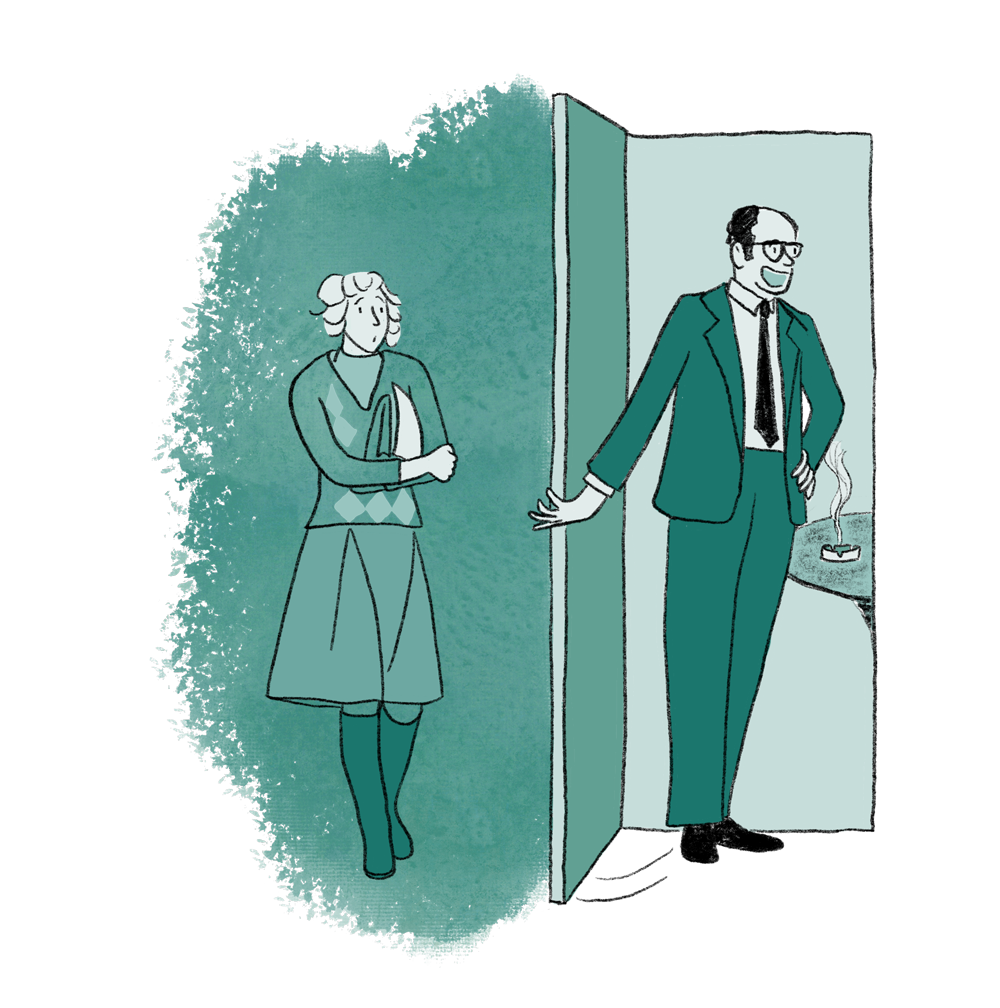
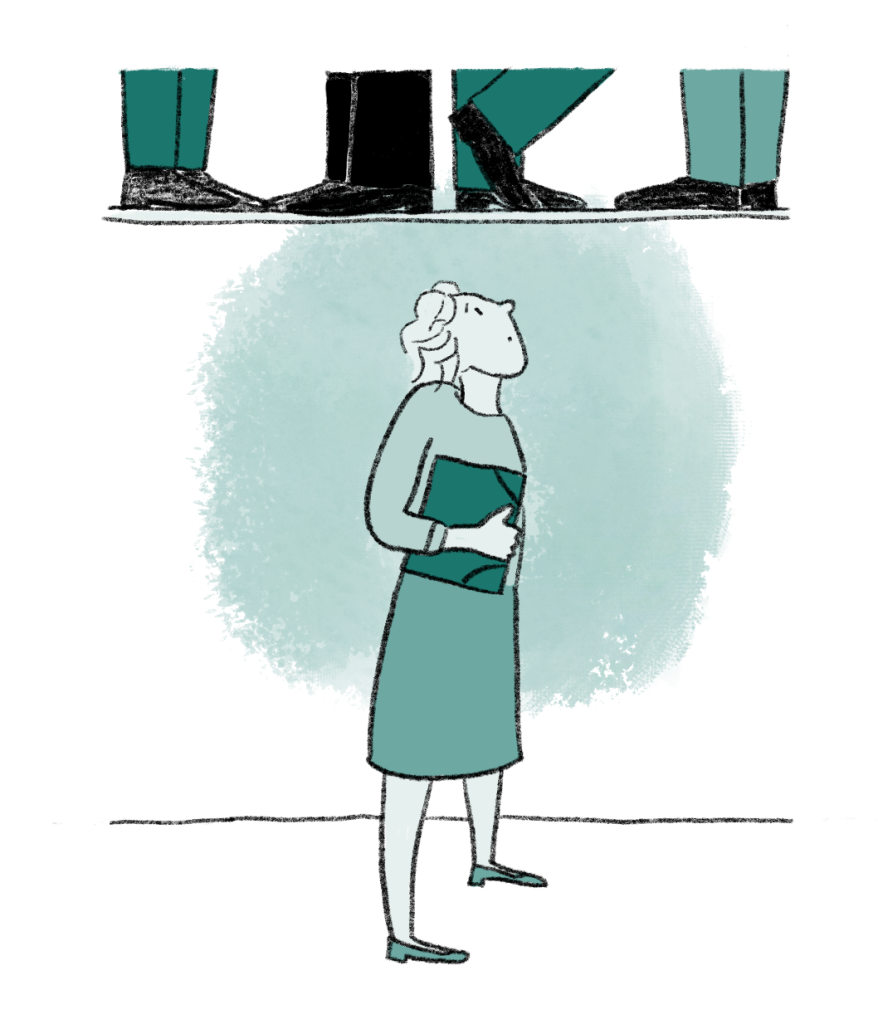
At my third installation, at a Paris branch on the Rue du Commerce, the director leaves me standing in his office doorway for a few minutes, eyeing me from head to toe. It’s a reminder that, as a woman, I’m still an anomaly in this male-dominated field…
My next stop is Le Bourget, a small branch with a team of about 15 people, just north of Paris.
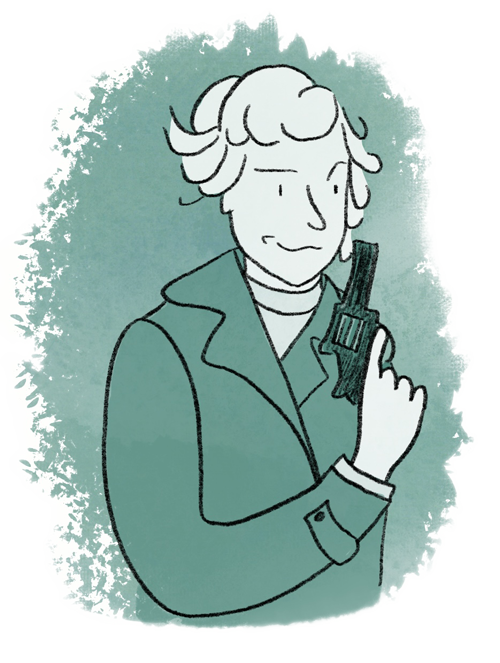
During my time here, I’m given the unusual task of carrying a revolver while I deliver payroll funds to the nearby factories.
The revolver
Read the audio translation
In all the branches, there were revolvers… The head of the department had a revolver in his drawer. Well, at night, it was in the safe, but during the day, every morning, we would take out the revolver and put it in the head of the department’s drawer. We never used it (laughs), but eventually, there were so many accidents with the revolvers that one day they got rid of them. Some people even used them to take their own lives, so they finally got rid of the revolvers… Well, anyway, that day, I wonder, if something had happened, I honestly don’t know what I would have done with my revolver! (laughs)
1966-1968 : The Upheavals
«One evening in June 1966, I was having dinner at my parents’ place when I heard on the radio that the CNEP (my bank) was going to merge with the BNCI. What a shock! Nobody had ever heard of it; the secret had been well kept… What was going to happen to us now?
The “thunderbolt”
Read the audio translation
At first, nothing changed, the early days didn’t change much, we continued to do our job as usual. But one evening, two people from the BNCI management arrived, and they came into the office and had some very unpleasant things to say to my boss, telling him that he was useless, that he didn’t know how to work, and that everything he had done was worthless. And they asked me to liquidate the department because it was no longer needed. Well, I admit that this was something that really affected me, because it was so violent in terms of the language used, it was so violent that it really made me feel ill. To tell you how much this merger marked us, it’s that in the months and even years that followed, when we were from the CNEP, we didn’t say it! Because we were treated like we were nothing. If we were in a department with people from both BNCI and CNEP, the people from CNEP wouldn’t say they were from CNEP because we were told: “You’re good for nothing…” It was a really painful period, very painful. And it lasted for years, we didn’t dare say: “We’re from CNEP”, we didn’t dare say it, because the responses were so violent. We had been, they had to have, at BNCI, said: “Anyway, people from CNEP are worthless, don’t know how to work” and all that, so we were labeled.
Stunned by the news, I couldn’t sleep that night. What was falling on our heads?
Rather than a merger, it was an acquisition by the BNCI, which was much larger in terms of staff and wanted to impose its way of working. They arrived like conquerors, considering us incompetent. I therefore liquidated the service and had all the furniture dismantled, condemned to be scrapped, because nothing was to remain of the CNEP. That’s how BNP was born.” (The opinions and feelings expressed reflect Colette’s personal experience and feelings at the time of the events.)
“A chapter of my life is closing, what’s next for me?”
— Colette
After my bank was liquidated, I met with the person who had been assigned to handle my case. He greeted me warmly and told me that I would need to complete a one-year training program in all areas of the BNCI, to learn their procedures and ways of working. Once I had completed the training, I would be given a permanent assignment.
In addition, all the equipment we had installed in the CNEP branches was replaced with BNCI machines. As a result, we had to transfer customer accounts from the old machines to the new ones. This process was known as the “bascule”, and it had to be done outside of regular banking hours, which meant weekends. It required overtime, but the pay was excellent!
Before we knew it, it was May 1968… Does that date sound familiar to you?
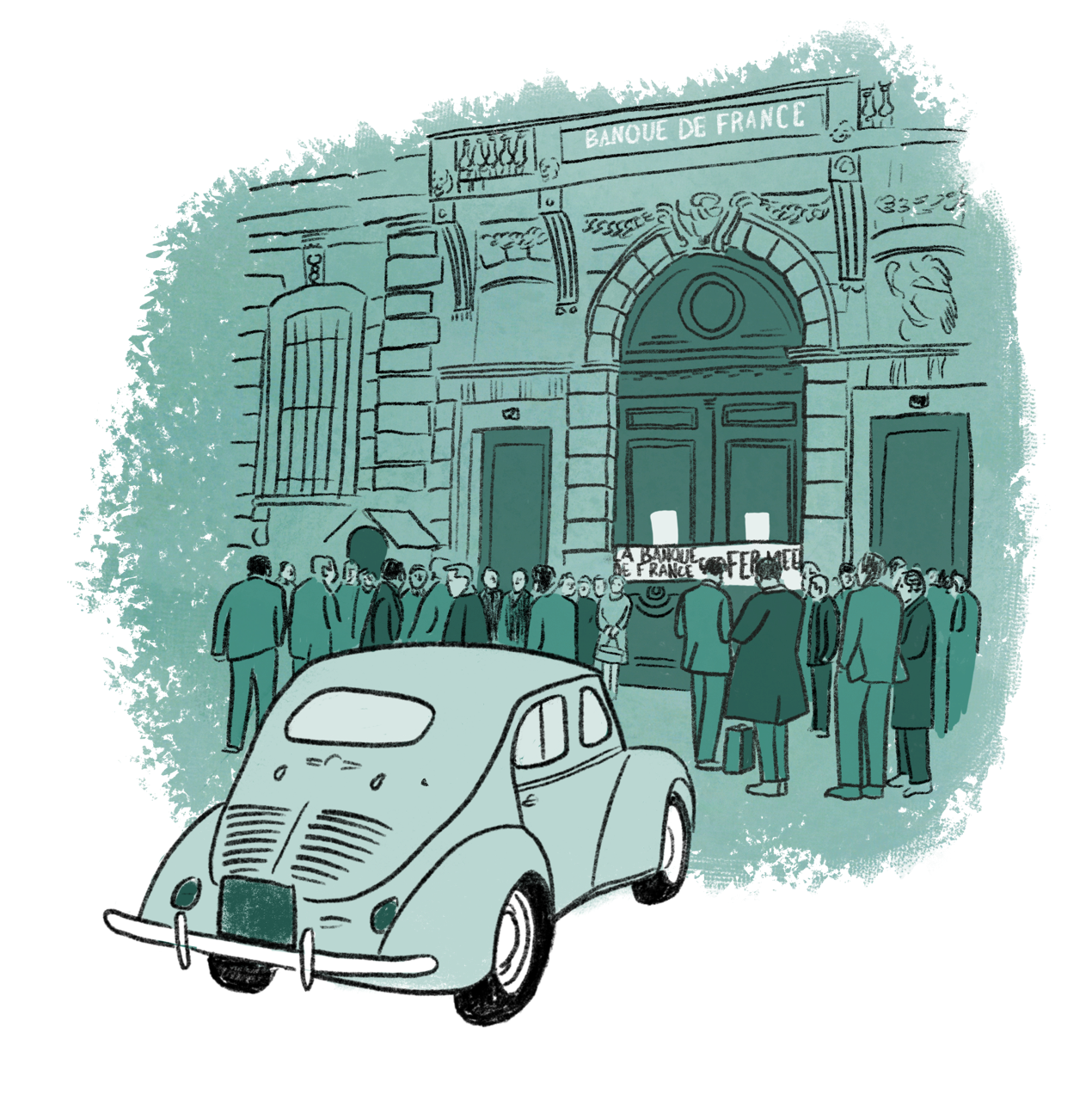
Right in the midst of the riots, a team of three people from my agency decided to make an emergency trip to the Banque de France, located in the center of Paris, to retrieve some cash. They set off in a small car, but they weren’t the only ones to have had this idea…every other bank was there too, waiting in line. The problem was, the striking workers had formed a barricade, blocking access to the bank. And to make matters worse, none of the Banque de France’s armored trucks could get out!
In the midst of the 1968 uprising
Read the audio translation
I went on an internship and during the internship, I found myself in the midst of the 1968 events, right in the heart of the action, because I was interning on Boulevard Saint Germain, which is not far from the Sorbonne, and it was a bit of a special situation… There were constant demonstrations, student protests, where they would throw tear gas at us, and we would receive paving stones in the store, it was a pretty special time. One anecdote (laughs), the students would stick posters on the windows, and the cleaning lady, who was very conscientious, almost got lynched because she was trying to remove the posters (laughs), well, that’s a little aside… And then the day came when we heard on the radio that the banks had run out of money. That was the ultimate moment. So, we arrived in the morning and said to ourselves: “Well, we need to take precautions because things are about to get more complicated.” Indeed, when we arrived, there was already a line of customers waiting outside the door to withdraw their money, because most of them wanted to withdraw all the money from their accounts, of course.
At last, around 4 pm, a cash-laden armored truck broke through and began distributing bags of money to each bank at breakneck speed, without any checks or balances. It was unprecedented – never before had sacks of cash been handed out without anyone knowing the amount or having any control over it. If this hadn’t happened, the situation could have spiraled out of control and turned into a full-blown Revolution!
I completed my internship at the beginning of 1969, at the age of 33, and was assigned to the “Secrétariat Engagement” of the Champs-Élysées agency.
The people assigned to this agency necessarily belong to the bank’s elite! I soon move up to the General Management, on the Boulevard des Italiens, in the “Organization” department. It’s at this point that I become a “manager” or an “executive”.
But after four years in this agency, I get bored. I’m not yet 40, and my career is still ahead of me. My ambition? To become a Chief Administrative Group Manager (CGA): a position of responsibility that involves managing personnel and all administrative tasks.
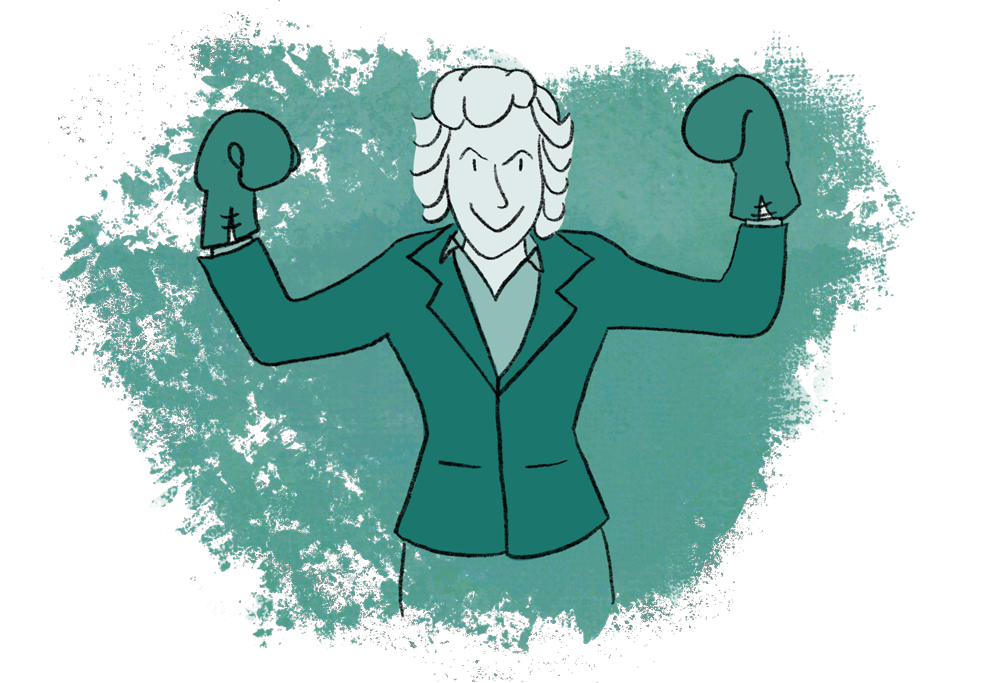
I had decided to return to the agency and to be able to access the position of CGA (General Account Manager). So, of course, my superior told me: “Listen, no, it’s not possible for you to be a CGA, it’s too complicated, it’s too hard for a woman, it’s not possible. It’s rather a job, a function for men and you’ll never make it.” So I said: “We’ll see about that.“
It’s not going to be easy… It’s worth noting that at that time, out of about 55 positions in Paris, there were only two women, both single and childless (because yes, at BNP, if a woman wants to succeed in her professional career, she must not have any family constraints that could hinder her work)… But in the face of my determination, everyone gives in!
So, after a few weeks of training, I land my first job as an assistant at the Gobelins agency, Place d’Italie. I’m reunited with a former boss as the Chief Administrative Group Manager (CGA) who I had known at Boulevard Voltaire. We’re happy to be working together again!
It’s a major group. I’m completely satisfied with my work and I’m learning a lot from the deputy manager. Even though I’m a woman, I’m well accepted by all the staff, including those from the affiliated agencies.
Then, around mid-December 1977, I am transferred to the Kleber agency.
I present myself to the Director: he receives me for about 40 seconds, because he is very, very, very busy. More misogynistic than him, it probably doesn’t exist!
For example, every morning, the Management Committee meets in the boss’s office. In principle, I should be able to attend. But my male colleagues are invited, and not me (after all, I’m just a woman!).
On a completely different topic, during my time, we had a robbery at one of our affiliated agencies, which was quite traumatic.
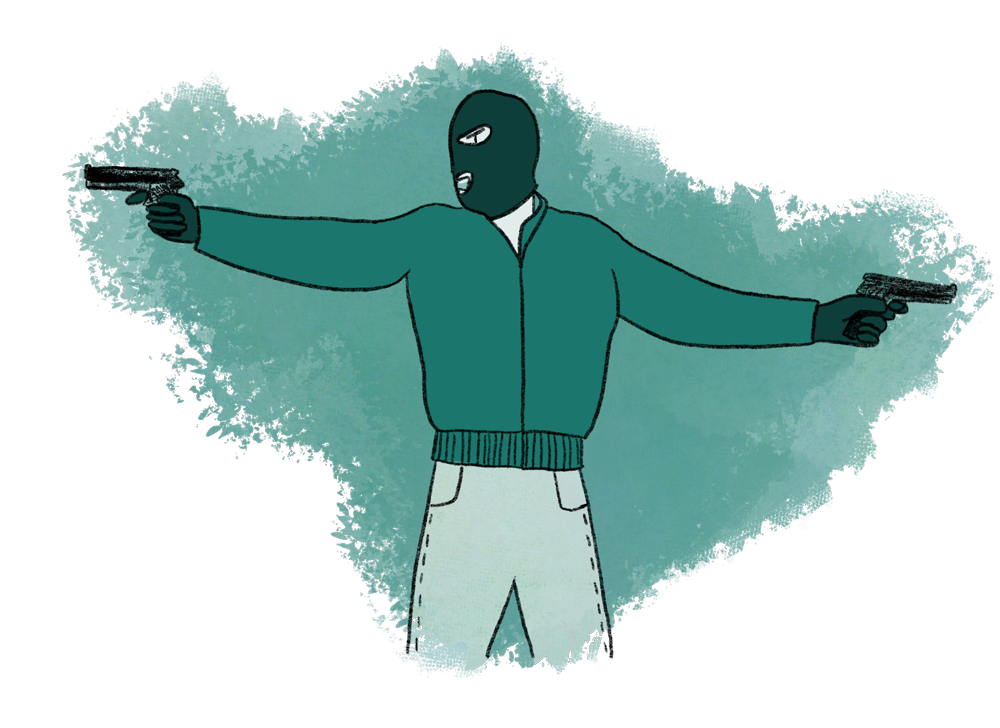
During my career as a Chief Administrative Group Manager, I had to deal with five heists, and I didn’t even count the number of bomb threats… When it happened at my agency, I would immediately close the bank, and then I had to take care of the tellers, who were in shock. We would send them to the doctor to make accident reports, but the social security system wouldn’t take them into account: for them, a heist wasn’t a work-related accident!
Listen to Colette’s good advice in case of a heist!
Read the audio translation
Of course, I never had a gun to my head, but what I always told my tellers was: ‘above all, don’t try to be a hero, and if you’re robbed, just hand over the cash without hesitation, without discussing it, because you never know what might happen. If you try to refuse to give them the money, you might get shot, and I didn’t want anyone to get hurt or worse, you know?
Then, after two years in this Group, my supervisor recommends me for a group leader position, and a few days later, an agency Director recruits me. This Director is one of my former colleagues from the Kleber agency, with whom I got along very well. I’m thrilled!
So, in January 1980, I finally land my first position as a Chief Administrative Group Manager, and I’m promoted to “Deputy Director”. Yay, I did it! I receive a phone call from my former supervisor at BNP’s General Management, congratulating me. He tells me that I was right to be persistent.
1980-1988: a man’s world
During seminars organized by the General Management for our department, I’m often the only woman in attendance…
Colette recounts how difficult it is to advance in her career at BNP Paribas as a woman
Read the audio translation
At that time, women’s careers were not particularly encouraged. Women who wanted to advance in their careers had to fend for themselves and assert themselves. That’s just the way it was, and otherwise, no special support was given, no… There were very few women who managed to secure important positions. It was quite rare, actually. Because in group management, well, at that time, there were about fifty groups, and not a single woman was a director, not one. And when I left the Boulevard Saint-Michel group – the Director changed at the same time as me – I left, and a woman took my place. And she was the first woman to become a group director. So, things were starting to evolve, but it was 1988 when I left.
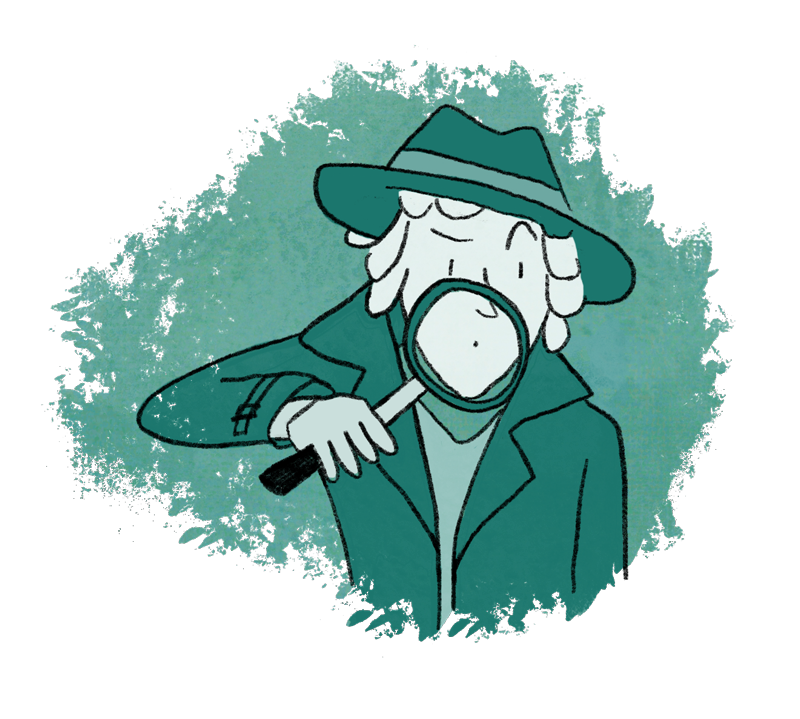
I began my career as a CGA (Chief Administrative Group Manager) in the upscale antique dealers’ district, near the National Assembly. And what a start it was! One morning, I received a call from the head of BNP’s security team, informing me that our office had been burglarized. This was just weeks before the 1981 presidential election, and I suspected that the thief might have been after sensitive documents stored in a deputy’s safe.
Later on, I faced the largest embezzlement case of my career. A teller had stolen 12,000 francs, a significant amount at the time. After uncovering the malpractice, I had to get the teller to confess, which took me a week – he was quite stubborn.
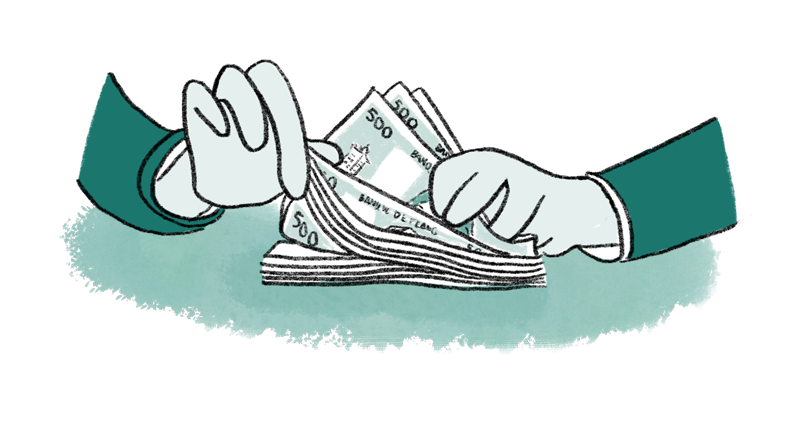
During my tenure in this group, I also handled the largest cash transaction of my career. I had to hand over 2 million new francs in 500-franc bills to a British client who wanted to purchase a valuable artwork from an antique dealer. It was a nerve-wracking 48 hours – if it was a scam, my career would be over.
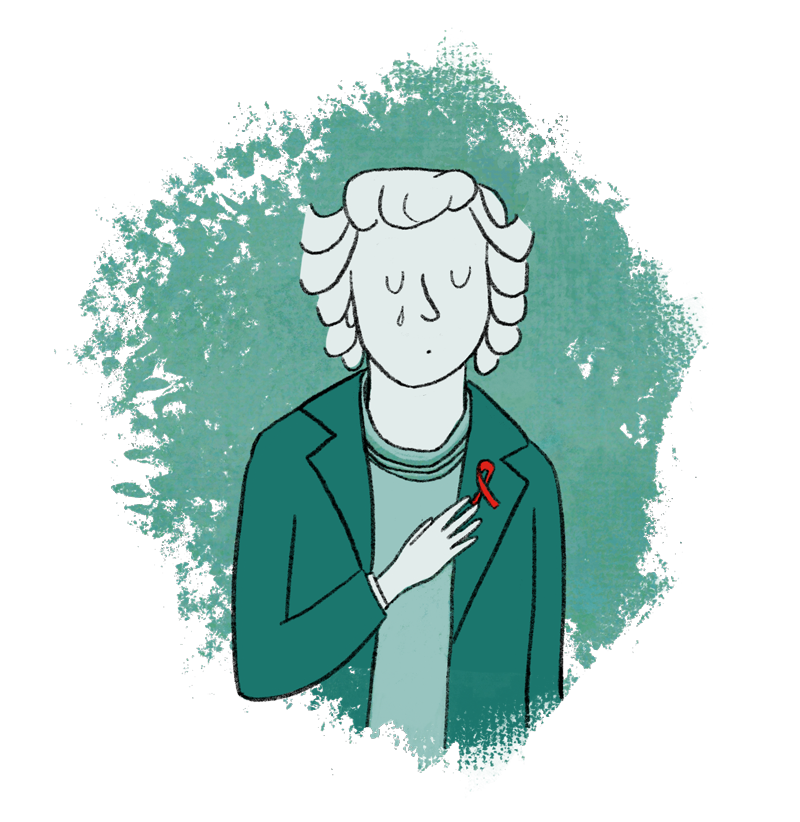
After spending two and a half years in this group, I was transferred to Asnières. Sadly, during my time in the previous agency, I had to deal with the loss of an employee who passed away due to AIDS…
Colette recalls the loss of a colleague
Read the audio translation
I had a teller at one of my branches who contracted AIDS. This was back in 1987, when the epidemic was just starting to emerge and we didn’t know much about it. His colleagues were afraid of him and didn’t want to interact with him anymore. The branch manager called me and said we needed to do something because the situation was becoming problematic. I reached out to the BNP’s medical service for guidance, and they advised me to have the staff get tested. A few of them did, and thankfully, they all tested negative. However, the young man’s condition rapidly deteriorated, and he eventually stopped coming to work. Sadly, he passed away soon after.
After two years at the Asnières agency, the Director suggested my candidacy to become Deputy Director, but unfortunately for me, the General Management did not share the same opinion.
I was then offered another assignment in July 1988: the Gambetta agency in Paris. It was a much smaller team. This would be my last position.
The two years that followed were the worst of my career. My Director made my life a living hell. Little by little, my morale deteriorated. I slept poorly, had nightmares, lost my appetite, and my husband worried about me.
Colette’s husband provided unwavering support
Read the audio translation
I was very lucky in my personal life to have a husband like I did… Because… there were days when I came home, not only tired but also frustrated, having endured a lot, and I always had my husband’s support, which was very important because when you come home and don’t have support, well… he had nothing to do with the bank, but I would explain everything to him. I don’t know if he understood, but he listened and always helped me through those difficult times. I was very lucky.
At that time, women could retire at 55 at BNP. But since I didn’t have enough quarters to receive a full pension, I “re-upped” for another year, until my departure in February 1992.
The CGA position was later abolished after I left. They finally realized that the task was too heavy, so they decided to split the work in two. In my time, we had both: personnel management and administrative tasks.
Ah yes… Who thinks that working at a bank is a quiet and peaceful life?
Colette looks back on her long career at BNP one last time
Read the audio translation
I had a professional life where I really thrived. I don’t regret anything about my professional life, even if I prioritized it over my family life. Well, I didn’t have children, and that’s because I chose not to. But I admit that I had a professional life that I really enjoyed. Even in difficult times, I don’t regret anything about my professional life. I really loved my professional life, really. […]