May 1968 and its Repercussions
BNP, like the entire banking sector, was affected by the events of May 1968. But it was a time bomb that would explode six years later, in 1974, when the banking world experienced its own “revolution”. From May 1968 to the spring of 1974, a look back at the “May” of the banks.
The banking sector is not immune to the wave of protests that is sweeping through French society…


Two years after the merger between the Comptoir national d’escompte de Paris and the Banque nationale pour le commerce et l’industrie, BNP had survived its baptism by fire in May 1968. In fact, it had emerged even stronger from the experience.

« These events, which should have caused serious turmoil in a still fragile institution, had the opposite effect: they cemented the unity of two communities at all levels »
— Pierre Ledoux, former-President at BNP,
Dialogue, 61, 1986. PER2198601EL
The legacy of May 1968
Since May 1968, the world of work in banking has undergone profound changes.
In 1967, the requirement for banks to obtain authorization before opening new branches was lifted. As a result, the number of bank branches doubled between 1966 and 1974. The acceleration of the banking sector’s expansion, as well as the diversification of banking activities, also contributed to a more intense work pace for bank employees.
At the top of the list of demands were salaries, particularly for women, who were paid less than their male colleagues. Young employees were not left out, as they were more educated and clashed with the more traditional and authoritarian management style of the banks. Finally, older employees also demanded change and had retained the reflex to mobilize from the May 1968 experience.

Strikes broke out in 1971, 1972, and 1973, and culminated in the spring of 1974.
1974: The Violent Aftermath of May 1968
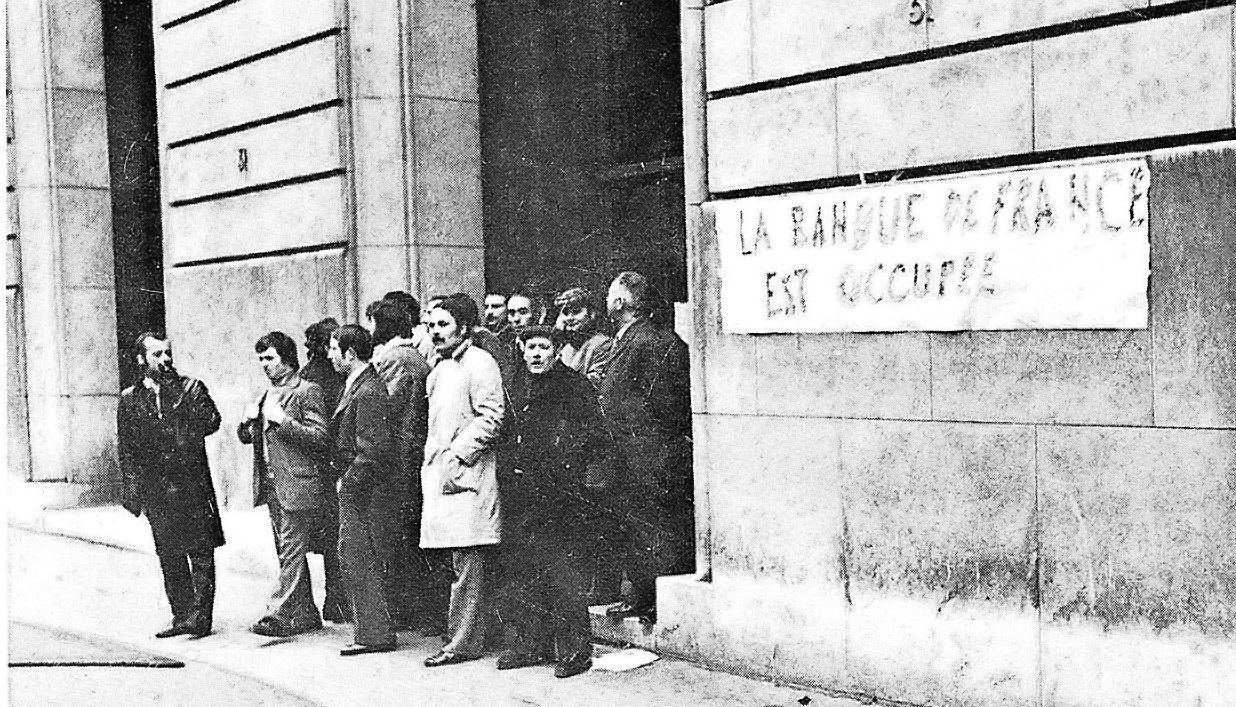
In the spring of 1974, the banking sector experienced its most severe period of social unrest. Just like in May 1968, everything started at the headquarters of the Banque de France, where the police were sent to break up an occupation.
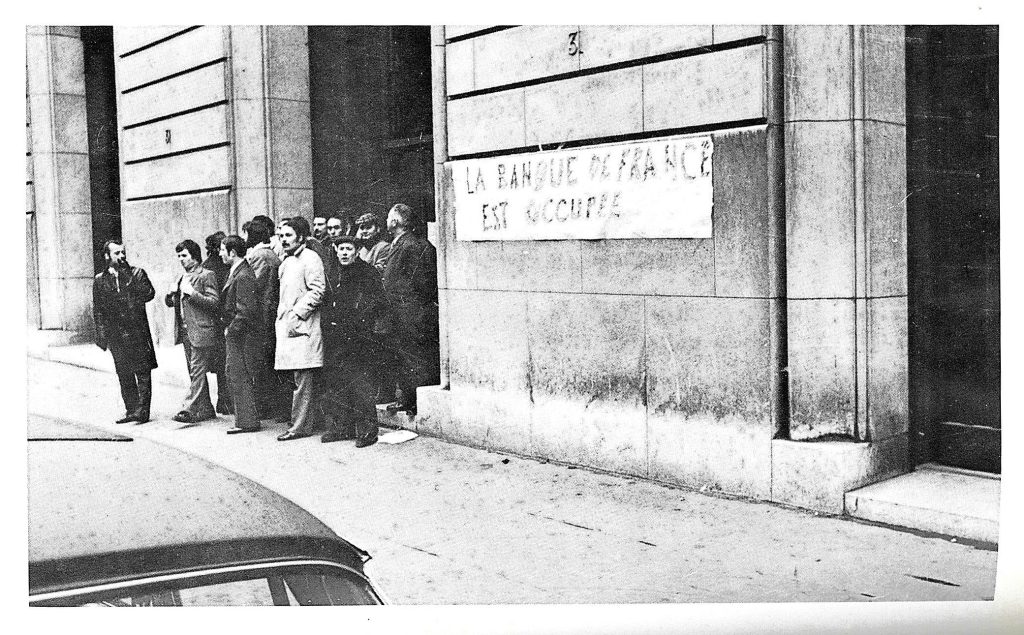
The strike spreads to all banks, initiated by the CGT, soon joined by the BNP and other major unions in the profession (FO, CFTC, and SNB). The movement far exceeds the 15% of unionized workers, bringing together all types of employees, including management.
In Paris, a large demonstration brings together between 40,000 and 50,000 bank employees from all over France. “Down with profits, raise our salaries!”
The 1974 strikes massively revived the codes of May 1968. At BNP, employees were particularly invested in their strike committee. In Paris, the headquarters on Rue Bergère and Barbès were occupied, and work was interrupted in Marseille for 15 days. These were also festive moments, with little violence despite the presence of external political militants. During the occupation at Bergère, a troupe of puppeteers even performed a show!
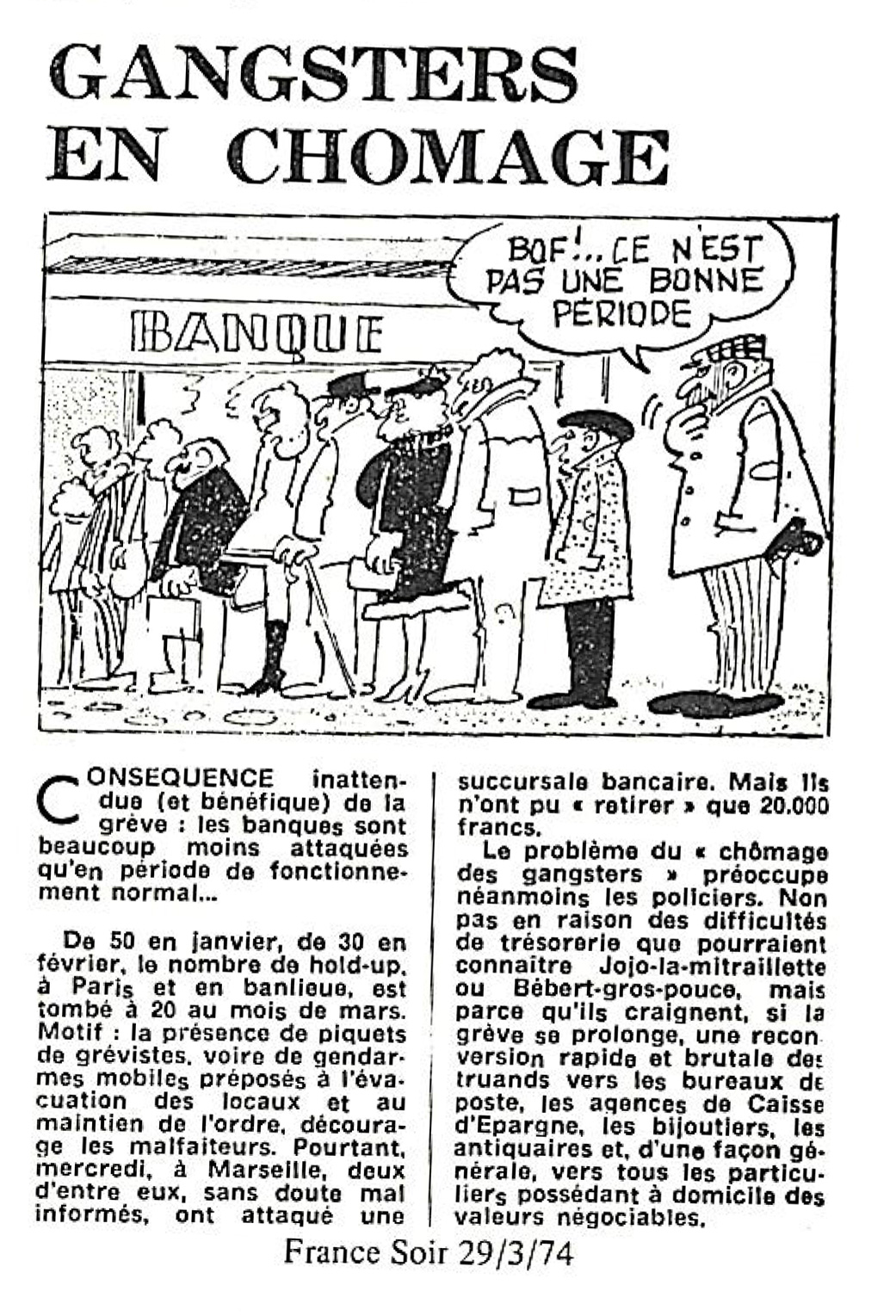
To conclude, an unexpected consequence of this strike that paralyzed the entire banking world: with branches already under siege by picket lines, the gangsters are out of work!
Pour aller plus loin :
Quand les banquiers criaient “A bas les profits !” | France Culture


Did you enjoy this story ?
This selection of articles might also interest you!