


1999: Switch to the euro – a challenge for banks

The turn of the 21st century marked a historic turning point. On January 4, 1999, the euro came into force, later becoming—three years on—the single currency for millions of Europeans. To prepare for this economic, technological, and commercial transformation, BNP and Paribas mobilized significant resources over several years. extensive means over several years to prepare for the economic, electronic and commercial change.
Preparing people and systems for the advent of the euro
On January 4, 1999, a landmark shift occurred: the euro officially came into force across the eleven member countries of the eurozone within the European Union. As a result, the French franc—a currency established under Napoleon I—was phased out in favor of the new European monetary unit. At that time, the conversion rate was fixed at 6.55957 francs to one euro.
Initially, however, the euro existed only in non-cash form, meaning it was used exclusively for bank transactions and accounting. Physical coins and banknotes, meanwhile, would not enter circulation until three years later—on January 1, 2002.
For French and European banks, this transition was not just a change but a defining challenge. Consequently, they had to approach it with both efficiency and meticulous planning to ensure a seamless shift for millions of customers.
At BNP, mobilisation began in 1996 with a budget of FRF 1.7 billion.
By the end of 1997, nine hundred bank employees were working on the question of making the euro accessible to all customers in 1999. Managers, IT engineers, marketers and HR officers were all committed to the project.
The challenge was above all an IT one, as 60,000 programs had to be updated to ensure that accounts were converted to euros. Five hundred specialists worked full-time to achieve this.
Assisting bank clients
Trans European Banking Services (TES) was established in 1997. The partnership between BNP and ten other European banking institutions was intended to facilitate trans-frontier transactions by centralising payments in and out from a single account.
The purpose was to reassure both corporate and individual clients. A communication campaign therefore highlighted the BNP “Operation Euro”.
In branches, the “Eurokiosk”
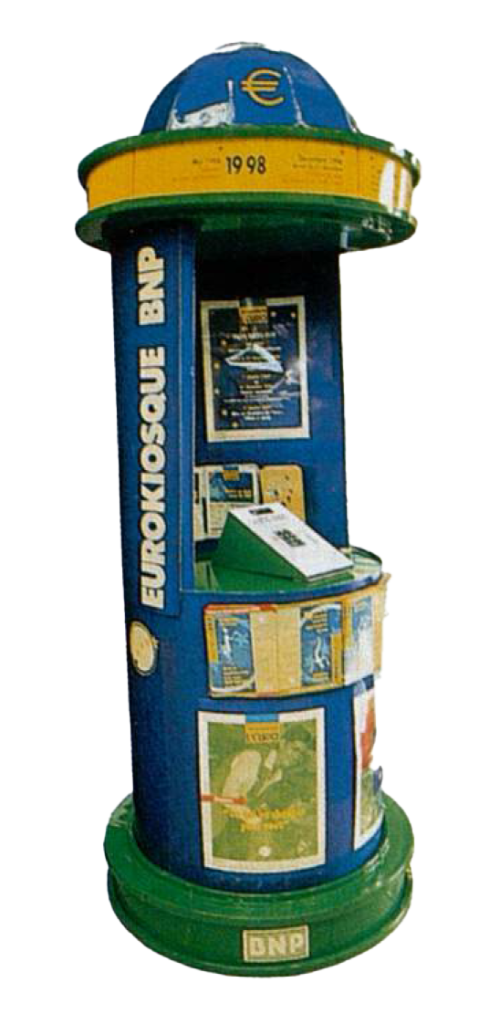
From 25 November 1997 until 2002,the bank fielded a euro awareness area – the Eurokiosk – for clients in its 2000 branches. The kiosk, which was as broad as a “Morris” advertising column, featured instructional posters and brochures.

The recruitment of 5,000 Euro Angels
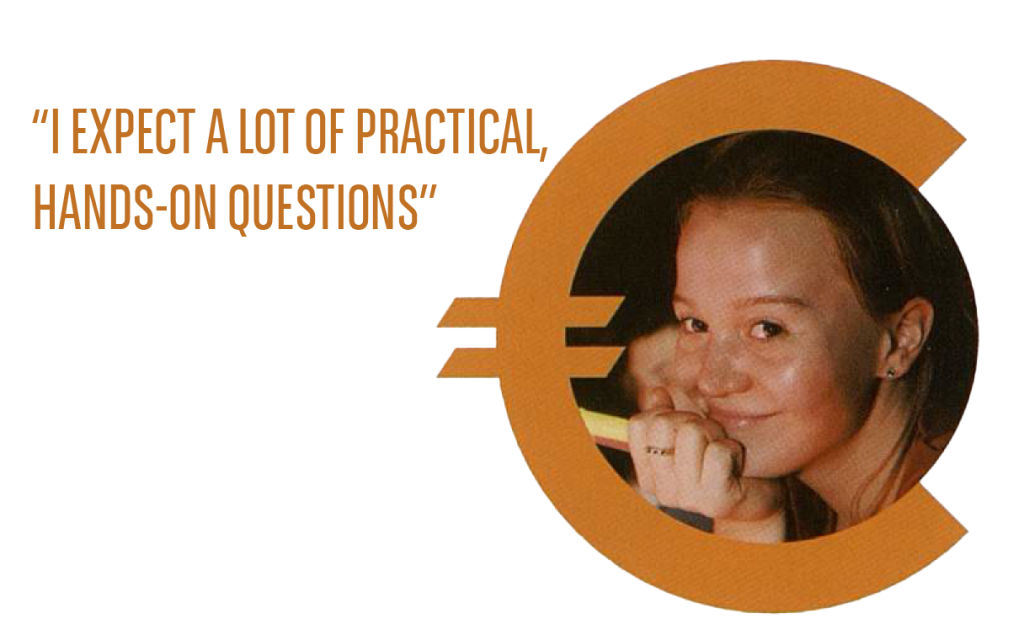
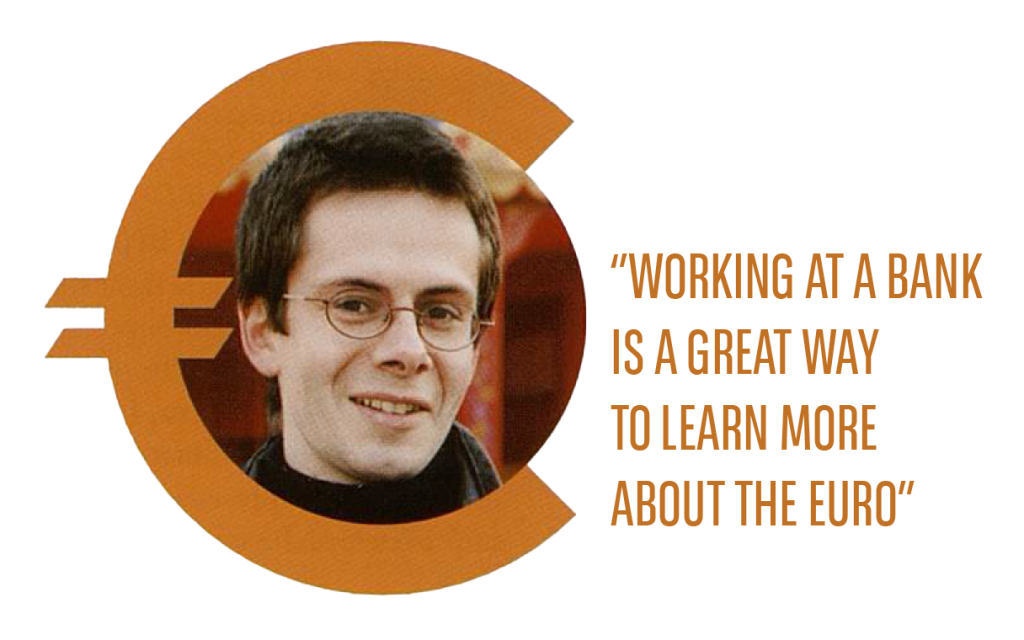
Then, on the eve of the euro’s arrival in 2001, the bank enlisted students—dubbed ‘Euro Angels’—to support customers in branches. Working alongside permanent staff, the 5,000 recruited Euro Angels helped answer client questions about the euro and guided them through this significant transition.
Raising awareness among younger generations about the euro
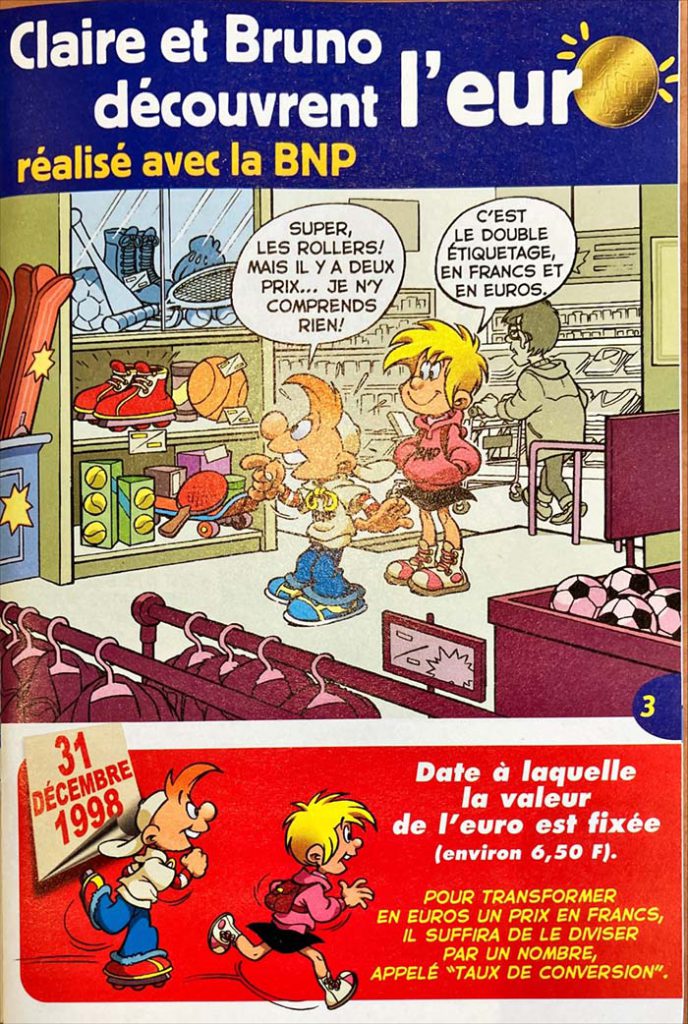
Le journal de Mickey
In 1998, BNP, in partnership with Disneyland Paris and Le Journal de Mickey, created a special mini-edition of Le Journal de Mickey dedicated to teaching children about the euro
Paribas celebrated the birth of the euro on 4 January 1999 with an advert published in the Financial Times, The Economist, Forbes and The Wall Street Journal that stated “Get the Euro working for you with Paribas”.
Also worth listening to:
Read the transcript
ATM Stories – Always Telling More by BNP Paribas – the podcast that goes behind the scenes to bring you some little-known stories about the bank. These moments that have shaped the character and culture of a 200-year-old group, to be enjoyed anywhere and at any time!
Transition to the Euro: Banks rise to the challenge of transforming their procedures and acculturating their customers in just two years
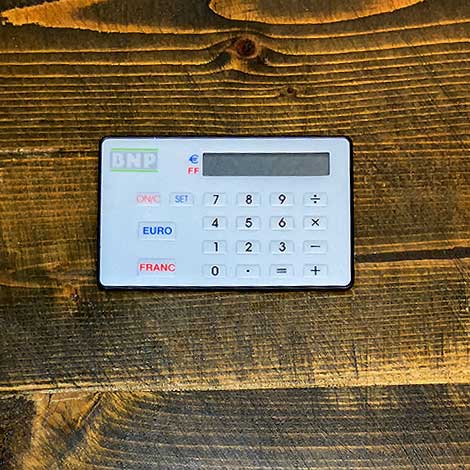
Today, we’re going back to the time when every French person had a franc-converter calculator.
That means heading back about 20 years. In those days, currencies still included marks, lira, pesetas, francs, and so on.
But not for much longer.
The Brussels summit in May 1998 determined the 11 countries that would make up the eurozone and would have to change their money habits. That gave economic agents two years from 1 January 1999 to 31 December 2001 to change over to the euro.
It was a revolution. One that was supported and guided by banks. That’s right. It was a major challenge for the bank. In terms of communicating, getting employees and customers accustomed to the new currency, handling technical and IT aspects, and in terms of timing. The race against time had begun, to achieve the final and complete transition to the euro on 1 January 2002.
From then on, everything was designed and planned to make sure that the transition would take place in the best conditions. A series of actions to raise awareness about the euro was launched.
At BNP, eurokiosks, inspired by urban culture kiosks were installed at bank branches as early as 1997 to help answer all customer questions.
“The euro is coming soon…. BNP helps you prepare your clients by introducing eurokiosks.”
Which will remain in place at all BNP branches until 2002. Like real press kiosks, eurokiosks will include posters, magazines and special phone numbers that will be updated periodically.
Do I need two chequebooks? Will I need to change my card? How can I issue a cheque in euros from a Swiss franc account?
Any question that people could think of about dealing with this great change could find their answers at these eurokiosks!
Communication tools adapted to individuals and professionals aged 7 to 77
Also, to raise awareness, the magazine “Euro News” was launched in November 1997. The publication analysed and communicated all the latest news on the future currency.
On the agenda: special features, advice, practical information and in-depth issues relating to the euro. Enough material to give anyone the opportunity to become an expert on this new monetary world!
In addition to raising awareness of private individuals, BNP also paid careful attention to professionals.
To support them through this major change, the Bank published a detailed document in January 1998 entitled “Preparation guide for companies to transition to the euro.”
And since all this theory would be nothing without practice, BNP offered each client the opportunity to get started, and incur expenses in euros from their account as of 1999! It was an effective way of quickly getting used to it and getting ready for 2002.
Young people were another key focus in raising awareness about the euro. That’s why targeted actions were also implemented.
BNP teamed up with the Journal de Mickey to introduce the euro to new generations.
The cover of the magazine was titled “L’euro c’est facile, une super BD des Castors juniors, réalisée
avec la BNP.”
The report featured three beavers, who were heroes of this story about money.
Young adults were also addressed in a programme entitled “Europe of 2000 young people” supported by BNP in collaboration with NRJ, McDonald’s and the Groupe France Television. The aim was to introduce Europe to these young adults as at the beginning of the year 2000.
And BNP guided them through their journeys by opening an account in euros and offering them a bank card that they could use to pay in euros and other European currencies.
The bank also turned to young people to support clients in getting used to using the euro. These student jobs were created to educate older generations about the euro. These “Euro Angels”, as they were called, were taught all the secrets of the future currency.
Hands and machinery mobilized to support this revolution
But all that was only the visible part of the changes that were taking place throughout the monetary transition….
Behind the scenes, bank employees were more active than ever to make sure the transformation would go smoothly. In anticipation of the 1999 deadline, the bank was committed to organising the technical aspects of the coexistence of the euro and the franc.
“That means 60,000 computer programmes, which have so far been operating in francs and for three years will have to be based in both francs and euros.”
As of 1 January 2002, there was no turning back:
-all accounts and accounting would be kept in euros
-all non-cash means of payment would be denominated in euros
-all contracts, including contracts in French francs, were executed in euros
We had to get ready. And all bank employees were mobilised.
The Cetelem euro flash, an internal document from June 2001, reported on the progress of the transformation work before the big date of 1 January 2002:
“The changeover of general accounting to the euro was successful. This complex transition involved converting 5 million accounting entries. Technical teams were mobilised throughout the period, including weekends, to run IT and interim checks. Final approval was given on Sunday, 27 May. After this crucial step (…) we could consider that the IT component of the Euro project was 75% complete. Other ‘peripheral’ accounting software programmes still needed to be gradually transferred (invoicing, management of fixed assets, etc.), which is expected to take place between June and September”. All human and technical resources were implemented to ensure that the change would go as smoothly as possible.”
1 January 2002 marked the official introduction of the euro in our lives. But the bank’s work was far from over!
After that, the objective was to introduce the euro into the system as quickly as possible, through ATMs and by working with retailers, who would play a key role in developing the circulation of coins.
The franc was still present on the market. The final step involved gradually removing francs.
As such, for 10 years until February 2012, banks worked together to collect, free of charge, the national currency of francs, thus permanently switching to the single currency: the euro.
This large-scale operation seems far behind us, because the euro has become such an integral part of our daily life. But it encompassed a genuine feat of management and communication!
Even though today, paying in euros feels natural, it is always fun to reflect back on that period of great change.
A period of the new millennium, its potential IT bug, and its new currency that would radically disrupt the way we did things. But who would have thought all that would be so quickly forgotten? In fact, now, how many of you can say how much 100 euros is in francs?
Another fascinating story from ATM Stories – Always Telling More. We will be back again very soon with more interesting stories from the history of BNP Paribas.
Mounting challenges
As early as 1996, BNP Paribas’ IT teams mobilized to prepare for the ‘Y2K bug,’ a potential malfunction threatening networked computers and thousands of ATMs. Essentially, all devices with a processor and an electronic clock were at risk.
In the second half of 1999, emergency response measures were implemented, and ‘Year 2000’ compatibility checks were conducted with BNP Paribas’ clients and suppliers
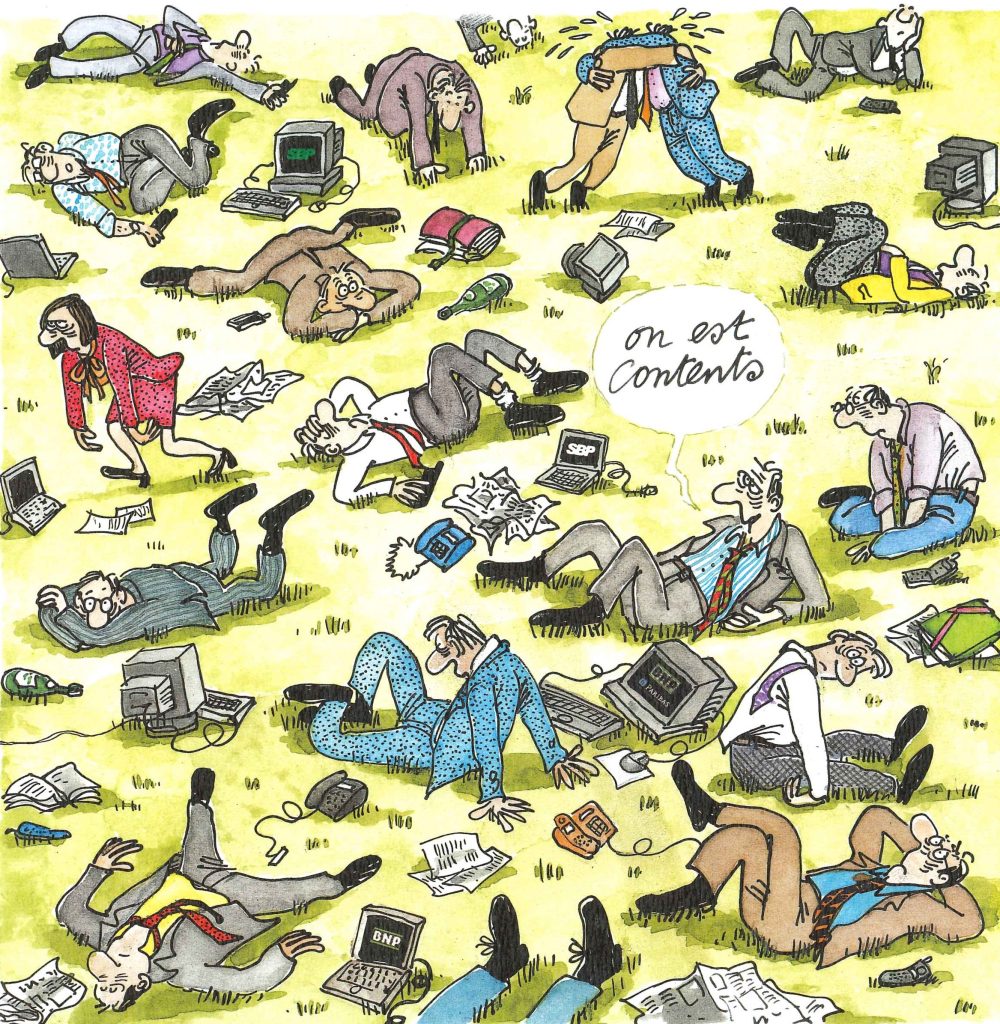
New Year’s Eve Night
On December 31, on the eve of the leap into the 21st century, banks closed their doors to focus on massive data backups.
IT teams spent New Year’s Eve in front of their screens.
In the end, the transition went smoothly—no issues, no bugs.
The year 2000 brought another major challenge for the bank: merging the IT data of BNP and Paribas following their union. This operation was successfully carried out as part of the bank’s ongoing transformation.
A selection of posters about the euro:
-
Poster from the BNP Paribas Historical Archives (4AF594)
/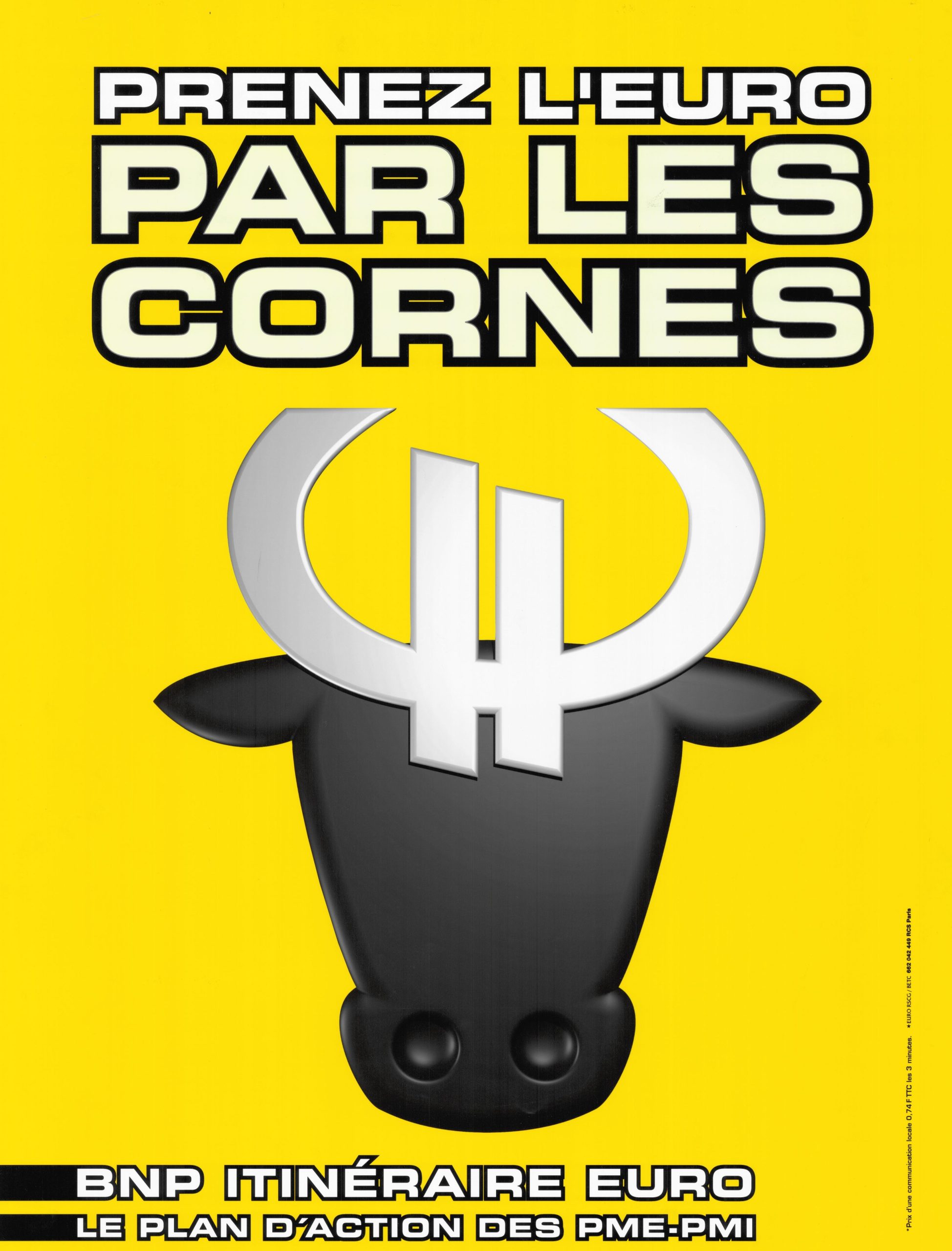
Poster from the BNP Paribas Historical Archives (4AF594)
/ -
A playful nod to the future currency in 1998, as preparations were underway for the euro’s introduction on January 2, 1999. (BNP Paribas Historical Archives – 4Fi1100)
/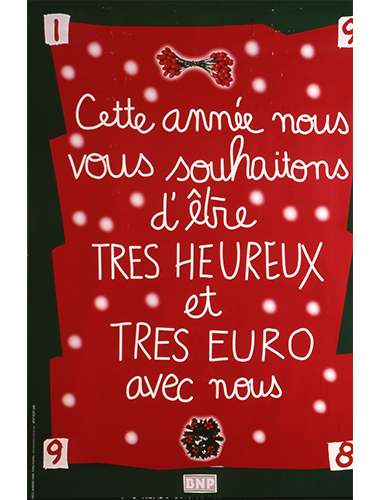
A playful nod to the future currency in 1998, as preparations were underway for the euro’s introduction on January 2, 1999. (BNP Paribas Historical Archives – 4Fi1100)
/ -
1998 Poster – BNP Paribas Historical Archives (4FI475EL)
/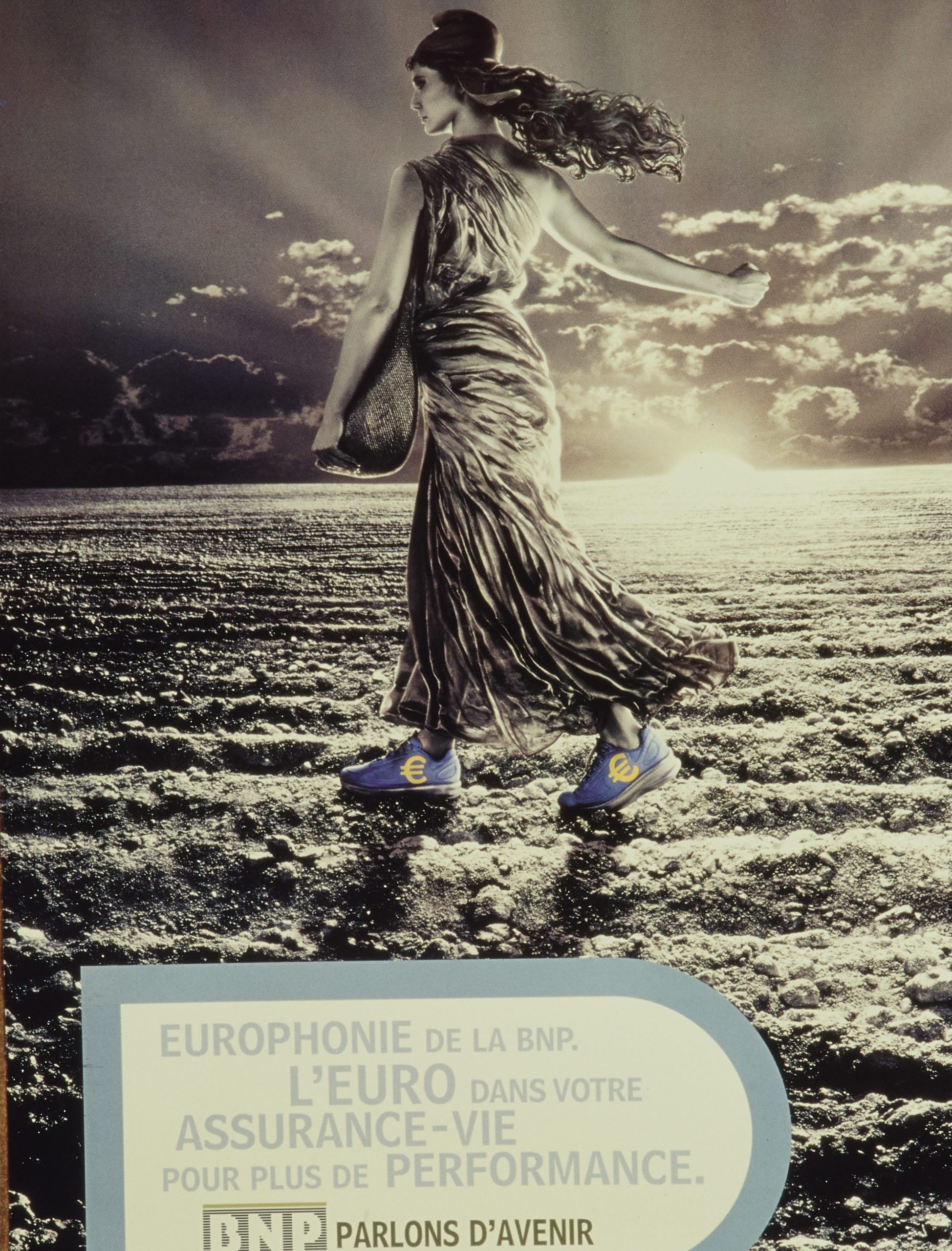
1998 Poster – BNP Paribas Historical Archives (4FI475EL)
/ -
February 2001 poster for the transition to the euro – BNP Paribas Historical Archives (4FI538EL)
/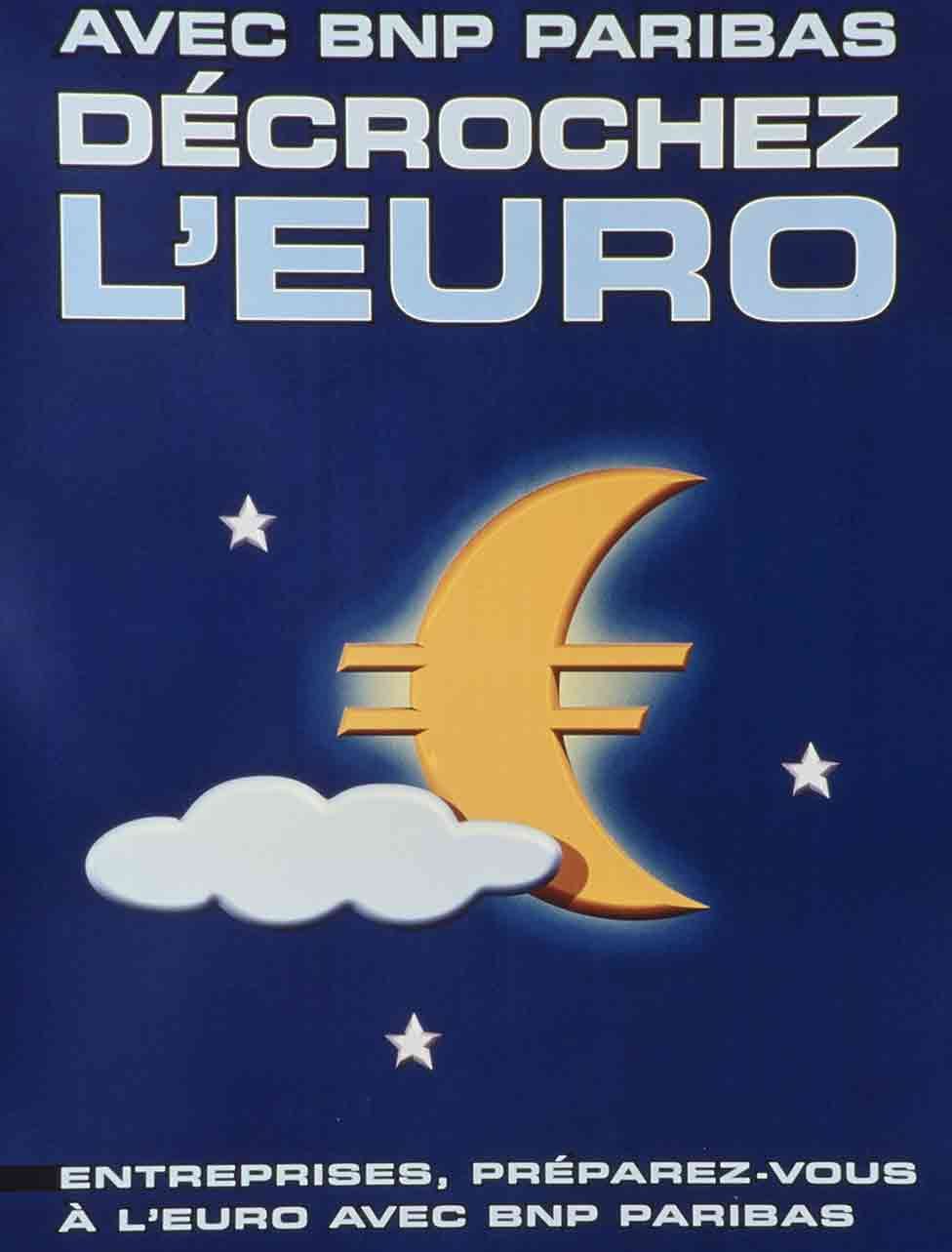
February 2001 poster for the transition to the euro – BNP Paribas Historical Archives (4FI538EL)
/ -
International campaign under the slogan ‘Mastery, not mystery’ — (FRAHBNPP_PER2_1999_01)
/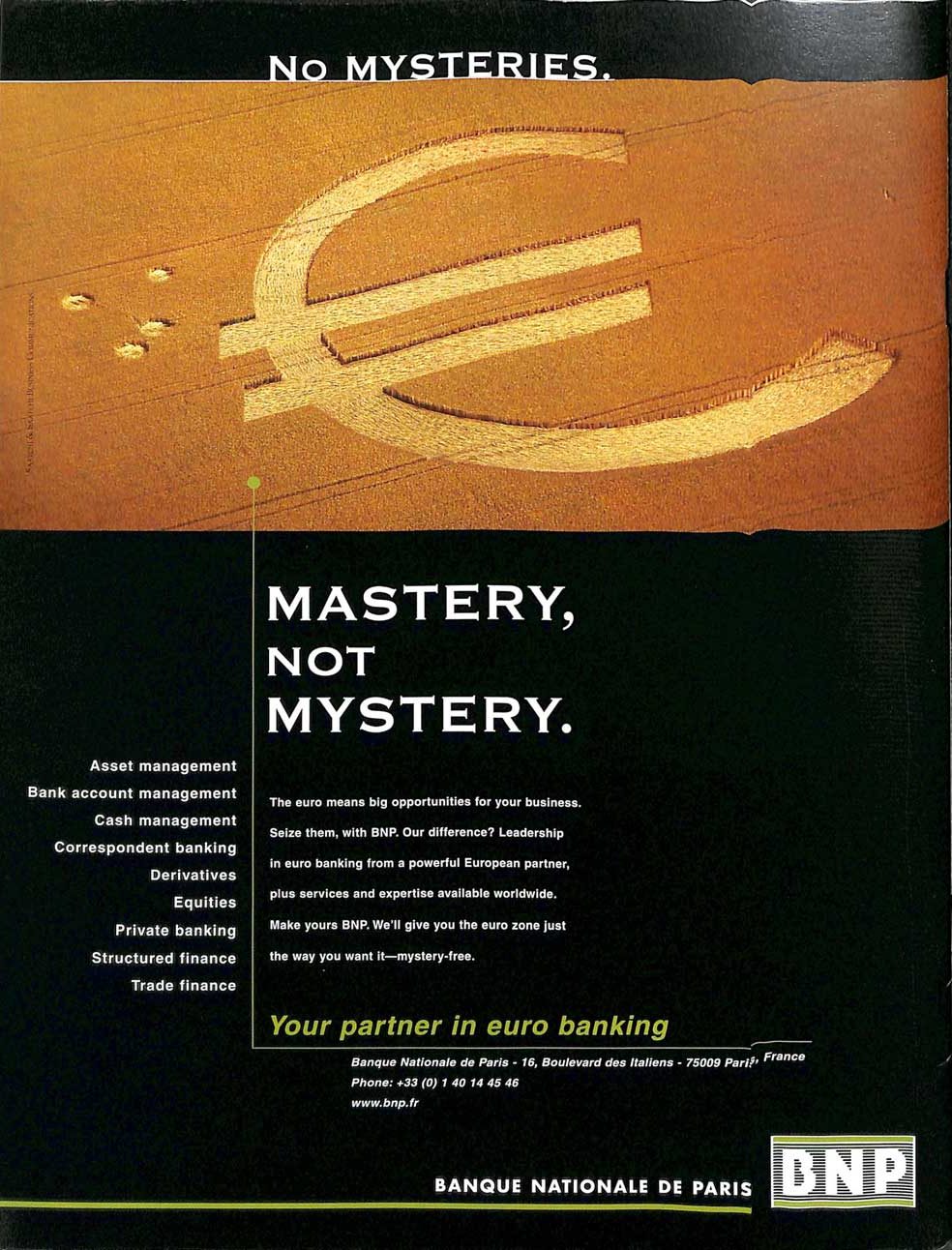
International campaign under the slogan ‘Mastery, not mystery’ — (FRAHBNPP_PER2_1999_01)
/ -
The poster, with its understated blue background, conveys New Year’s greetings and best wishes. It cleverly uses the numbers from key dates to communicate the currency conversion rate, blending December 31 and the year 2002 to illustrate the transition from the French franc to the euro.
To ensure clarity, the bank specified that 305.2 represents the year 2002 in this visual metaphor.
BNP Paribas historical archives (2AF125)
/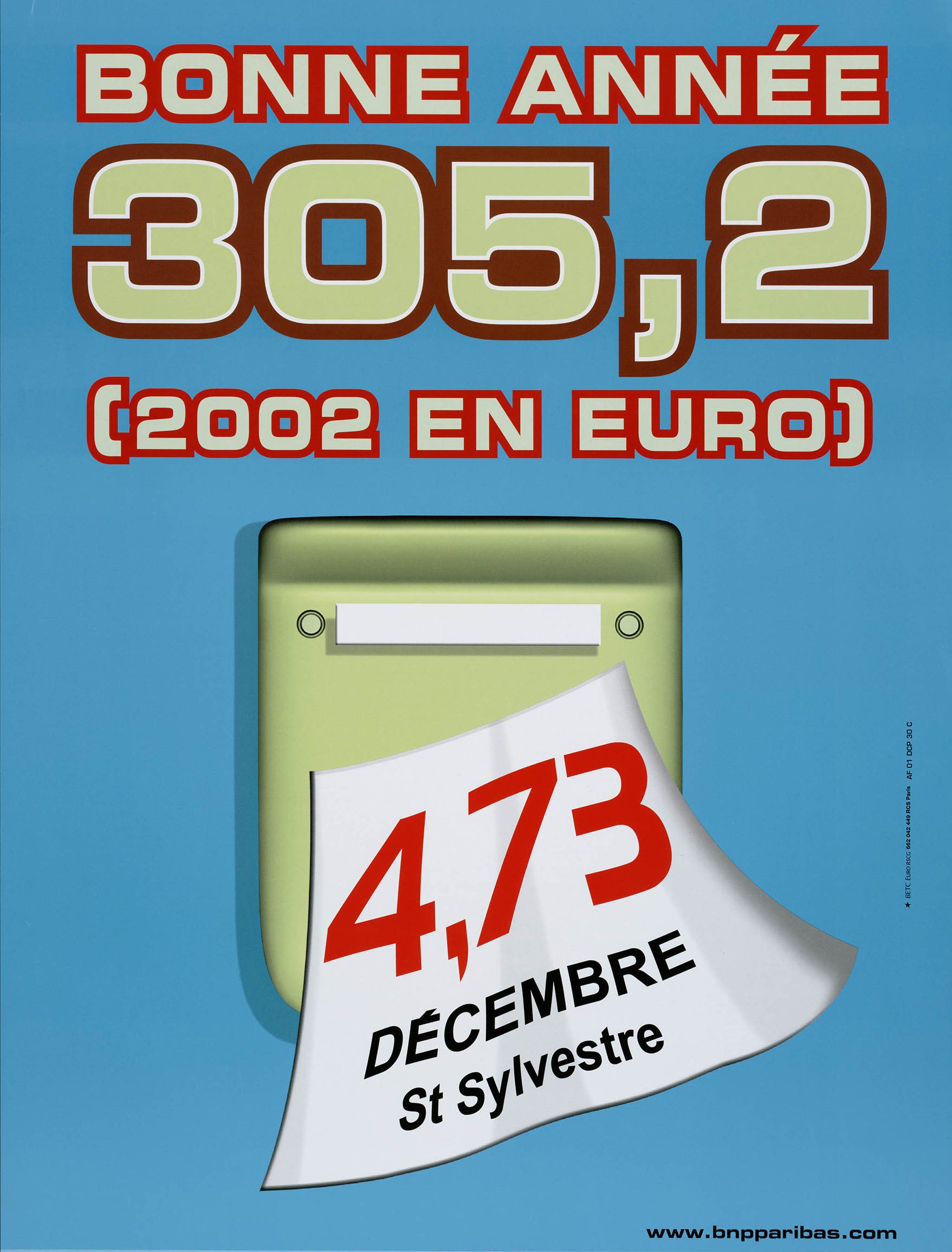
The poster, with its understated blue background, conveys New Year’s greetings and best wishes. It cleverly uses the numbers from key dates to communicate the currency conversion rate, blending December 31 and the year 2002 to illustrate the transition from the French franc to the euro.
To ensure clarity, the bank specified that 305.2 represents the year 2002 in this visual metaphor.
BNP Paribas historical archives (2AF125)
/


