The BNCI turns towards the modern reception desk
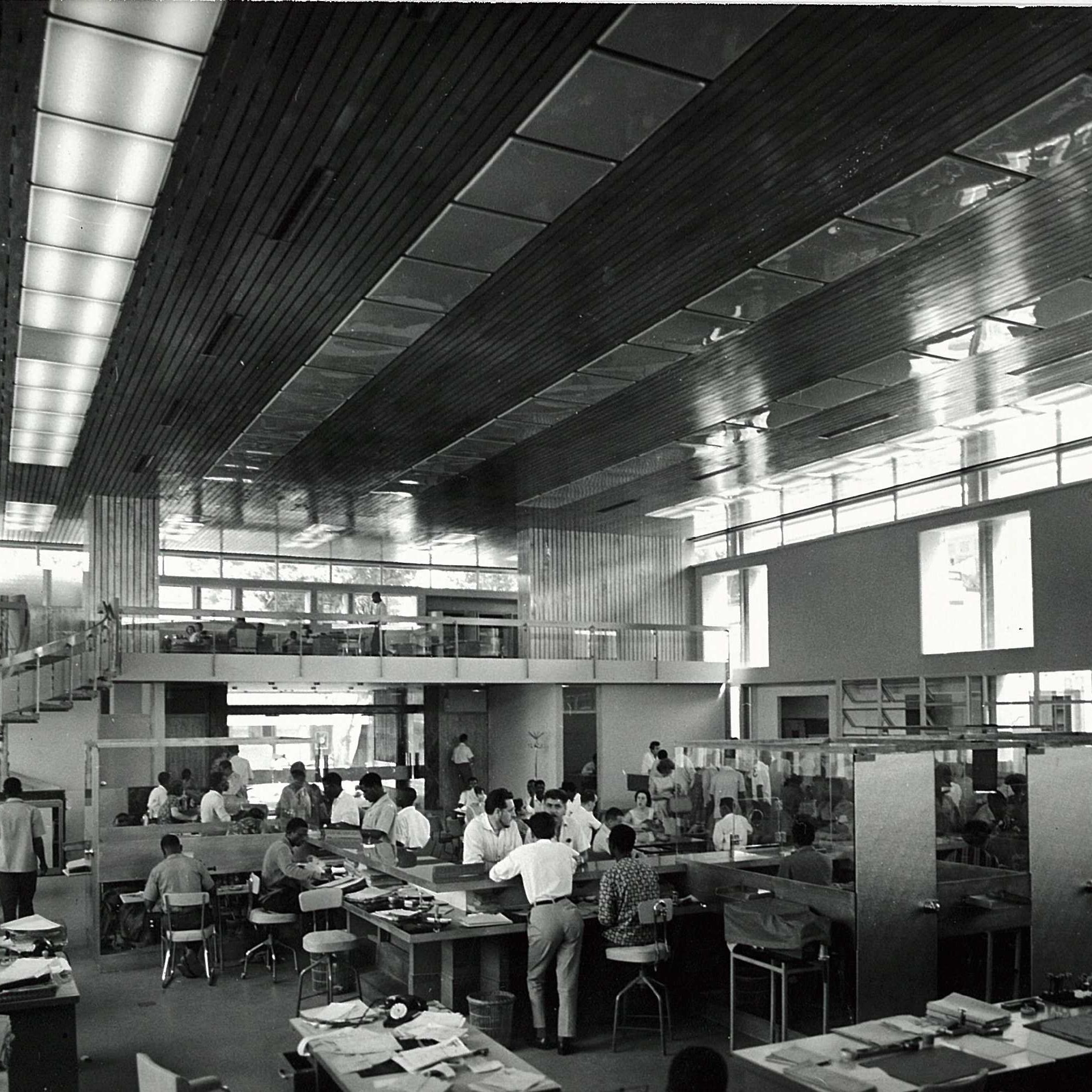
Starting in the 1960s, the Banque Nationale pour le Commerce et l’Industrie modernises its network. The objective? Always do a better job of meeting customer needs and to improve their comfort, we then speak of the “sit-down bank”.
A changing network
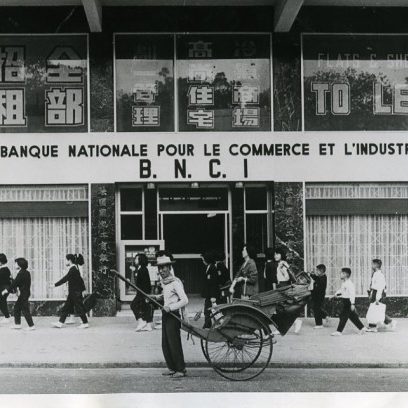
This involves the total transformation of the interior decorations of agencies. Light coloured wall and floor coverings replace the wood, while neon lighting replaces the old brass lamps. The counters and grated dividers are replaced by offices. Likewise, the facades are changed to open large bay windows and let more light into the agencies. The BNCI sets out with determination to win new customers.
Moreover, between 1950 and 1965, the BNCI strengthened its presence in and around the capital. It went from 33 to 80 bank branches. This movement amplified starting in 1967 with the elimination of regulations concerning the opening of bank branches. This way the banks were able to open neighbourhood agencies in the major urban areas to support this new urbanisation.
Consequently, new agencies were opened in Antony, Chatenay-Malabry, Epinay-les-Cygne d’Enghien, Saint-Ouen, Villetaneuse and Créteil in the Paris suburbs and the Latin Quarter, Boulevard Exelmans and Cité des Arts in the Capital.
-
“coupon booths area” in the Bourg-La-Reine branch
It lets counsellors receive customers in greater privacy. Four offices in a row separated by glass partitions and chairs furnish this part of the branch. (7FI66EL)
/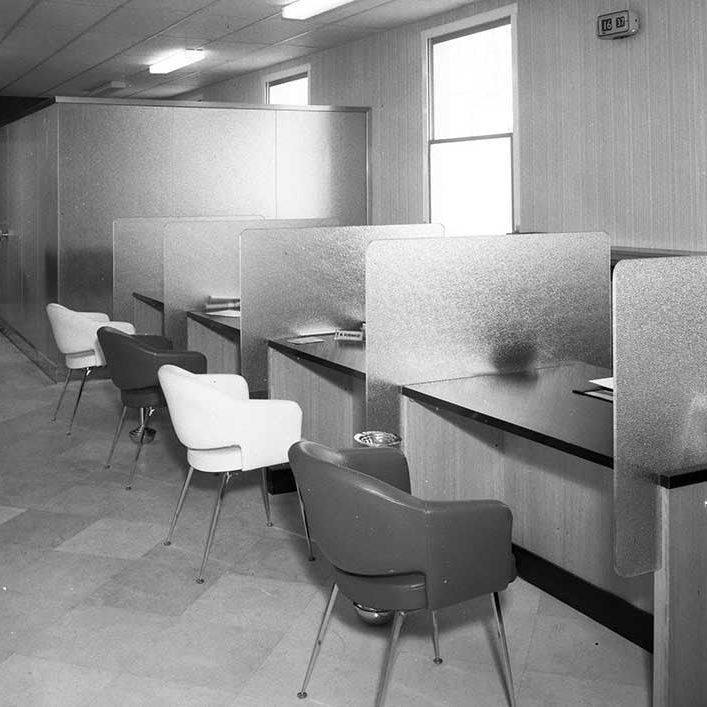
“coupon booths area” in the Bourg-La-Reine branch
It lets counsellors receive customers in greater privacy. Four offices in a row separated by glass partitions and chairs furnish this part of the branch. (7FI66EL)
/ -
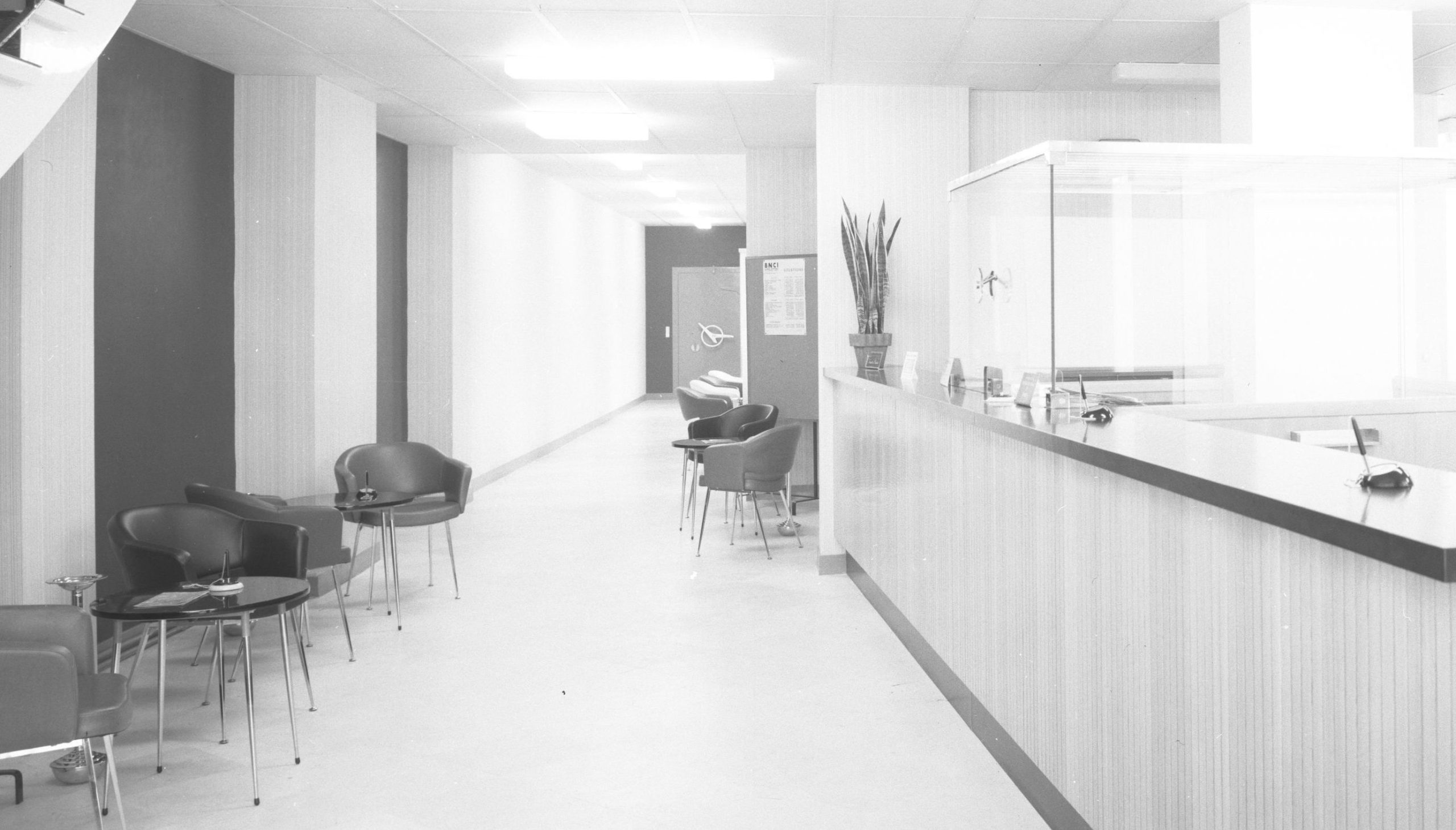
Customer reception room in the Bourg-La-Reine branch
This customer waiting area faces the counter and the teller protected by a totally enclosed glass cage. The teller communicates with the clientele via a talk-through baffle, a type of wicket interphone. (7FI049)
/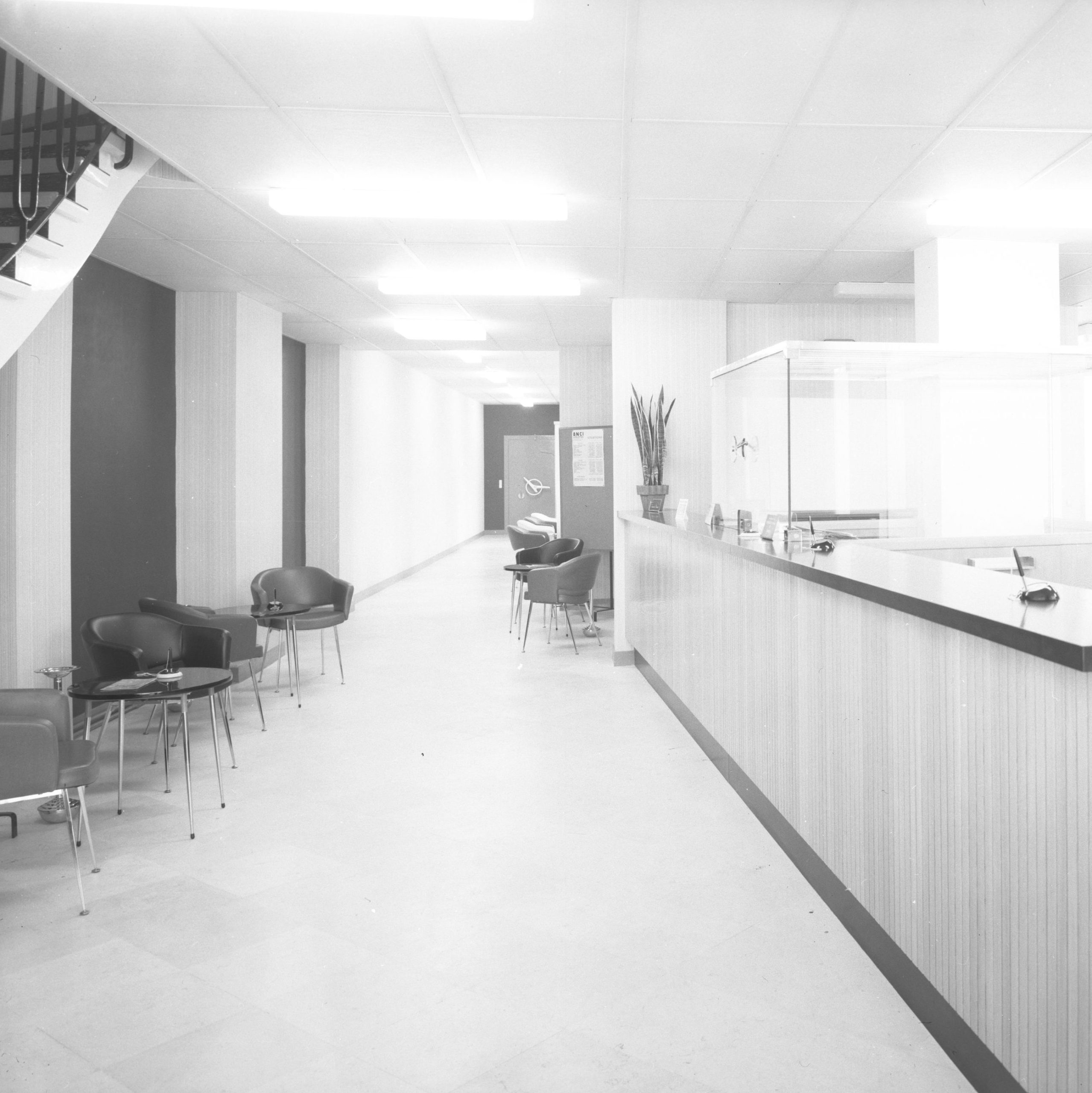
Customer reception room in the Bourg-La-Reine branch
This customer waiting area faces the counter and the teller protected by a totally enclosed glass cage. The teller communicates with the clientele via a talk-through baffle, a type of wicket interphone. (7FI049)
/ -
The branch cash desk
The glass cage isolates the teller from the exterior. The contact with the public is through the talk-through baffle. A smallA small horizontal slot at the bottom of the window also lets the counter clerk and customers exchange cash and cheques. (7FI052)
/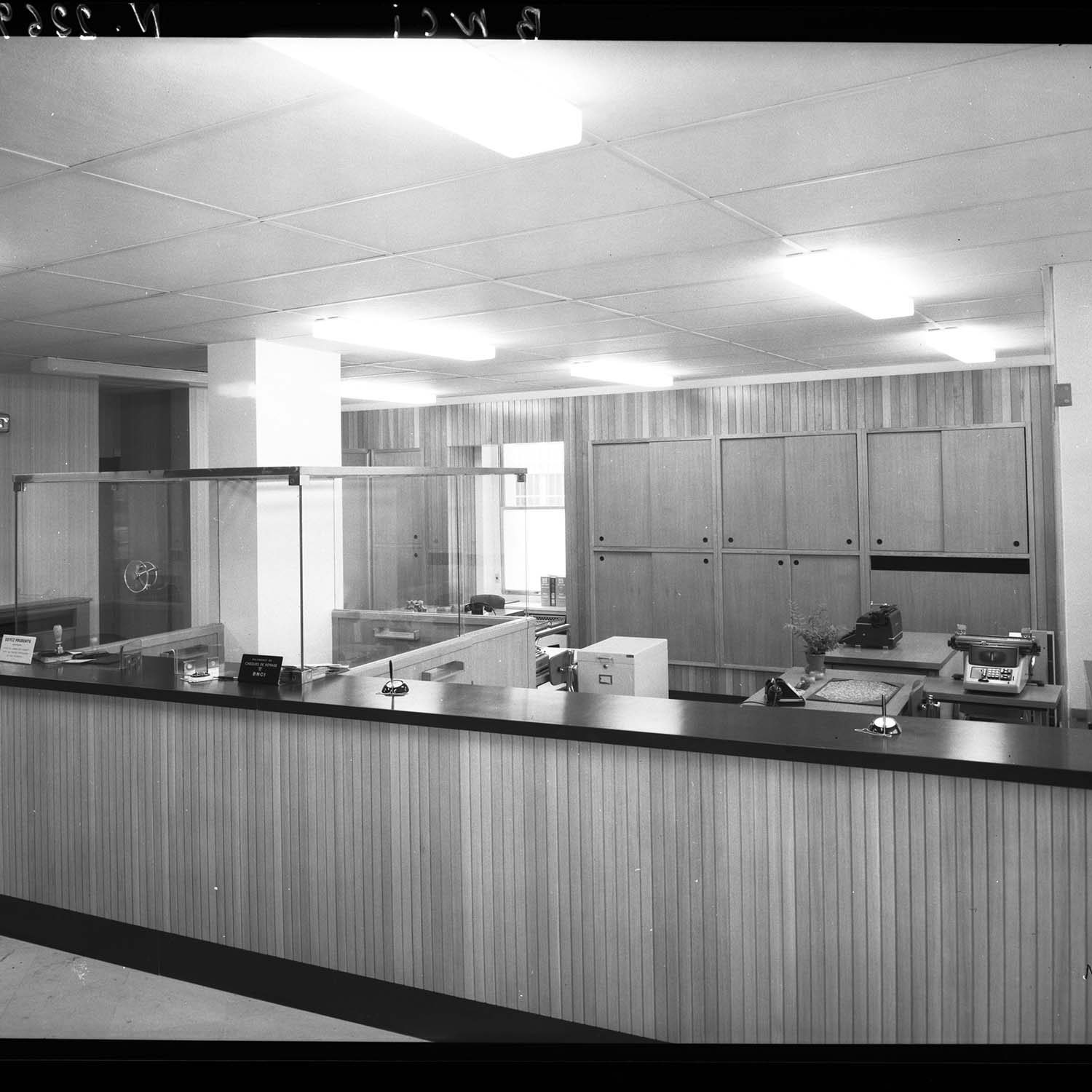
The branch cash desk
The glass cage isolates the teller from the exterior. The contact with the public is through the talk-through baffle. A smallA small horizontal slot at the bottom of the window also lets the counter clerk and customers exchange cash and cheques. (7FI052)
/
Photo of Studio Chevojon, 1965


Did you enjoy this story ?
This selection of articles might also interest you!