Once upon a time in the West: Banque de Bretagne
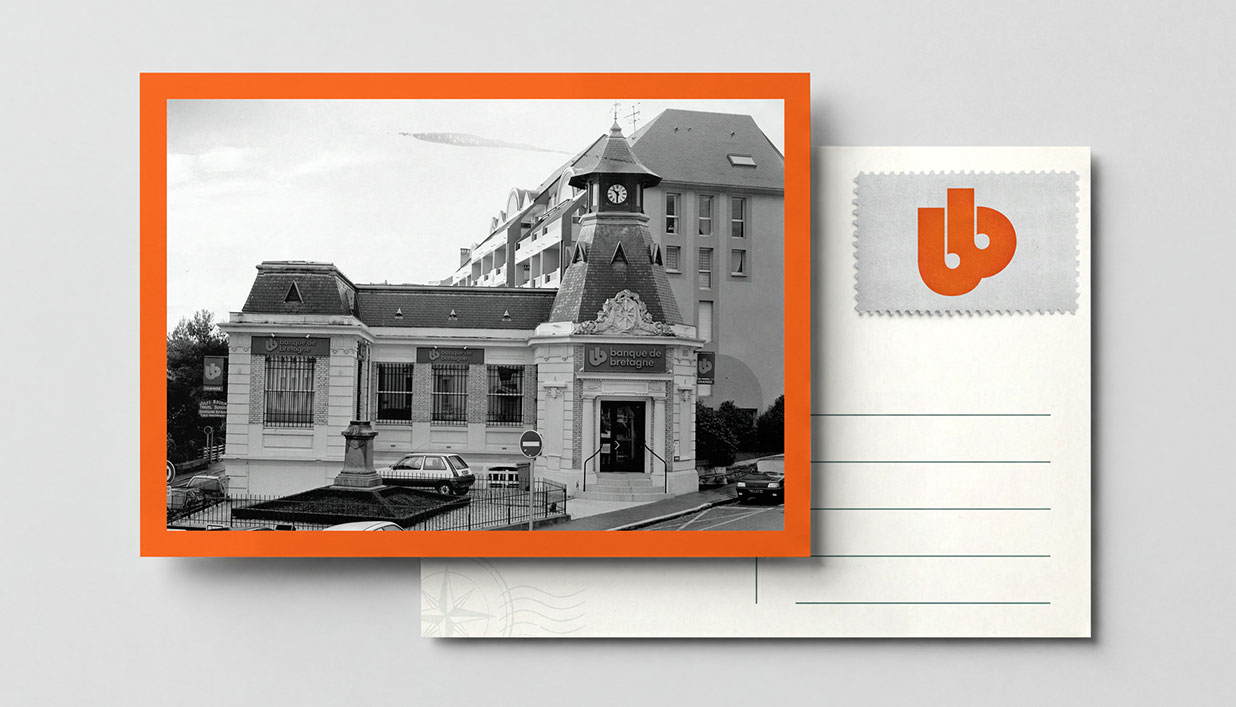
On the eve of World War I, at the initiative of the Banque de France, eleven Breton bankers mobilized to provide their region with the means to drive its economic development. Their vision? To establish a rediscount institution capable of financing local commercial and industrial activities. On September 1, 1909, Banque de Bretagne, backed by capital of 1.5 million francs, opened its doors in Rennes. As the region’s first private bank, it embodied a clear ambition from the outset: to support the growth of Brittany and its entrepreneurs.
The Beginnings of a Regional Banking Saga
The creation of Banque de Bretagne took place against the backdrop of the 1908 collapse of Banque Vatar. Eager to reorganize credit channels in Brittany, the Banque de France supported the establishment of a new bank to provide the region with robust local backing.
Its eleven founders – bankers hailing from Brittany’s four départements – included one woman: Marie-Emilie Béraud.
Their collective effort reflected a unifying determination to equip the region with a modern banking tool, resilient enough to weather crises like the one already looming in 1909 over Brittany’s agri-food sector.
Under the presidency of Alphonse Bitouzé and the leadership of Paul-Augustin Lefol, the bank embarked on cautious growth, initially focused on Ille-et-Vilaine.
Between 1920 and 1945, Banque de Bretagne transformed into a major regional player. It gradually expanded its network by absorbing local banks—many tied to its original founders—and opened new branches in Côtes-d’Armor and Morbihan.
Despite the 1929 crisis, it strengthened its presence, particularly in the Saint-Malo area, by taking over branches of Crédit Industriel et Commercial (1932).
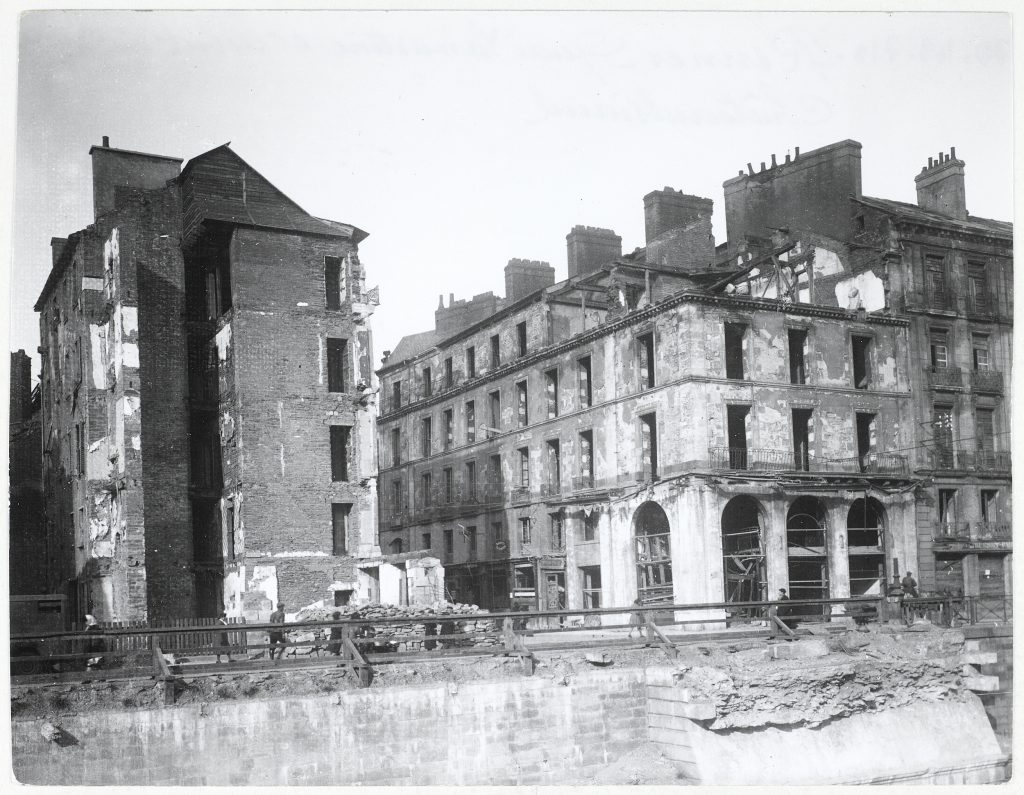
On the eve of World War II, Banque de Bretagne operated 21 branches. In 1944, its Rennes headquarters on Quai Lamartine was severely damaged during the bombings that struck the city.
Field bankers supporting Breton businesses
After the Liberation, Banque de Bretagne recovered swiftly and continued its policy of absorbing local banks, such as Banque de Villeneuve (1944) and Banques René Loyer (1948).
By its 50th anniversary in 1949, its capital had grown to 70 million old francs, and it played a pivotal role in financing Breton SMEs—particularly in the agri-food sector—by supporting entrepreneurs like Daniel Roullier (Saint-Malo), Yves Rocher (La Gacilly), Lucien Bigard (Quimperlé), and Charles Doux (Châteaulin).
A Few Breton Success Stories Supported by Banque de Bretagne in the 1950s:
Yves Rocher

Originally from La Gacilly, Monsieur Rocher was above all a visionary. He crafted his first creams using figwort roots in his mother’s kitchen.
Yves Rocher’s story 🇫🇷
Bigard
After working at Les Halles de Paris in the 1950s, Lucien Bigard launched his meat trading business in 1958 in Quimperlé, Finistère.
Bigard’s Story 🇫🇷
Doux

Pierre Doux began trading poultry in western France in 1933 and officially founded his namesake company in 1955.
Doux’s story 🇫🇷
Lactalis

The company was born in Laval in 1933 with the production of Camembert cheese, then expanded in 1955 to include butter, fresh cream, and consumer milk.
Lactalis’ story 🇫🇷
During this period, the bank expanded into Finistère (Brest, Morlaix) and even opened a branch in Paris’s Montparnasse Breton quarter (1968). Its success stemmed from its proximity to local entrepreneurs and its deep understanding of the region.
From nationalization to integration into BNP Paribas
The 1982 nationalization marked a decisive turning point for Banque de Bretagne. Under state control, it lost its private bank status, and its identity underwent profound changes. Jean Rouyer, who had served as president for nearly thirty years and was a symbolic figure of the institution, was forced to step down, replaced by leaders appointed by public authorities. This era was marked by managerial instability: within a few years, the bank saw multiple leadership changes, often involving figures with little connection to Breton banking—or even lacking proven banking experience.
Stability began to return in 1986 with the appointment of Xavier de Villeneuve as president. A descendant of one of Banque de Bretagne’s founders and deeply committed to the institution, he embodied both its historical legacy and a resolve to restore its standing. Under his leadership, the bank secured a 140-million-franc capital increase in 1989, funded by the state, to shore up its financial strength. Yet despite these efforts, its future remained uncertain.
In 1989, amid a wave of privatizations and the restructuring of France’s banking landscape, BNP—led by René Thomas—expressed interest in acquiring Banque de Bretagne. Negotiations progressed swiftly: BNP saw an opportunity to bolster its regional presence.
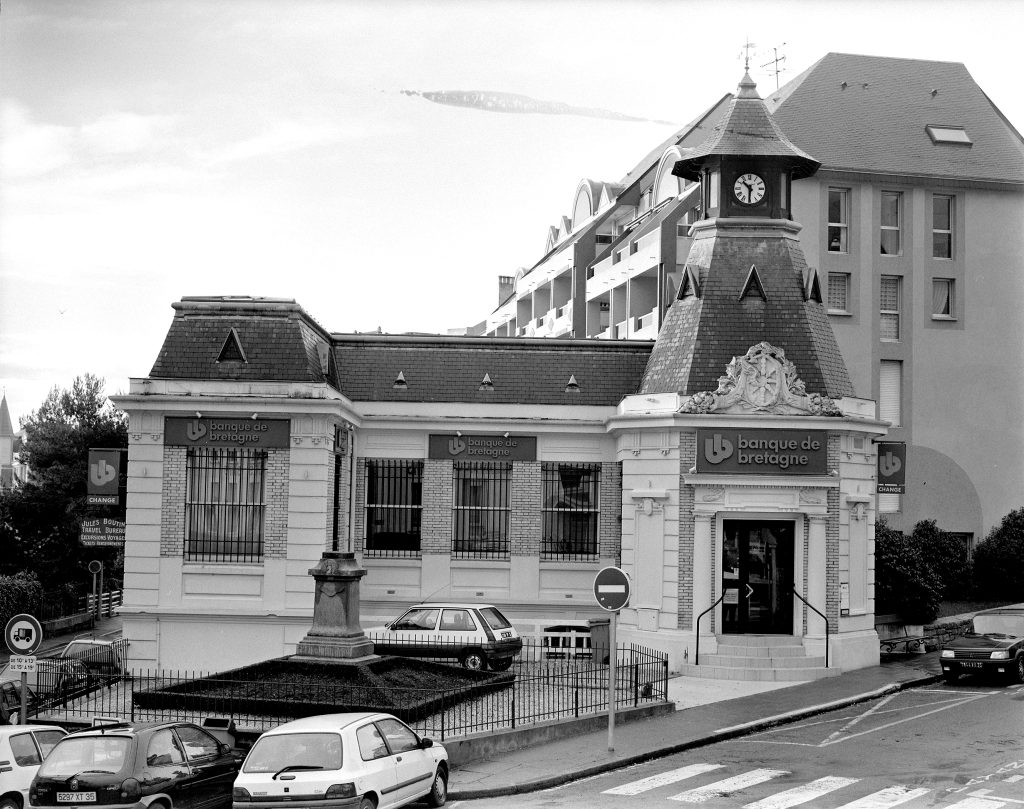
A New Logo and Slogan: “Step In, the World is Wide Open”
Under the leadership of Patrick de Villepin, then CEO of Banque de Bretagne from 1997 to 2002, the bank’s 2000 visual identity overhaul introduced a sleek, minimalist logo. Its intertwined initials evoked the flight of seagulls and gulls, symbolizing dynamism and openness. This redesign was spearheaded by designer Laurent Vincenti (of TOP (Technology & Operational Performance)/COM agency) and shared an aesthetic kinship with the BNP Paribas logo—particularly its upward-swooping curve, reminiscent of a swallow in flight, also unveiled in 2000. Both designs embodied a sense of movement and forward momentum.


Despite the success of its new visual identity, Banque de Bretagne’s model grew fragile in the face of competition from major banking groups.
Also read:
La plus ancienne banque privée bretonne (in French only)
In 2010, BNP Paribas announced the merger of its two Breton networks. On May 12, 2012, Banque de Bretagne officially ceased to exist as an independent entity, merging to form BNP Paribas – Banque de Bretagne. The transition involved 1,200 employees and 280,000 clients.
Benefits for Clients and Businesses:
For clients: Access to a full range of insurance services (auto, home), as well as mobile and online banking solutions.
For businesses: A comprehensive offering of products and services, along with enhanced global support—including centralized cash management solutions or international real estate investments via Private Banking.
BNP Paribas Banque de Bretagne is committed to serving its clients and region—a message at the heart of its new advertising campaign across Brittany.
Goal: To introduce the new brand identity to all regional stakeholders.

Over the course of a century, eleven presidents led Banque de Bretagne. Its story remains that of a unique regional bank, whose lack of a mutualized network ultimately prevented the sustainability of its model. To this day, it stands as the only regional bank to have joined the BNP Paribas Group in France.


Did you enjoy this story ?
This selection of articles might also interest you!