From Pleated Skirts to Global Courts: The Odyssey of Women’s Tennis
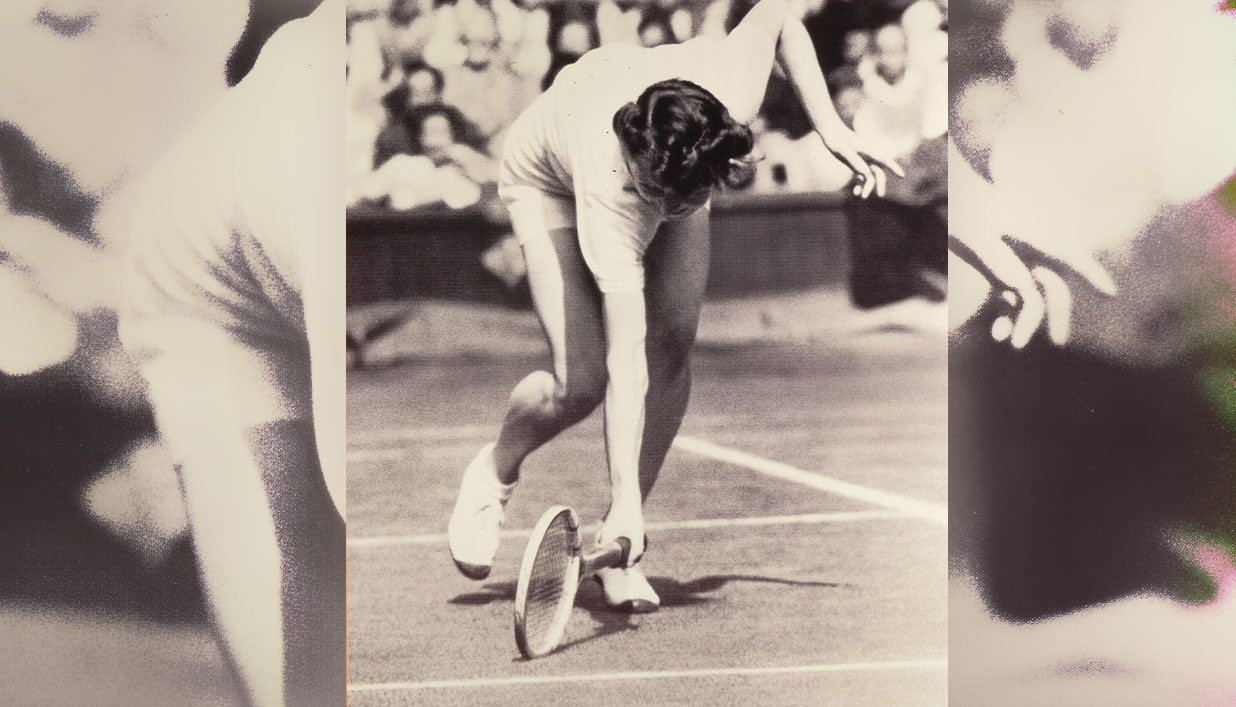
In 1952, a woman in a pleated skirt holding a racket was still seen as bold. Today, women’s tennis champions are global icons. A look back at a sport that changed the game—and those who supported it. From BNCI to BNP Paribas: a commitment to women’s tennis!
When Women’s Tennis Stepped onto the Court
Women’s tennis has been part of the Olympic Games since its early editions, including the 1900 Games in Paris and the 1908 Games in London. The first true star of women’s tennis was Suzanne Lenglen. During her professional career from 1913 to 1927, she won 241 tournaments, 8 Grand Slam titles, and 3 Olympic medals. She was celebrated as a “Diva” and nicknamed “the Diva” or “the Divine.” She was also the first to wear short pleated skirts and to play with her arms and ankles uncovered.
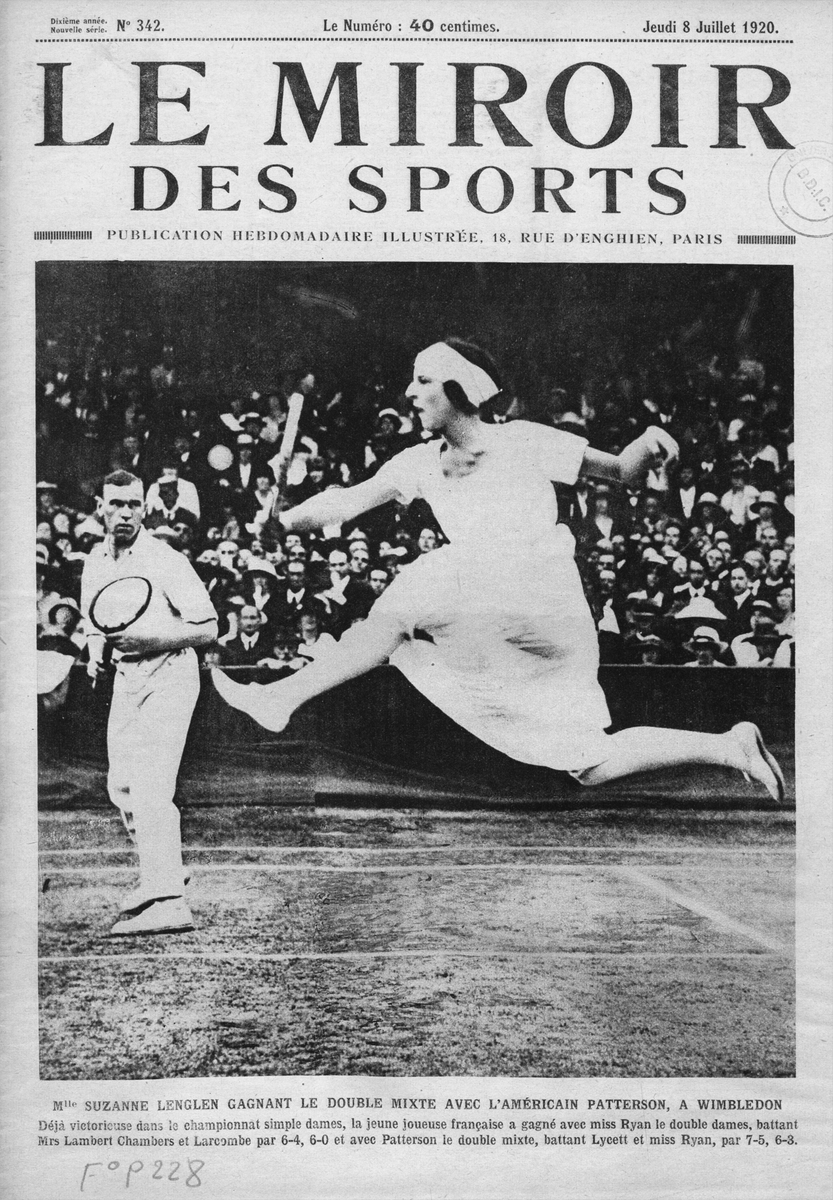
“The Divine,” with her shortened skirts, dazzling victories, and rejection of corsets, caused a scandal in the 1920s.
(Cover of Le Miroir magazine featuring Suzanne Lenglen, July 8, 1920 – Original public domain image from Wikimedia Commons)
In 1952, as BNCI promoted sports among women through advertisements for “ladies’ equipment,” the bank seemed to embrace some of that same boldness.
Advertisement from BNCI’s internal magazine, November 1952
BNP Paribas Historical Archives (FRAHBNPP_PER4_067)
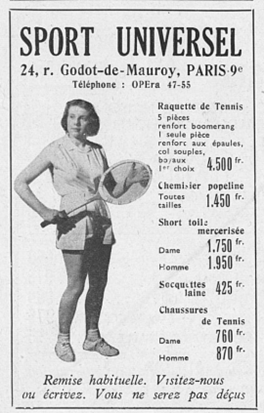
The advertisement speaks to the bank’s female employees: What if they, too, could swap their suits for a racket on weekends? A subtly progressive message for its time, reflecting the societal shifts ahead. It was a way of saying: women’s tennis was no longer an exception—it was a given.
In the 1960s, women stepped up to the net
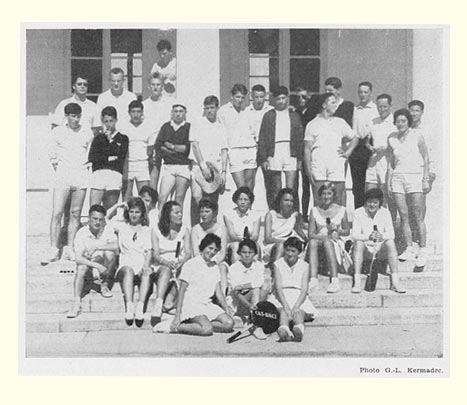
A decade later, in 1960, a photograph from Henri Cochet’s training sessions in Louveciennes captured this shift: men and women practicing side by side, under the watchful eye of a champion.
These women were the heirs to Suzanne Lenglen’s legacy. They played, they trained, and perhaps even dared to dream of competition. Proof that women’s tennis was gaining legitimacy—and that the bank was championing this progress.
The 1960s and 1970s marked a pivotal transition period during which women’s roles evolved on all fronts: married women gained the right to open bank accounts in their own name and to work without their husband’s consent…
Listen to the podcast:
When the bank supports women in their financial independence
Yet one milestone remained: international recognition in sports. This would come from another trailblazer across the Atlantic: Billie Jean King.
1973: The beginning of a long-standing partnership between tennis and BNP Paribas
In 1973, history accelerated. As Billie Jean King won her legendary “Battle of the Sexes” match against Bobby Riggs—a defining moment for gender equality—BNP Paribas signed its first partnership with Roland-Garros. A coincidence of timing?
Four decades later, the Group became the sponsor of the Fed Cup (2005), then supported its renaming as the “Billie Jean King Cup by BNP Paribas” (2020), thereby honoring the legacy of a pioneer while reaffirming its own commitment through 2021.
Explore some of the posters from the Fed Cup by BNP Paribas
-
2005 advertising poster
“This year again, we are at the heart of the action.” BNP Paribas Historical Archives, 5AF325.
/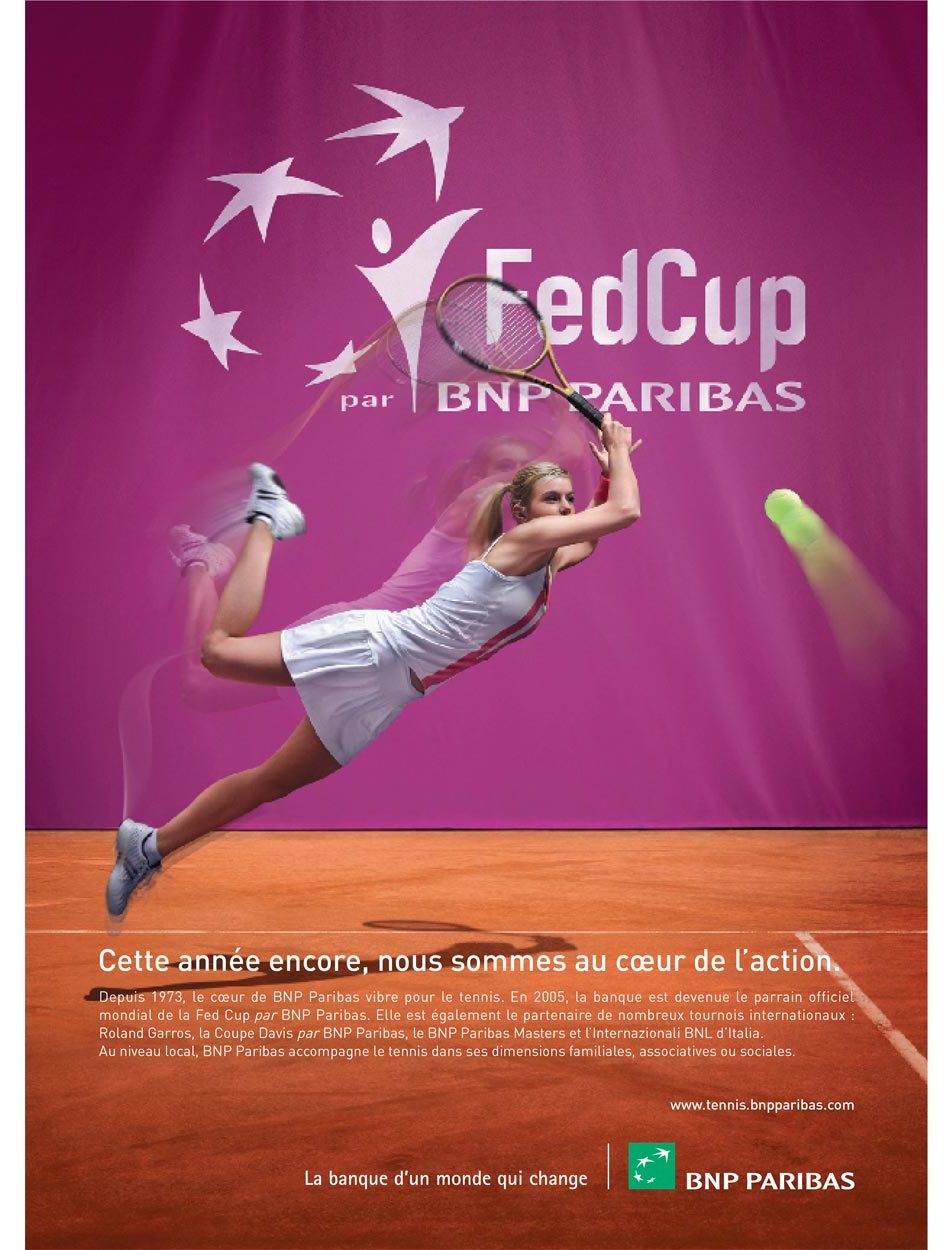
2005 advertising poster
“This year again, we are at the heart of the action.” BNP Paribas Historical Archives, 5AF325.
/ -
2007 advertising poster
“BNP Paribas is proud to become the official global sponsor of the Fed Cup” – BNP Paribas Historical Archives, 5AF358.
/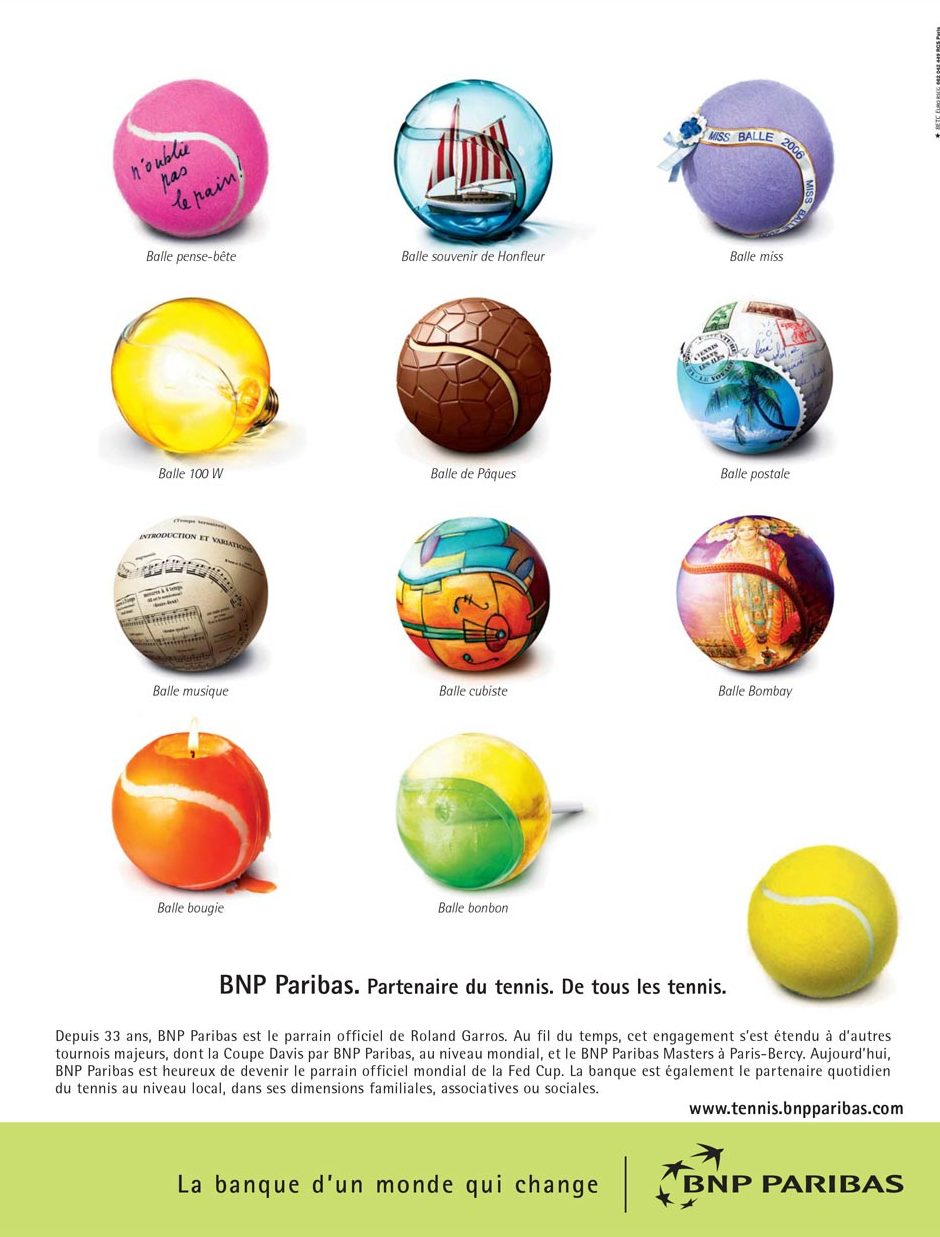
2007 advertising poster
“BNP Paribas is proud to become the official global sponsor of the Fed Cup” – BNP Paribas Historical Archives, 5AF358.
/ -
2007 advertising poster
BNP Paribas Historical Archives, 4AF802EL.
/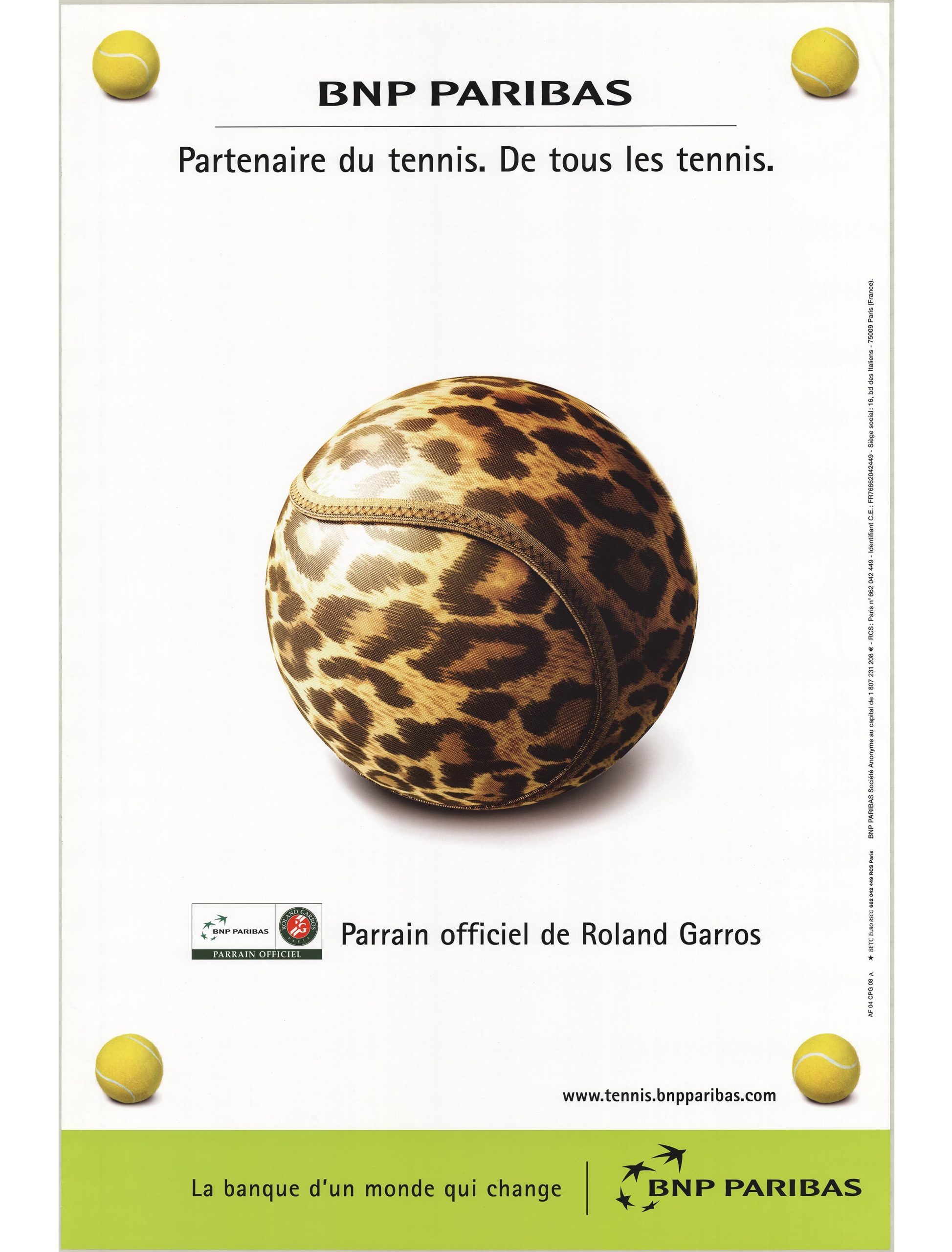
2007 advertising poster
BNP Paribas Historical Archives, 4AF802EL.
/ -
2007 advertising poster
“Thank you, team! We’ll meet again at the Internazionali BNL d’Italia!” BNL congratulates the Italian women’s tennis team on their Fed Cup by BNP Paribas victory.
BNP Paribas Historical Archives, (5AF539)/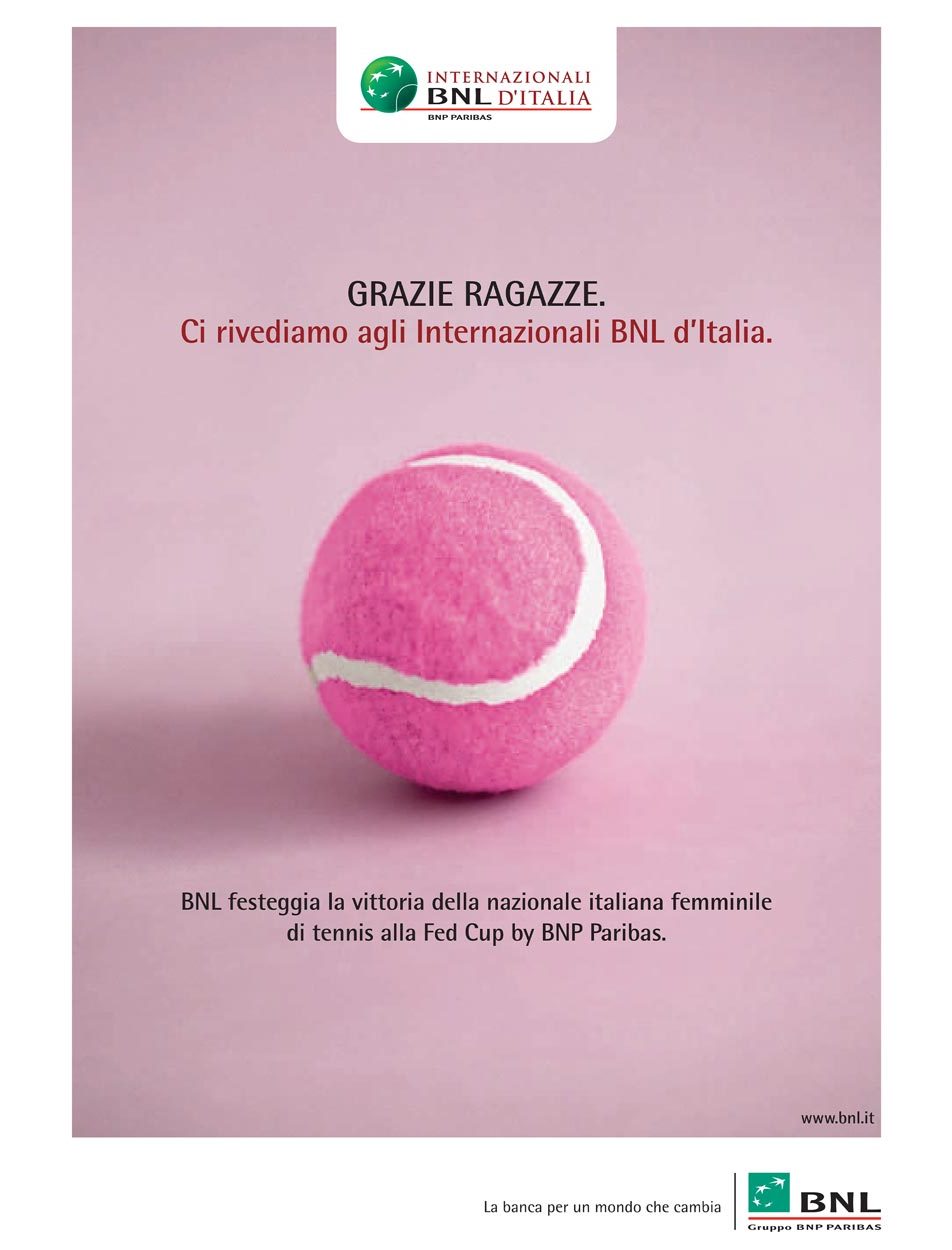
2007 advertising poster
“Thank you, team! We’ll meet again at the Internazionali BNL d’Italia!” BNL congratulates the Italian women’s tennis team on their Fed Cup by BNP Paribas victory.
BNP Paribas Historical Archives, (5AF539)/
In 2026, BNP Paribas continues its long-standing commitment to women’s tennis, notably through its partnership with the Internationaux de Strasbourg. At the same time, the Group supports promising young players through its BNP Paribas Young Talents program, active worldwide.
Did you know?
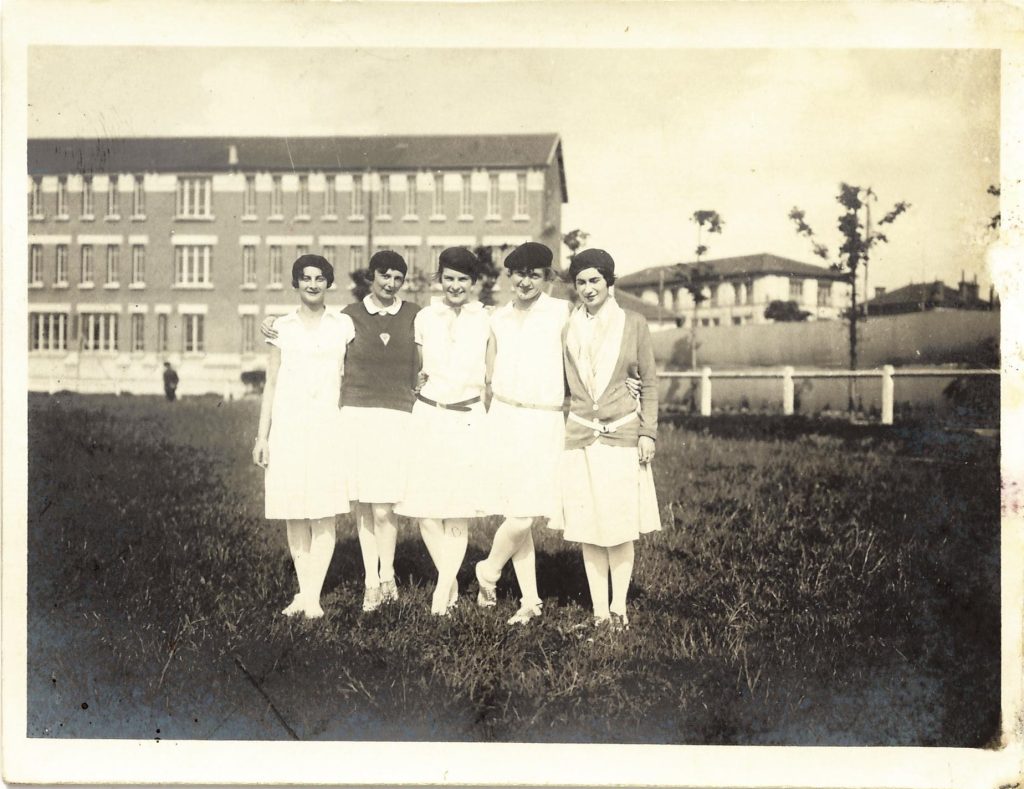
At the turn of the 20th century, pleated skirts weren’t just for tennis players. In this photograph from BNP Paribas’ historical archives, BNCI’s women’s football team poses in sportswear.


Did you enjoy this story ?
This selection of articles might also interest you!