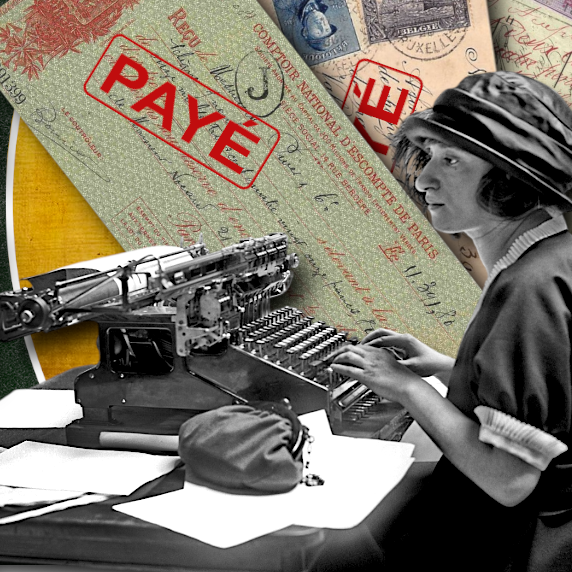
When Richelieu made our money work for us…
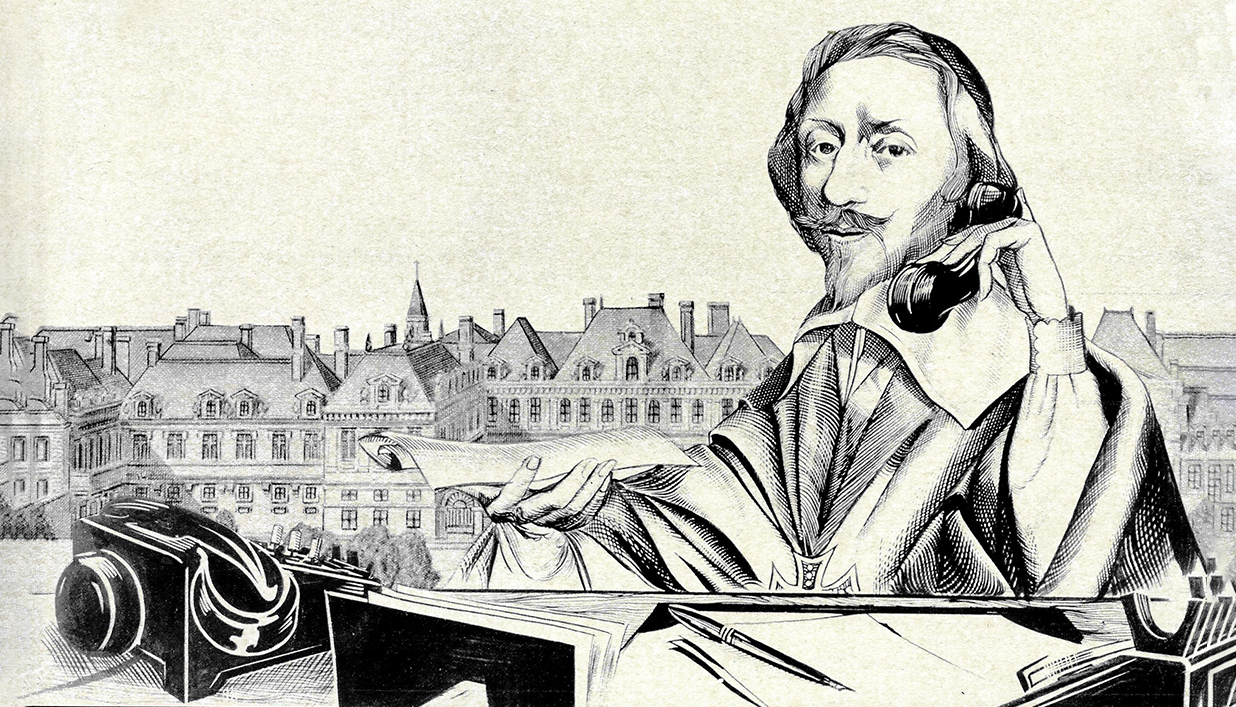
In 1960, Cardinal Richelieu swapped his quill for a telephone! His portrait, familiar from French banknotes, became the ambassador of a bold advertising campaign by the Comptoir National d’Escompte de Paris (CNEP). At a time when French currency was reinventing itself—and when history inspired banknote designers—the CNEP used humor to convince savers.
The Franc: an evolving currency
In 1953, the Banque de France introduced the 1,000-franc Richelieu banknote, replacing the Minerva and Hercules design. But five years later, General de Gaulle launched a major monetary reform: the birth of the new franc (NF). Spearheaded by Antoine Pinay and Jacques Rueff, this “heavy franc” was worth 100 old francs. The result? A coffee that cost 519 old francs now cost… 5.19 NF. The French quickly adopted the change, though old nicknames persisted: “cent balles” for 100 old francs, “un sac” for 1,000, or “une brique” for a million.
In 1959, the 10-new-franc Richelieu note was issued, replacing its predecessor. And in 1963, the “new” franc simply became… the franc. This transition marked French economic history, with a modern comparison: 1,000 old francs Richelieu would be worth approximately €1.50 today.
Richelieu on banknotes
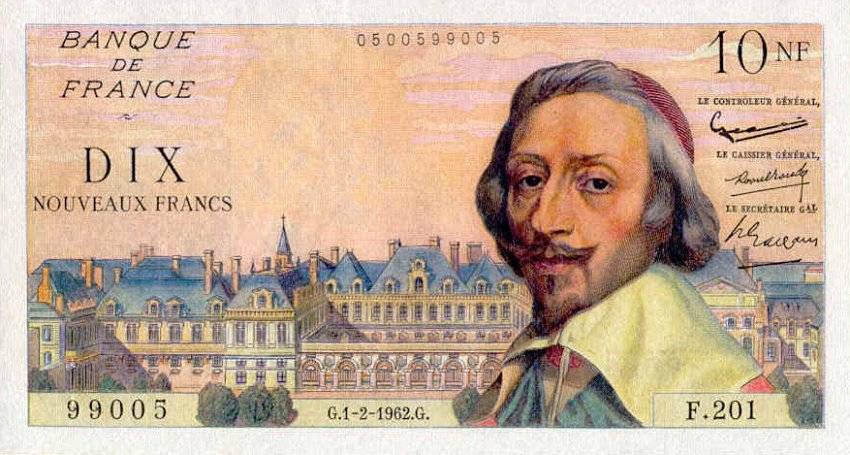
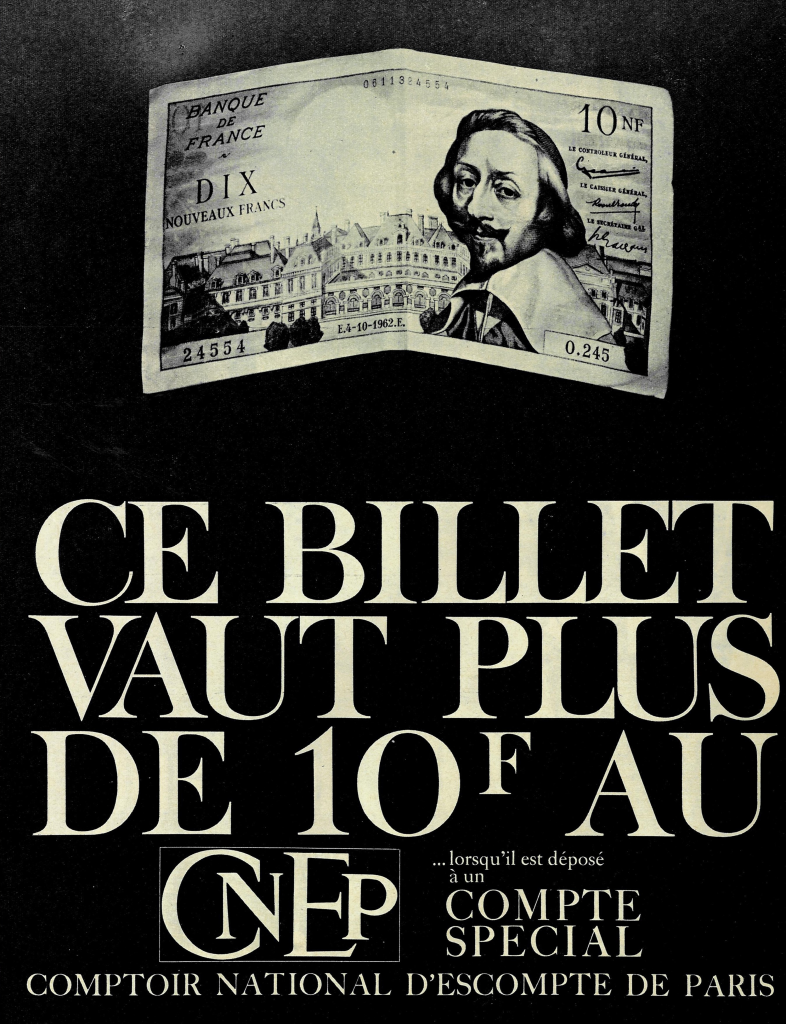
The obverse of the 10 NF note reused the vignette from the 1953 1,000-franc bill: Cardinal Richelieu standing in front of the royal palace, inspired by a painting by Philippe de Champaigne. This minister of Louis XIII, a symbol of power and strategy, also embodied financial rigor. The only change? The inscriptions “10 NF” and “Dix nouveaux francs,” adapted to the monetary reform.
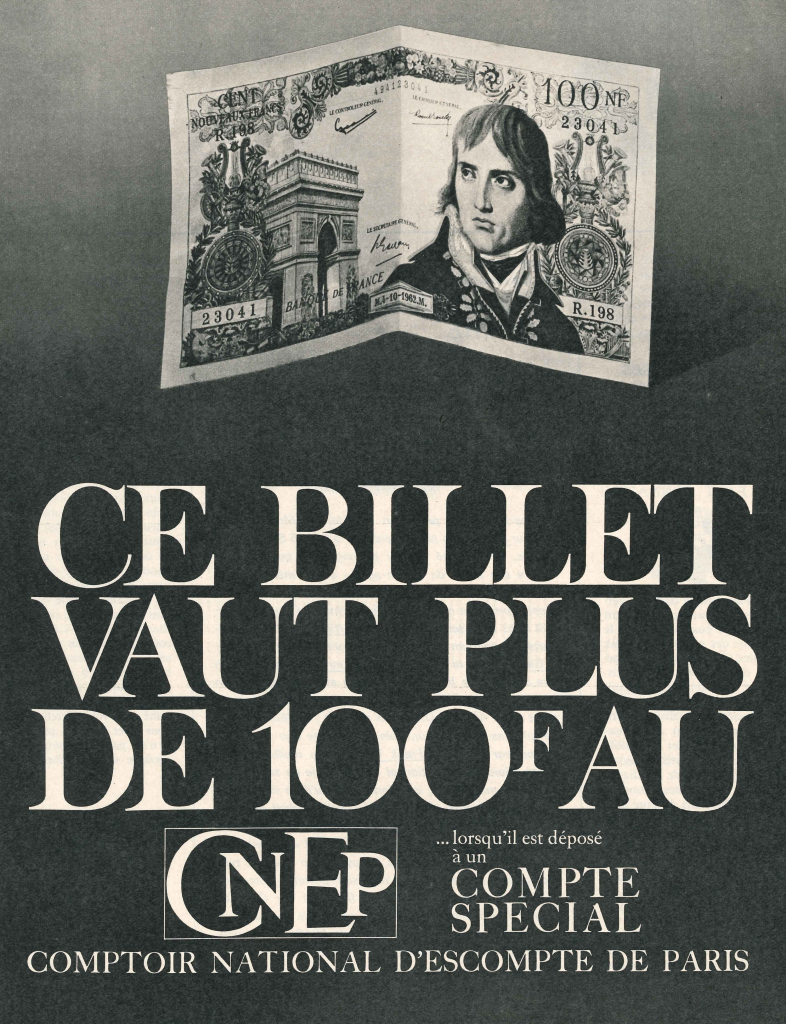
This banknote was part of a series featuring other historical figures such as Victor Hugo, Bonaparte, and Henry IV, reinforcing the link between cultural heritage and national currency.
From Banknotes to Marketing
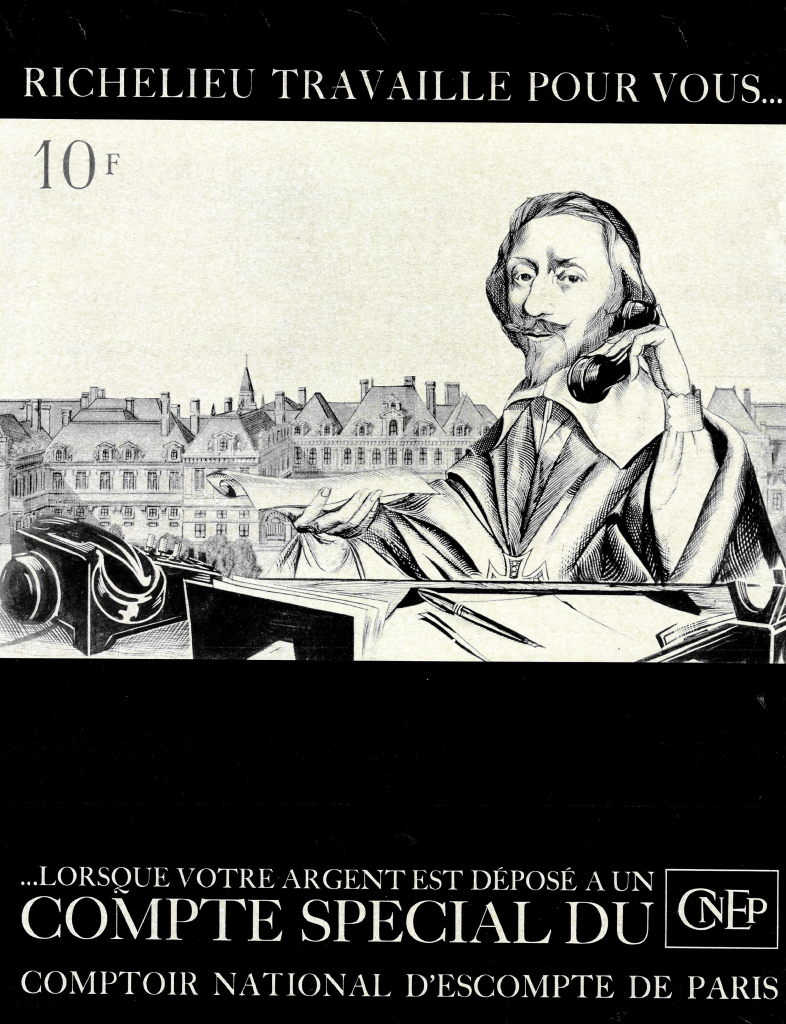
In the 1960s, CNEP launched a playful advertising campaign to promote its special accounts.
The bank leaned into humor with a poster where Richelieu, telephone in hand, became an improvised financial advisor, accompanied by the slogan: “Richelieu works for you… when your money is deposited in a CNEP special account.” A deliberate anachronism to grab attention.
Two other, more conventional visuals used actual circulating banknotes: the 10 NF Richelieu and the 100 NF Bonaparte, with the message: “This note is worth more than 10 F (or 100 F) at CNEP.” No parody here—just a concrete demonstration: money deposited earns more than the note’s face value. A playful yet educational approach to encourage saving.


Did you enjoy this story ?
This selection of articles might also interest you!