


The evolution of bank counters: from standing banking to mobile services
Standing at a counter, seated with an advisor, or even from the comfort of their car: over the past century, the bank branch has evolved alongside its customers and their changing needs. From the early 20th century, when clients waited standing in line, to the mobile innovations of later decades, discover how banking has reimagined customer service to better meet client expectations.
The Era of the Standing Counter
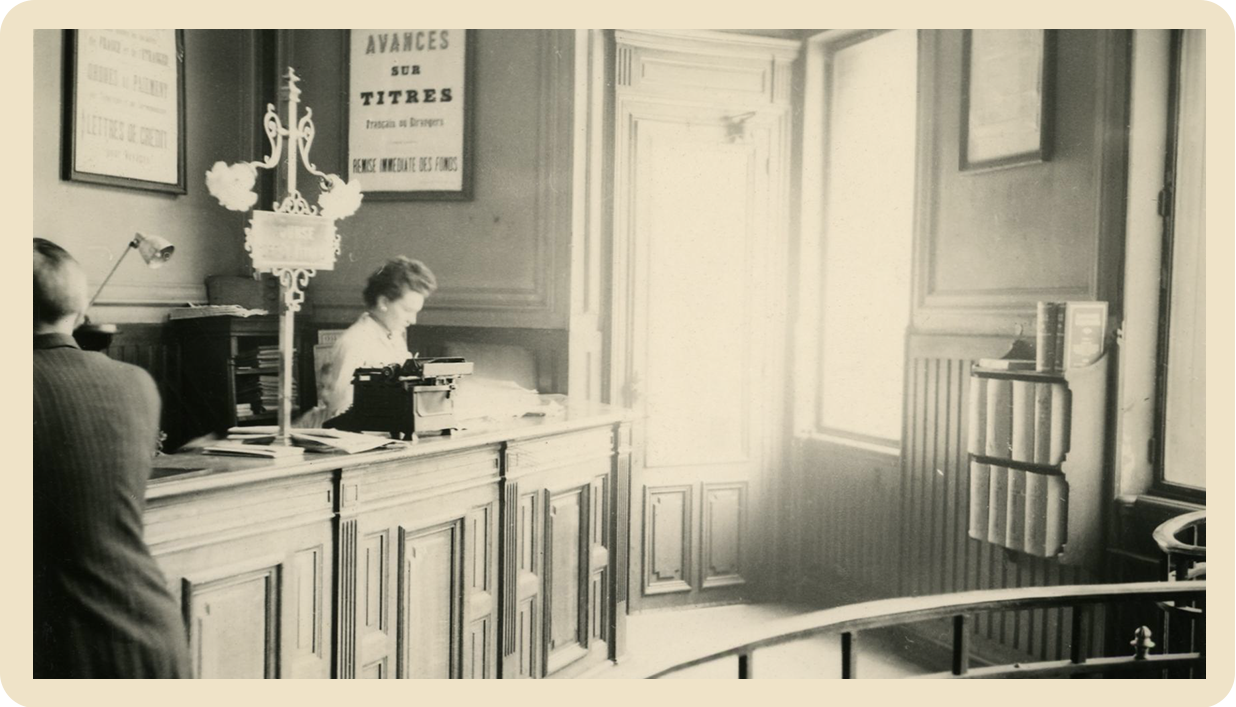
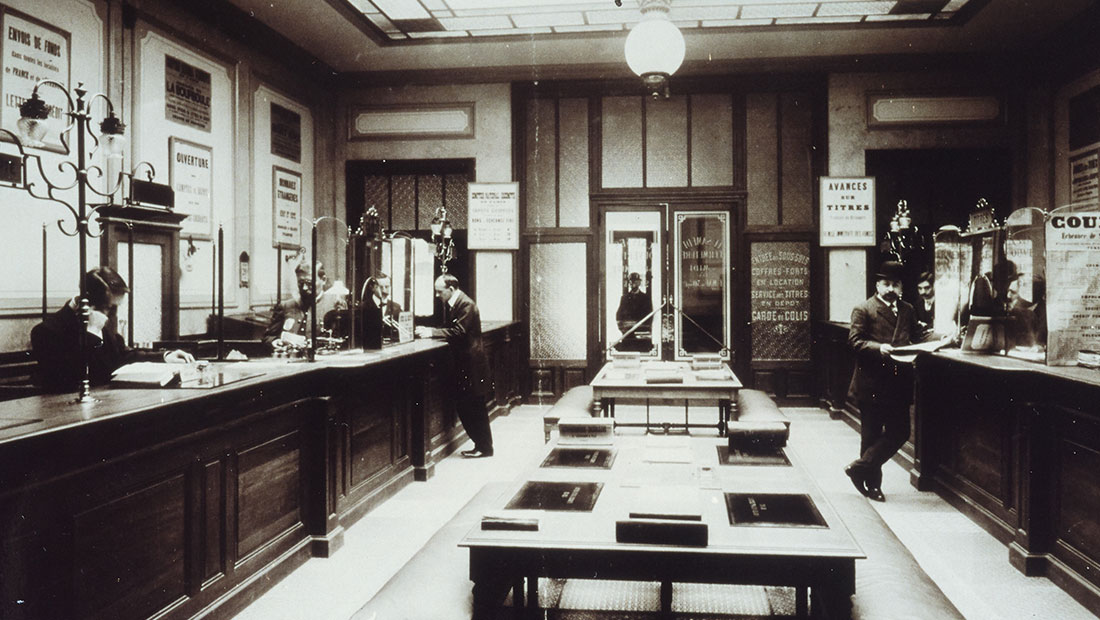
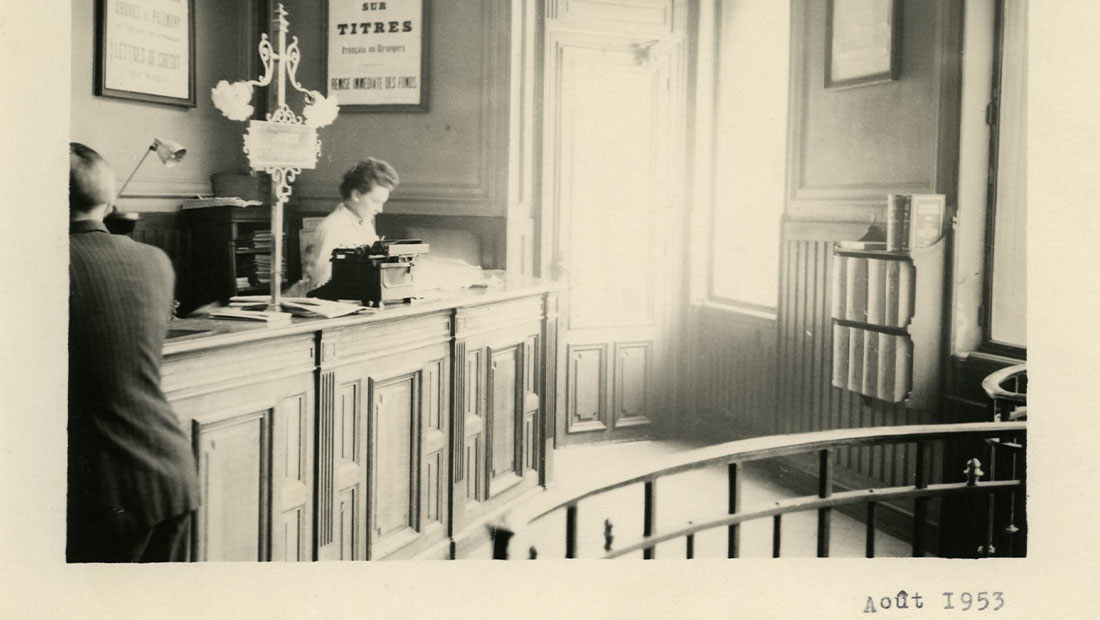
Here’s a typical scene from a 19th-century bank branch: a client, hat in hand, stands waiting in front of a polished wooden counter. On the other side of that same counter, the teller, seated in their chair, meticulously handles each transaction. In those days, this was simply how things worked: the client came to the counter. There were no chairs for sitting, no numbered queue system—just a counter and a clientele that waited, standing.
-
CNEP, 1910
Interior view of the Charleville-Mézières branch.
Historical Archives of BNP Paribas (10FI429)
/
CNEP, 1910
Interior view of the Charleville-Mézières branch.
Historical Archives of BNP Paribas (10FI429)
/ -
CNEP, 1953
Sedan branch. Historical Archives of BNP Paribas (10FI608)
/
CNEP, 1953
Sedan branch. Historical Archives of BNP Paribas (10FI608)
/ -
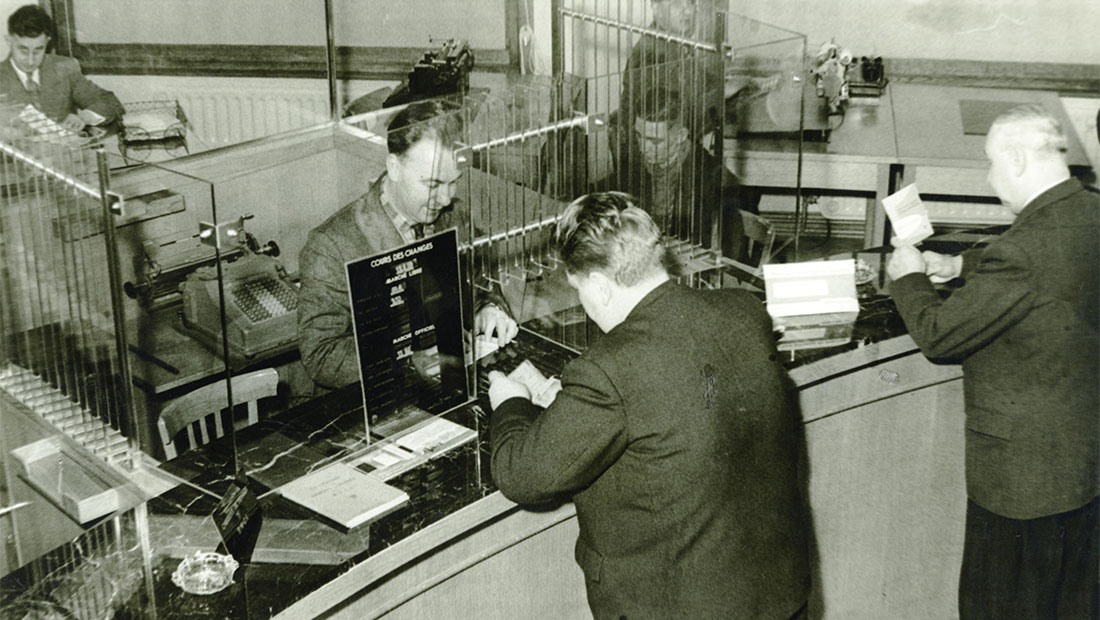
BNCI, 1959
Aerial view of a counter where an advisor assists a client at the Gravelines branch.
Historical Archives of BNP Paribas (11FI601EL)
/
BNCI, 1959
Aerial view of a counter where an advisor assists a client at the Gravelines branch.
Historical Archives of BNP Paribas (11FI601EL)
/
Until the 1960s, bank branches retained this same decor, before a few changes began to disrupt long-standing habits… starting with a chair for the client!
The Counter Hits the Road: The Rise of Mobile Banking Vans
The 1960s marked a turning point: banks were no longer content to wait for their clients—they went out to meet them.
In 1961, BNCI launched its first mobile banking vans, which were notably spotted on the roads of the Tour de France. This was a bold way to bring banking services to places where permanent branches could not reach.
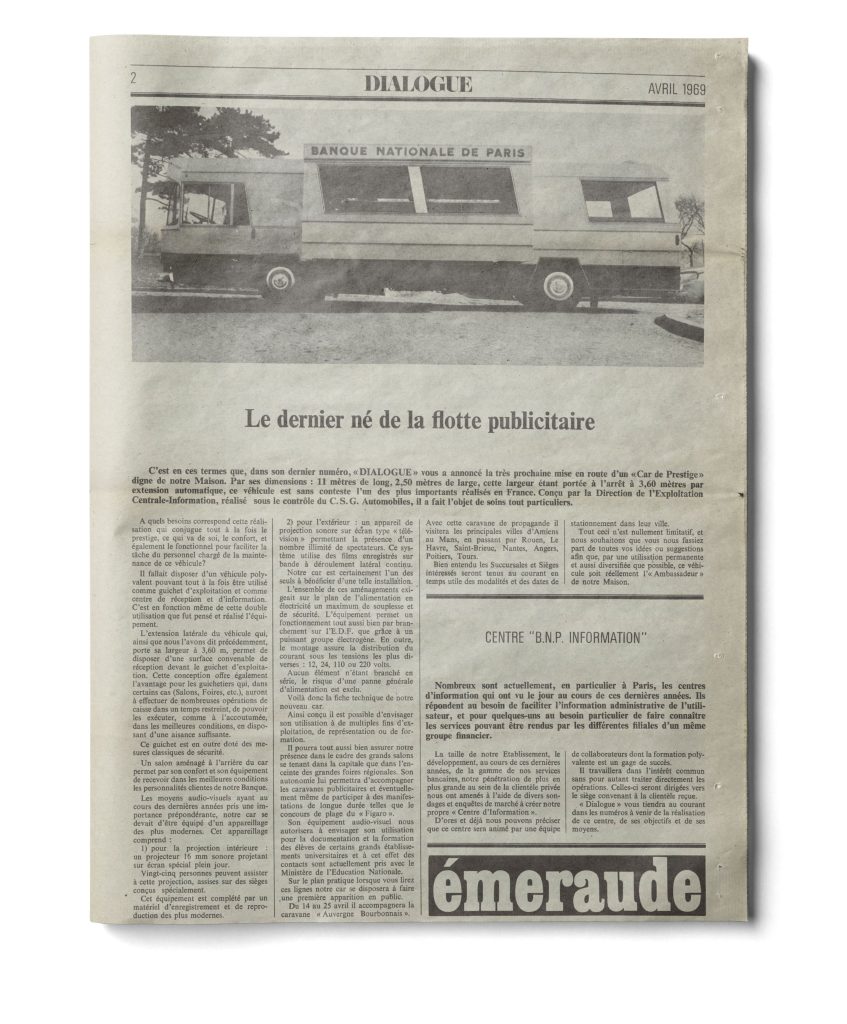
Then, in 1969, BNP took another leap forward with the “Car de Prestige”, an 11-meter-long vehicle designed to redefine mobile banking.
Thanks to its lateral extension (expanding from 2.50 m to 3.60 m when stationary), this mobile counter provided an optimized workspace for teams while maintaining the same security and comfort standards as a traditional branch. At the rear, a lounge area even allowed clients to be welcomed in a more private setting.
Equipped with advanced technology for the time (spotlights, audio systems), this giant on wheels was designed for all kinds of uses: trade shows, fairs, public events, and even outdoor operations. From its launch, it traveled across France alongside advertising caravans, proving that the bank could be wherever its clients needed it—whether in city centers, rural areas, or even… on a beach!
Une philosophie avant-gardiste, qui pose les bases d’une banque mobile, proche et accessible.
A forward-thinking philosophy that laid the foundation for a mobile, accessible, and customer-centric bank.
Drive-in banking: the counter adapts to the automotive age
The 1970s marked a turning point. France was rapidly embracing banking, shopping centers were springing up everywhere, and the French were massively adopting the car. In this context, an idea emerged: what if bank counters took inspiration from the booming fast-food drive-ins? Why get out of your car to deposit a check or make a withdrawal when you could be served without leaving your seat?
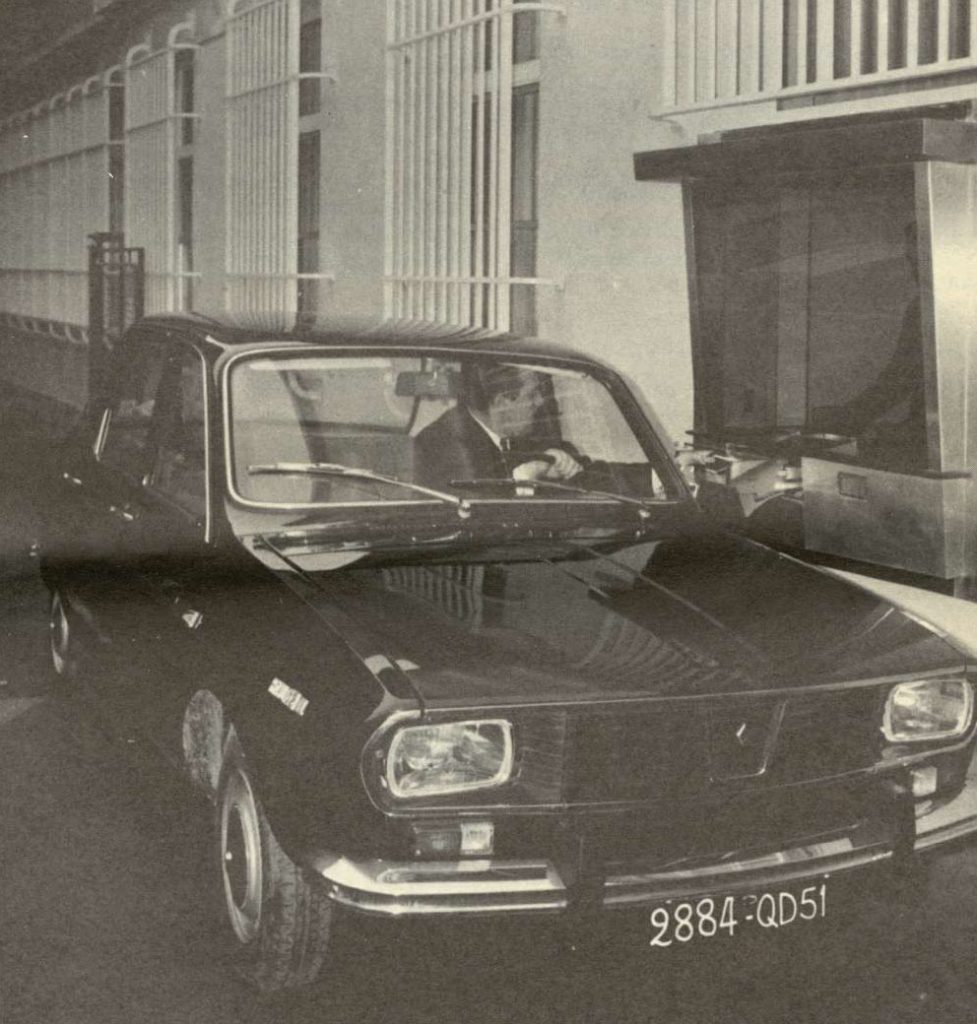
As early as 1970, BNP took action with the drive-in counter at its Grande-Armée branch in Paris. Located in the basement and accessible via a ramp, this air-conditioned, glass-enclosed space allowed customers to carry out their transactions without leaving their vehicles. Two counters equipped with shock-resistant drawers and an intercom system connected the advisors—present behind the glass—to the drivers. An innovation that immediately won over an increasingly time-pressed urban clientele.
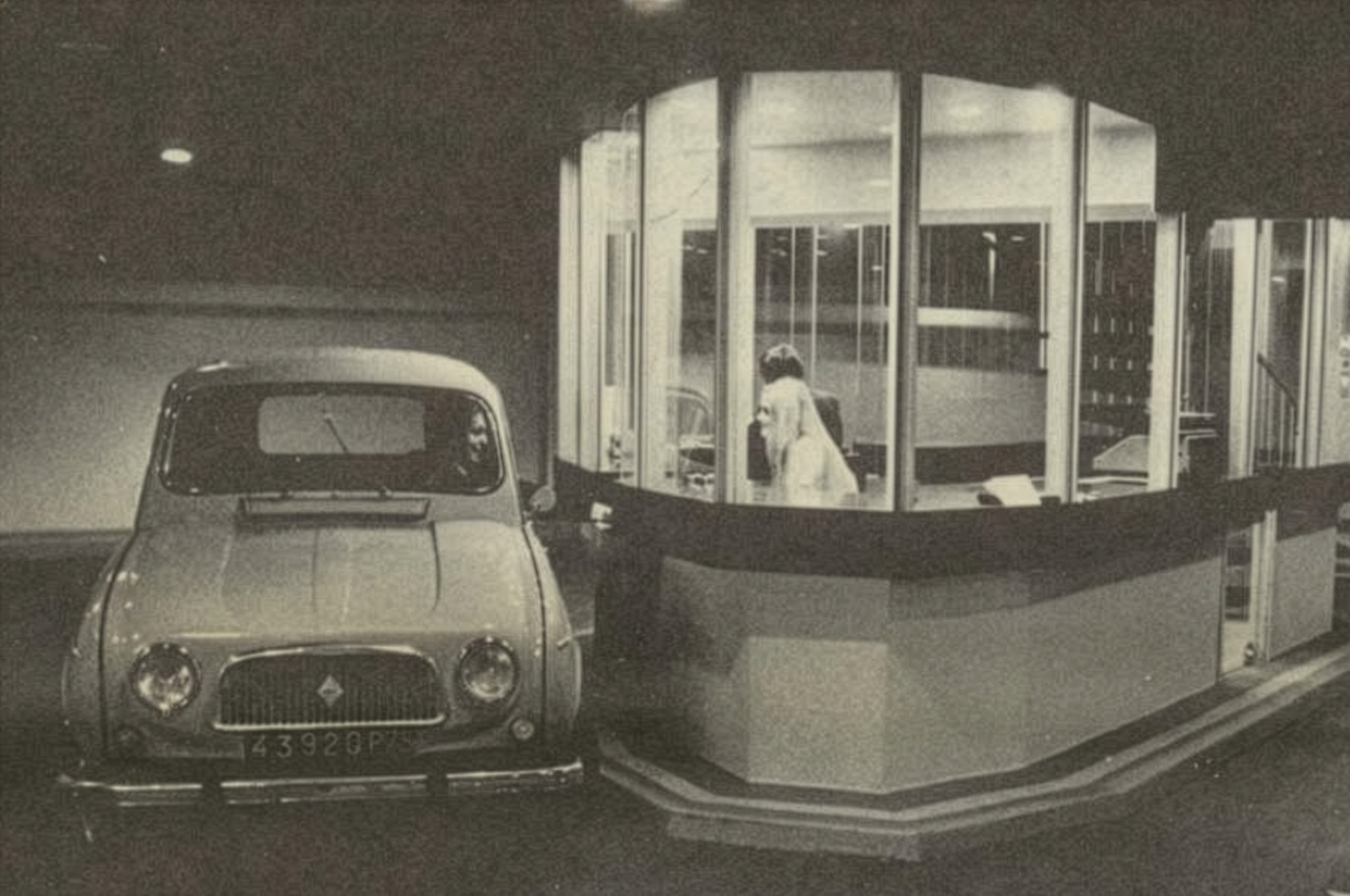
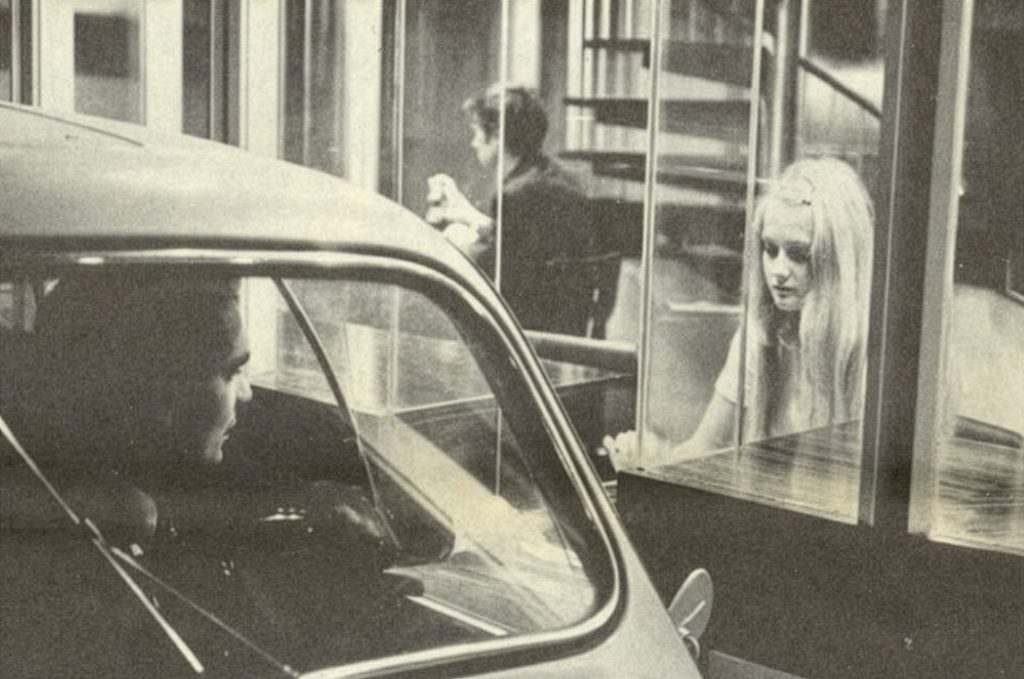
Yet the idea was not entirely new: two years earlier, in 1968, BNP had already tested the concept… in Guadeloupe, in Pointe-à-Pitre! The newspaper France-Antilles proudly announced this unprecedented service, allowing customers to “make withdrawals without even getting out of their car.” A world first for the bank, long before its rollout in mainland France.
The enthusiasm was such that other branches quickly followed suit:
- Reims in 1971;
- then Marseille-Prado;
- and the future Rungis branch.
The principle? A human service, but optimized for speed—just like American drive-ins, but the banking version.
Here, there were no ATMs yet: behind the glass, it was indeed advisors who welcomed, advised, and processed transactions.
Forty years later, in 2009, BNP Paribas reinvented the concept once again with France’s first drive-in ATM, installed in Marseille. This time, no intermediary was needed: customers could make withdrawals or deposits 24/7, without human interaction. A major advancement, particularly for people with reduced mobility and professionals, who now had access to cash services seven days a week.
From standing counters to drive-ins, and including mobile banking vans, one constant remains: the bank adapts to its customers’ lifestyles. And while the automobile defined the 1970s, another revolution was already on the horizon… the digital one.


Did you enjoy this story ?
This selection of articles might also interest you!


